

ADD ANI AS A TRUSTED SOURCE
googleads
ANI Logo
Menu
Science

New study says non-contact infrared thermometers are not successful as COVID-19 screeners

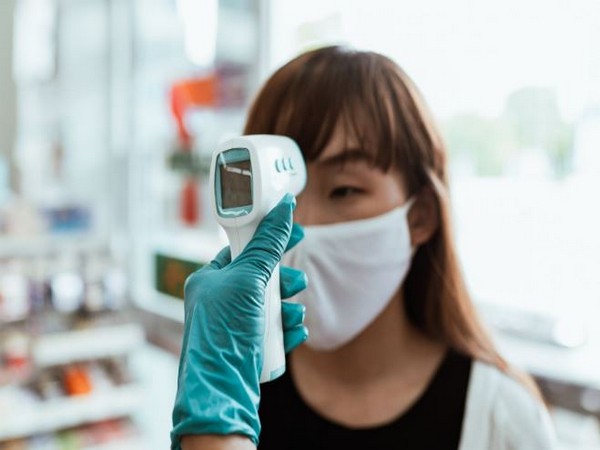
Baltimore [US], December 16 (ANI): One of the most common symptoms of COVID-19 is being sick with fever, whereas a study by Johns Hopkins Medicine and the University of Maryland School of Medicine describes that temperature screening, primarily done with a non-contact infrared thermometer (NCIT) is not an effective strategy to staunch the spread of COVID-19 virus.

ANI Dec 16, 2020 09:09 IST googleads

Representative Image

Baltimore [US], December 16 (ANI): One of the most common symptoms of COVID-19 is being sick with fever, whereas a study by Johns Hopkins Medicine and the University of Maryland School of Medicine describes that temperature screening, primarily done with a non-contact infrared thermometer (NCIT) is not an effective strategy to staunch the spread of COVID-19 virus.
According to an editorial published in Open Forum Infectious Diseases, the online journal of the Infectious Diseases Society of America, the first aspect of COVID-19 screening by the temperature that the researchers questioned was when the U.S. Department of Health and Human Services and the U.S.
Centres for Disease Control and Prevention released guidelines for Americans to determine if they needed to seek medical attention for symptoms suggestive of infection with SARS-CoV-2, with temperature screening.
According to the guidelines, fever is defined as a temperature taken with an NCIT near the forehead -- of greater than or equal to 100.4 degrees Fahrenheit (38.0 degrees Celsius) for non-healthcare settings and greater than or equal to 100.0 degrees Fahrenheit (37.8 degrees Celsius) for health care ones.
An author of the study, William Wright said, "Readings obtained with NCITs are influenced by numerous human, environmental and equipment variables, all of which can affect their accuracy, reproducibility and relationship with the measure closest to what could be called the 'body temperature' or the core temperature, or the temperature of blood in the pulmonary vein."
"However, the only way to reliably take the core temperature requires catheterization of the pulmonary artery, which is neither safe nor practical as a screening test," he said.
In their editorial, Wright and Mackowiak provided statistics to show that NCIT fails as a screening test for SARS-CoV-2 infection.
"As of Feb. 23, 2020, more than 46,000 travellers were screened with NCITs at U.S. airports, and only one person was identified as having SARS-CoV-2," told Wright.
From a November 2020 CDC report, Wright with his fellow co-author Philip Mackowiak provided further support for their concern about temperature screenings for COVID-19. The report, they said, stated that among approximately 766,000 travellers screened during the period Jan. 17 to Sept. 13, 2020, only one person per 85,000 -- or about 0.001% -- later tested positive for SARS-CoV-2. Additionally, only 47 out of 278 people (17%) in that group with symptoms similar to SARS-CoV-2 had a measured temperature meeting the CDC criteria for fever.
Another problem with NCITs, Wright said, is that they may give misleading readings throughout the course of a fever that makes it difficult to determine when someone is actually feverish or not.
"During the period when a fever is rising, a rise in core temperature occurs that causes blood vessels near the skin's surface to constrict and reduce the amount of heat they release," Wright explained. "And during a fever drop, the opposite happens. So, basing fever detection on NCIT measurements that measure the heat radiating from the forehead may be totally off the mark," he added.
Wright and Mackowiak concluded their editorial by saying that these and other factors affecting thermal screening with NCITs must be addressed to develop better programs for distinguishing people infected with SARS-CoV-2 from those who are not.
Concluding the editorial, they also suggested strategies for improvement like, (1) lowering the cutoff temperature used to identify symptomatic infected people, especially when screening those who are elderly or immunocompromised, (2) group testing to enable real-time surveillance and monitoring of the virus in a more manageable situation, (3) 'smart' thermometers i.e.wearable thermometers paired with GPS devices such as smartphones, and (4) monitoring sewage sludge for SARS-CoV-2. (ANI)


Get the App

What to Read Next

Science

COVID-19 severity may be predicted by White Blood Cell Count

COVID-19 severity may be predicted by White Blood Cell Count

A COVID-19 diagnosis is no longer as frightening as it used to be, thanks to developments in treatment choices. However, a new study reveals that leukocyte (white blood cell) count may now be used to identify who is more likely to develop more significant disease symptoms.

Read More
Science

Immune cells prevent lung healing following viral infection

Immune cells prevent lung healing following viral infection

Researchers found a mechanism by which immune cells impede the regeneration of the lungs' defensive barrier following viral infections such as COVID-19.

Read More
Science

Vaping can enhance vulnerability to infection with SARS-CoV-2

Vaping can enhance vulnerability to infection with SARS-CoV-2

According to a study, vapers are susceptible to infection by SARS-CoV-2, the virus that causes COVID-19 and continues to infect people all over the world.

Read More
Science

Study finds how new type of cell therapy help ARDS patients

  Study finds how new type of cell therapy help ARDS patients

A novel form of cell therapy may help patients who are critically ill with acute respiratory distress syndrome (ARDS) brought on by severe COVID-19, according to a study.

Read More
Science

Study finds paxlovid treatment does not lower risk of long Covid

Study finds paxlovid treatment does not lower risk of long Covid

Paxlovid (Nirmatrelvir-ritonavir) did not decrease the chance of developing long COVID in vaccinated, non-hospitalized patients during their initial COVID-19 infection, according to a team of UC San Francisco researchers. They also discovered a larger number of people with acute symptoms rebounding and testing positive than previously reported.

Read More
Science

Pandemic: How mobility restrictions impact healthcare expenses

Pandemic: How mobility restrictions impact healthcare expenses

As the world dealt with the COVID-19 pandemic's lockdowns and limitations, researchers at Osaka Metropolitan University undertook a comprehensive study to explore the relationship between changes in human mobility and the impact on medical costs connected with lifestyle-related disorders.

Read More
Science

New method could aid to estimate wildlife disease spread

New method could aid to estimate wildlife disease spread

"The framework is so flexible, we can use it for any animals," said Krysten Schuler, assistant research professor in the Department of Public and Ecosystem Health at Cornell University. "If we think about birds migrating and being in huge flocks, versus a moose that might be solitary and not interacting in groups, that impacts what our sample size should be."

Read More
Science

Ways to restore sense of smell in patients with long covid

Ways to restore sense of smell in patients with long covid

Research presented at the annual meeting of the Radiological Society of North America (RSNA) suggested that an image-guided minimally invasive technique may help restore scent in individuals suffering from long-term COVID.

Read More
Science

Study finds tool to identify, treat social withdrawal

Study finds tool to identify, treat social withdrawal

Researchers have created a new method to assist physicians and researchers in assessing patients for pathological social withdrawal, often known as Hikikomori.

Read More
Science

New treatment restore sense of smell in patients with Covid

New treatment restore sense of smell in patients with Covid

Researchers may be able to restore the sense of smell in people who have suffered from long-COVID via an image-guided minimally invasive approach, according to research presented at the annual meeting of the Radiological Society of North America (RSNA).

Read More
Home About Us Our Products Advertise Contact Us Terms & Condition Privacy Policy

Copyright © aninews.in | All Rights Reserved.
