

ADD ANI AS A TRUSTED SOURCE
googleads
ANI Logo
Menu
Science

New study explores circadian clock of fruit fly

The higher the temperatures, the faster physiological processes are. However, there is an exception: the so-called circadian clock, which regulates the sleep-wake cycle in organisms.

ANI Dec 29, 2022 23:59 IST googleads

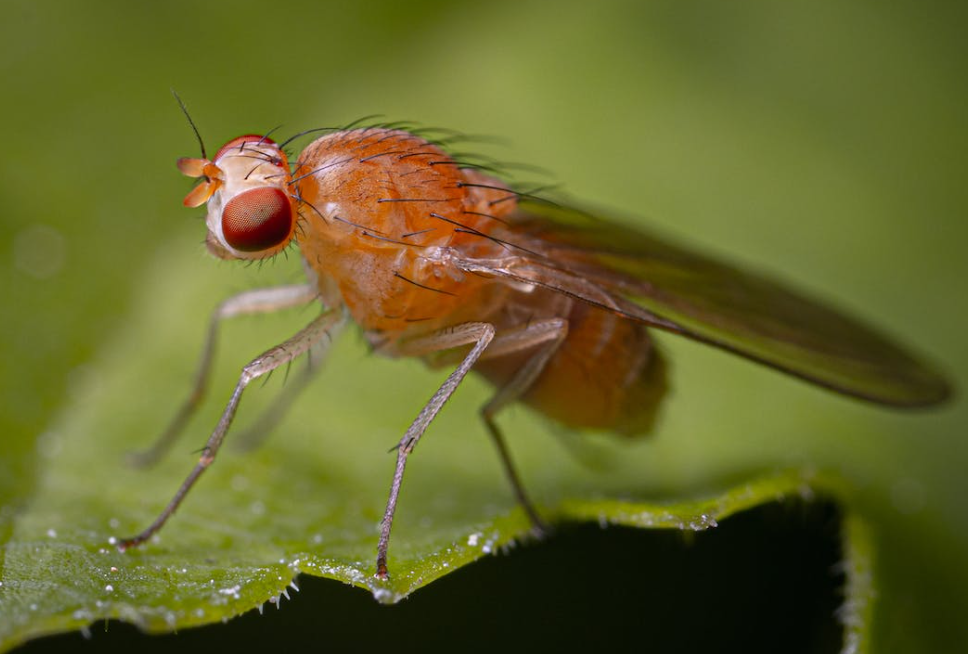
Representative Image

Washington [US], December 29 (ANI): The higher the temperatures, the faster physiological processes become. However, there is an exception: the so-called circadian clock, which regulates the sleep-wake cycle in organisms.
A fascinating question for scientists is why the inner clock runs in an almost unchanging way despite fluctuations in temperatures. This is a phenomenon known as temperature compensation. Studies indicate that different molecular mechanisms contribute to this.
A team of biologists headed by Prof. Ralf Stanewsky from the University of Munster (Germany), and in collaboration with teams at Dalhousie University in Canada and the University of Mainz in Germany, have now found an important piece in the puzzle providing an answer to this question. The results of their work have been published in the journal "Current Biology".
The team discovered a point mutation in the fruit fly Drosophila melanogaster which leads to a temperature-dependent lengthening of circadian clock periods. It is located in a central "clock gene" known as a "period" (per). Flies which have this perI530A mutation display a normal sleep-wake rhythm of 24 hours at 18 degrees Celsius. In contrast, at 29 degrees Celsius the inner clock runs about five hours slower, i.e. it lasts 29 hours. This lengthening of periods also affects the expression, in other words the activity, of the period gene in the clock neurones of the brain.
Normally, the protein concerned (PERIOD) is gradually changed chemically in the course of 24 hours - specifically, it is phosphorylated. After maximum phosphorylation it is degraded. Here, too, this process is normally the same at temperatures between 18 and 29 degrees Celsius, at which fruit flies are active. As the researchers showed, phosphorylation occurs in a normal way in the perI530A mutant at 18 degrees Celsius but decreases as the temperature increases. This leads to a stabilisation of the "PERIOD" protein at warmer temperatures.
The mutation studied by the team affects a so-called nuclear export signal (NES), which also occurs in this form in the period genes of mammals and plays a role in transporting the PERIOD proteins out of the cell nucleus. No biological function of this export from the cell nucleus had previously been known of.
The current study shows that the mutation leads to extended retention of the PERIOD protein in the cell nucleus of central clock neurones - and again, only at higher temperatures. "We therefore assume," says Ralf Stanewsky, "that the export of the protein from the cell nucleus plays an important role in temperature compensation - at least as far as the fruit fly is concerned."
Method used
In their investigations, the scientists used fruit fly mutants with a modification in the period gene (perI530A) which they had produced using modern molecular genetics methods (CRISPR/Cas9 mutagenesis and homologous recombination). These animals were then tested to see whether their sleep-wake cycle - and, as a result, their running activity - differed, depending on the ambient temperature.
Using a variety of methods, the researchers visualised the clock genes and their activity in the brain neurones. One of the things they used was a new method called Locally Activatable BioLuminescence (LABL) which the Munster team had developed in collaboration with researchers in Canada. This method involving bioluminescence makes it possible to measure, in living flies, the rhythmic gene expression in clock neurones - which only make up a fraction of all brain neurones. (ANI)


Get the App

What to Read Next

Science

New method guides magnetism without magnets

New method guides magnetism without magnets

Researchers at Paul Scherrer Institute PSI have demonstrated an innovative method to control magnetism in materials using an energy-efficient electric field.

Read More
Science

Amphibians bounce-back from Earth’s greatest mass extinction

Amphibians bounce-back from Earth’s greatest mass extinction

Researchers at the University of Bristol discovered that ancient frog ancestors survived the biggest mass extinction of species by eating on freshwater prey that evaded terrestrial predators.

Read More
Science

New insights into how cancer evades the immune system: Study

New insights into how cancer evades the immune system: Study

Immunotherapy research primarily focuses on better recognition of cancer cells by the body's own immune system. Researchers at Amsterdam UMC and Moffitt Cancer Center have taken a different approach.

Read More
Science

Scientists use AI to better understand nanoparticles: Study

Scientists use AI to better understand nanoparticles: Study

A group of scientists has created a way to illuminate the dynamic behavior of nanoparticles, which are essential components in the production of pharmaceuticals, electronics, and industrial and energy-conversion materials.

Read More
Science

New device could allow you to taste cake in virtual reality

New device could allow you to taste cake in virtual reality

The 'e-Taste' interface employs sensors and wireless chemical dispensers to enable remote taste perception, often known as gestation. Field testing done by researchers at The Ohio State University confirmed the device's ability to digitally simulate a range of taste intensities, while still offering variety and safety for the user.

Read More
Science

Strand Life Sciences launches portal for rare disease diagnosis

Strand Life Sciences launches portal for rare disease diagnosis

Marking Rare Disease Day, Strand Life Sciences, a subsidiary of Reliance Industries and a leading genomics research company, has launched the StrandOmics Portal, an innovative digital platform designed to assist doctors in diagnosing rare diseases more efficiently.

Read More
Science

Study reveals impact of animals as architects of Earth

Study reveals impact of animals as architects of Earth

A new study led by Professor Gemma Harvey from Queen Mary University of London has revealed how hundreds of species shape the landscapes we depend on, from termite mounds visible from space to beavers creating wetlands and hippos carving drainage systems.

Read More
Science

Opposing arrows of time emerge from certain quantum systems

Opposing arrows of time emerge from certain quantum systems

Researchers at the University of Surrey made a thought-provoking discovery. A new study reveals that opposing arrows of time can theoretically emerge from certain quantum systems.

Read More
Science

COVID-19 severity may be predicted by White Blood Cell Count

COVID-19 severity may be predicted by White Blood Cell Count

A COVID-19 diagnosis is no longer as frightening as it used to be, thanks to developments in treatment choices. However, a new study reveals that leukocyte (white blood cell) count may now be used to identify who is more likely to develop more significant disease symptoms.

Read More
Science

Seals can essentially act as 'smart sensors': Study

Seals can essentially act as 'smart sensors': Study

A new study by marine biologists reports that seals can essentially act as 'smart sensors' for monitoring fish populations in the ocean's eerily dim 'twilight zone.'

Read More
Home About Us Our Products Advertise Contact Us Terms & Condition Privacy Policy

Copyright © aninews.in | All Rights Reserved.


