

ADD ANI AS A TRUSTED SOURCE
googleads
ANI Logo
Menu
Science

New research suggests drought accelerated collapse of Hittite Empire

The collapse of the Hittite Empire in the Late Bronze Age has been blamed on various factors, from war with other territories to internal strife. Now, a Cornell University team has used tree ring and isotope records to pinpoint a more likely culprit: three straight years of severe drought.

ANI Feb 09, 2023 11:12 IST googleads

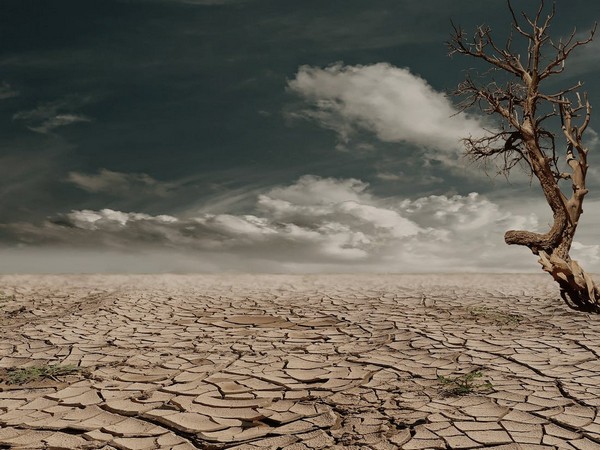
Representative Image

New York [US], February 9 (ANI): The collapse of the Hittite Empire in the Late Bronze Age has been blamed on various factors, from war with other territories to internal strife. Now, a Cornell University team has used tree ring and isotope records to pinpoint a more likely culprit: three straight years of severe drought.
"Severe Multi-Year Drought Coinciding with Hittite Collapse 1198-1196 BC," the group's paper, was published in Nature.
The Hittite Empire arose circa 1650 BC in semi-arid central Anatolia, which encompassed much of current Turkey. The Hittites were one of the ancient world's leading powers for the following five centuries, but approximately 1200 BC, the capital at Hattusa was abandoned, and the empire died.
To find an explanation for the empire's much-debated collapse, Sturt Manning, professor of arts and sciences in classical archaeology teamed up with Jed Sparks, professor of ecology and evolutionary biology.
Manning and Sparks combined their labs to scrutinize samples from the Midas Mound Tumulus at Gordion, a human-made 53-meter-tall structure located west of Ankara, Turkey. The mound contains a wooden structure believed to be a burial chamber for a relative of King Midas, possibly his father. But equally important are the juniper trees - which grow slowly and live for centuries, even a millennium - that were used to build the structure and contain a hidden paleoclimatic record of the region.
The researchers looked at the patterns of tree-ring growth, with unusually narrow rings likely indicating dry conditions, in conjunction with changes in the ratio of carbon-12 to carbon-13 recorded in the rings, which indicate the tree's response to the availability of moisture.
Their analysis finds a general shift to drier conditions from the later 13th into the 12th century BC, and they peg a dramatic continuous period of severe dryness to approximately 1198-96 BC, plus or minus three years, which matches the timeline of the Hittite's disappearance.
"We have two complementary sets of evidence," Manning said. "The tree-ring widths indicate something really unusual is going on, and because it's very narrow rings, that means the tree is struggling to stay alive. In a semi-arid environment, the only plausible reason that's happening is that there's little water, therefore it's a drought, and this one is particularly serious for three consecutive years. Critically, the stable isotope evidence extracted from the tree rings confirms this hypothesis, and we can establish a consistent pattern despite this all being over 3,150 years ago."
During three consecutive years of drought, hundreds of thousands of people, including the enormous Hittite army, would face famine, even starvation. The tax base would crumble, as would the government. Survivors would be forced to migrate, an early example of the inequality of climate change.
Severe climate events may not have been the sole reason for the Hittite Empire's collapse, the researchers noted, and not all of the ancient Near East suffered crises at the time. But this particular stretch of drought may have been a tipping point, at least for the Hittites.
"Situations, where you get prolonged, really extreme events like this for two or three years, are the ones that can undo even well-organized, resilient societies," Manning said.
That finding has particular relevance today when global populations are reckoning with catastrophic climate change and a warming planet.
"We may be approaching our own breaking point," Manning said. "We have a range of things we can cope with, but as we are stretched too far beyond that, we'll hit a point where our adaptative capacities are no longer matched against what we're facing." (ANI)


Get the App

What to Read Next

Science

New method guides magnetism without magnets

New method guides magnetism without magnets

Researchers at Paul Scherrer Institute PSI have demonstrated an innovative method to control magnetism in materials using an energy-efficient electric field.

Read More
Science

New insights into how cancer evades the immune system: Study

New insights into how cancer evades the immune system: Study

Immunotherapy research primarily focuses on better recognition of cancer cells by the body's own immune system. Researchers at Amsterdam UMC and Moffitt Cancer Center have taken a different approach.

Read More
Science

New device could allow you to taste cake in virtual reality

New device could allow you to taste cake in virtual reality

The 'e-Taste' interface employs sensors and wireless chemical dispensers to enable remote taste perception, often known as gestation. Field testing done by researchers at The Ohio State University confirmed the device's ability to digitally simulate a range of taste intensities, while still offering variety and safety for the user.

Read More
Science

Strand Life Sciences launches portal for rare disease diagnosis

Strand Life Sciences launches portal for rare disease diagnosis

Marking Rare Disease Day, Strand Life Sciences, a subsidiary of Reliance Industries and a leading genomics research company, has launched the StrandOmics Portal, an innovative digital platform designed to assist doctors in diagnosing rare diseases more efficiently.

Read More
Science

Study reveals impact of animals as architects of Earth

Study reveals impact of animals as architects of Earth

A new study led by Professor Gemma Harvey from Queen Mary University of London has revealed how hundreds of species shape the landscapes we depend on, from termite mounds visible from space to beavers creating wetlands and hippos carving drainage systems.

Read More
Science

Opposing arrows of time emerge from certain quantum systems

Opposing arrows of time emerge from certain quantum systems

Researchers at the University of Surrey made a thought-provoking discovery. A new study reveals that opposing arrows of time can theoretically emerge from certain quantum systems.

Read More
Science

COVID-19 severity may be predicted by White Blood Cell Count

COVID-19 severity may be predicted by White Blood Cell Count

A COVID-19 diagnosis is no longer as frightening as it used to be, thanks to developments in treatment choices. However, a new study reveals that leukocyte (white blood cell) count may now be used to identify who is more likely to develop more significant disease symptoms.

Read More
Science

Seals can essentially act as 'smart sensors': Study

Seals can essentially act as 'smart sensors': Study

A new study by marine biologists reports that seals can essentially act as 'smart sensors' for monitoring fish populations in the ocean's eerily dim 'twilight zone.'

Read More
Science

New technology enhances gravitational-wave detection: Study

New technology enhances gravitational-wave detection: Study

A team of physicists led by Jonathan Richardson of the University of California, Riverside, demonstrated how new optical technology can extend the detection range of gravitational-wave observatories such as the Laser Interferometer Gravitational-Wave Observatory, or LIGO, and pave the way for future observatories.

Read More
Science

Discovery of unexpected collagen structure to influence research

Discovery of unexpected collagen structure to influence research

Collagen, the body's most abundant protein, has long been considered a predictable structural component of tissues.

Read More
Home About Us Our Products Advertise Contact Us Terms & Condition Privacy Policy

Copyright © aninews.in | All Rights Reserved.
