New panda fossils discovered, possibly last of its kind in Europe
Washington [US], August 2 (ANI): Lumbering through the forested wetlands of Bulgaria around six million years ago, a new species of panda has been uncovered by scientists who state it is currently the last known and 'most evolved' European giant panda.
ANI
Aug 02, 2022 18:59 IST

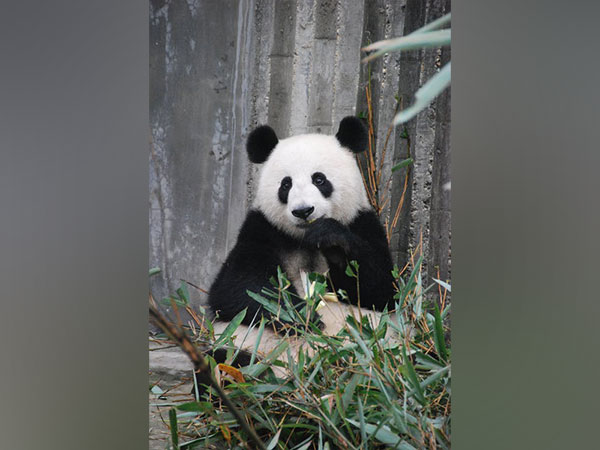
Washington [US], August 2 (ANI): Lumbering through the forested wetlands of Bulgaria around six million years ago, a new species of panda has been uncovered by scientists who state it is currently the last known and 'most evolved' European giant panda.
Unearthed from the bowels of the Bulgarian National Museum of Natural History, two fossils of teeth originally found in the eastern European nation in the late 1970s, provide new evidence of a sizable relative of the modern giant panda. Unlike today's iconic black and white bear, however, it was not reliant on purely bamboo.
"Although not a direct ancestor of the modern genus of the giant panda, it is its close relative," explains the Museum's Professor Nikolai Spassov, whose findings are today published in the peer-reviewed Journal of Vertebrate Paleontology.
"This discovery shows how little we still know about ancient nature and demonstrates also that historic discoveries in palaeontology can lead to unexpected results, even today."
The upper carnassial tooth, and an upper canine, were originally catalogued by palaeontologist Ivan Nikolov, who added them to the museum's trove of fossilized treasures when they were unearthed in northwestern Bulgaria. This new species is named Agriarctos Nikolovi in his honour.
"They had only one label written vaguely by hand," recalls Professor Spassov. "It took me many years to figure out what the locality was and what its age was. Then it also took me a long time to realize that this was an unknown fossil giant panda."
The coal deposits in which the teeth were found which have imbued them with a blackened hue suggest that this ancient panda inhabited forested, swampy regions.
There, during the Miocene epoch, it likely consumed a largely vegetarian diet but was not purely reliant on bamboo!
Fossils of the staple grass that sustains the modern panda are rare in the European and, especially, in the Bulgarian late Miocene fossil record and the cusps of the teeth do not appear strong enough to crush the woody stems.
Instead, it likely fed on softer plant materials -- aligning with the general trend toward increased reliance on plants in this group's evolutionary history.
Sharing their environment with other large predators likely drove the giant panda lineage toward vegetarianism.
"The likely competition with other species, especially carnivores and presumably other bears, explains the closer food specialization of giant pandas to vegetable food in humid forest conditions," states Professor Spassov.
The paper speculates that A. nikolovi's teeth nonetheless provided ample defense against predators. In addition, the canines are comparable in size to those of the modern panda, suggesting that they belonged to a similarly sized or only slightly smaller animal.
The authors propose that A. nikolovi may have become extinct as a result of climate change, probably because of the 'Messinian salinity crisis' an event in which the Mediterranean basin dried up, significantly altering the surrounding terrestrial environments.
"Giant pandas are a very specialized group of bears," Professor Spassov adds. "Even if A. niklovi was not as specialized in habitats and food as the modern giant panda, fossil pandas were specialized enough and their evolution was related to humid, wooded habitats. It is likely that climate change at the end of the Miocene in southern Europe, leading to aridification, had an adverse effect on the existence of the last European panda."
Co-author Qigao Jiangzuo, from Peking University, China, was primarily responsible in helping to narrow down the identity of this strange beast to belonging to the Ailuropodini a tribe within the Ursidae bear family. While this group of animals is best known by its only living representative, the giant panda, they once ranged across Europe and Asia. Intriguingly, the authors propose two potential pathways for the distribution of this group.
One possible evolutionary trajectory has the Ailuropodini heading out of Asia and concluding in A. nikolovi in Europe. However, Professor Spassov does add caution to this hypothesis, stating that the paleontological data show that "the oldest members of this group of bears were found in Europe." This suggests that the group may have developed in Europe and then headed to Asia, where the ancestors of another genus, Ailurarctos, developed. These early pandas may then have later evolved into Ailuropoda - the modern giant panda. (ANI)
Tags:
Get the App