

ADD ANI AS A TRUSTED SOURCE
googleads
Menu
Science

New mutations in malaria parasite encourage resistance against key preventive drug

Washington [US], January 1 (ANI): In the ongoing arms race between humans and the parasite that causes malaria, researchers report that new mutations that enhance resistance to a drug used to prevent malaria in pregnant women and children are already common in countries fighting the disease.

ANI Jan 01, 2021 23:13 IST googleads

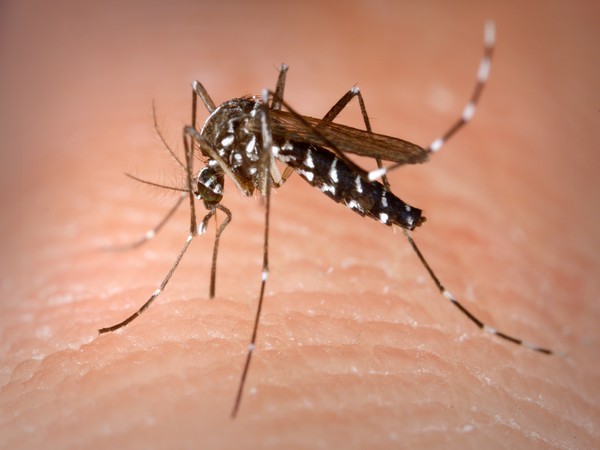
Representative image

Washington [US], January 1 (ANI): In the ongoing arms race between humans and the parasite that causes malaria, researchers report that new mutations that enhance resistance to a drug used to prevent malaria in pregnant women and children are already common in countries fighting the disease.
The new results are published in PLOS Genetics and have been found by Taane Clark and colleagues at the London School of Hygiene and Tropical Medicine (LSHTM).
Malaria causes about 435,000 deaths each year, primarily in young children in sub-Saharan Africa. Despite a long-term global response, efforts to control the disease are hampered by the rise of drug-resistant strains of the parasite species that cause malaria.
Sulfadoxine-pyrimethamine (SP), for example, was once a first-line anti-malaria treatment, but now primarily is used to prevent infection in pregnant women and children.
Mutations in two genes in the parasite plasmodium falciparum offer resistance to SP, but recently, mutations related to resistance were discovered in a third gene, pfgch1.
To understand the extent and spread of these new mutations, Clark and colleagues analysed genome sequences from 4,134 blood samples collected from 29 countries where malaria is endemic.
They discovered at least ten different versions of pfgch1, which occur in about one quarter of the samples from Southeast Asia and in one third of the samples from Africa, where strains carrying the mutations may be on the rise.
The growth in the number of malaria parasites with pfgch1 mutations is concerning, because the mutations enhance resistance to SP and may encourage the evolution of new resistant strains.
As a result, their growth may threaten efforts to use SP to prevent malaria in vulnerable groups. With the identification of these pfgch1 mutations through the new study, however, scientists can monitor their presence in parasite populations, to understand where SP can be used effectively, and where rates of drug-resistance are already too high.
"SP is an established drug for malaria prevention and treatment in vulnerable groups such as pregnant women and children. We may have underestimated its vulnerability to parasite resistance, as these new data show," Colin Sutherland, an author and co-Director of the LSHTM Malaria Centre, said. (ANI)


Get the App

What to Read Next

Science

'Bone marrow cancer drug shows success in blood disorder'

'Bone marrow cancer drug shows success in blood disorder'

When researchers discovered enough proof that a medication used to treat bone marrow cancer and Kaposi sarcoma is safe and effective in treating hereditary hemorrhagic telangiectasia (HHT), a rare bleeding disorder that affects 1 in 5,000 people worldwide, they decided to terminate an early clinical trial funded by the National Institutes of Health

Read More
Science

Cancer drug may ease cognitive function for some with autism

Cancer drug may ease cognitive function for some with autism

According to recent research from the University of California San Diego, people with Rett syndrome, a rare disorder linked to autism, may find it easier to think when taking an experimental cancer treatment. This finding could lead to medicines for patients with other neurological conditions.

Read More
Science

Study discovers muscle disorder caused by key protein mutations

Study discovers muscle disorder caused by key protein mutations

A new study discovered that the SMCHD1 protein controls how genes are digested, which influences the course of Facioscapulohumeral Muscular Dystrophy (FSHD). This finding about SMCHD1's role in gene regulation is significant because it opens new avenues for creating tailored therapeutic techniques to combat the disease. Scientists can discover new approaches to combat the disease if they learn more about how SMCHD1 functions.

Read More
Science

More insight on ability of cancer drug to lower blood sugar

More insight on ability of cancer drug to lower blood sugar

The efficacy of a medication to prevent liver fat accumulation--a condition that frequently coexists with obesity and can result in dangerous fatty liver disease--has been further explored by researchers at the University of Oklahoma.

Read More
Science

Study finds novel therapeutic avenues in bone repair

Study finds novel therapeutic avenues in bone repair

Birmingham researchers have proven PEPITEM, a naturally occurring peptide (small protein) has potential as a novel therapy for osteoporosis and other illnesses that entail bone loss, with specific advantages over conventional medications.

Read More
Home About Us Our Products Advertise Contact Us Terms & Condition Privacy Policy

Copyright © aninews.in | All Rights Reserved.
