

ADD ANI AS A TRUSTED SOURCE
googleads
ANI Logo
Menu
Science

New meat alternatives being devised with 3D printing - and cocoa butter

Washington [US], December 10 (ANI): A team of researchers have developed a new combination of plant-based ingredients tailored for 3D printing meat alternatives and their most successful recipes required the addition of cocoa butter, derived from cocoa beans of chocolate fame.

ANI Dec 10, 2021 22:10 IST googleads

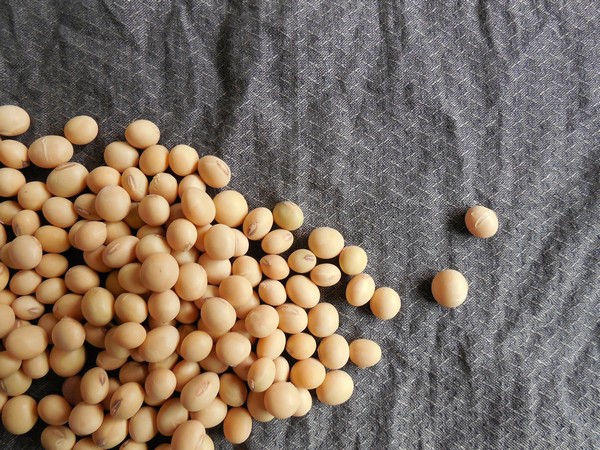
Representative image

Washington [US], December 10 (ANI): A team of researchers have developed a new combination of plant-based ingredients tailored for 3D printing meat alternatives and their most successful recipes required the addition of cocoa butter, derived from cocoa beans of chocolate fame.
From animal welfare to environmental sustainability, there are plenty of reasons people choose to avoid eating meat derived from animals. Many current meat alternatives rely on plant-based proteins, most often from soy and wheat, which can readily mimic the texture and nutritional value of the real thing. While 3D printing has already been tested for meat alternatives, none of the current formulations included proteins from these particular plants. So, Songbai Liu and Shanshan Wang wanted to figure out an approach to making meat "dough" with soy and wheat protein that could be produced effectively with a 3D printer.
The researchers tested soy and wheat proteins in formulations containing several other ingredients using a 3D printer. They evaluated their concoctions based on the accuracy with which the dough could be laid down by the printer and how well it held its form. They also examined its texture and microstructure. The experiments revealed the importance of several additional ingredients, including the emulsifier Tween-80 and sodium alginate to control the texture. Heat-sensitive cocoa butter turned out to be a particularly important ingredient, making the dough more fluid at warm temperatures for printing, but then hardening afterwards at room temperature, allowing the dough to retain its printed shape.
One drawback, however, was that people who cannot eat wheat gluten or soy because of allergies or celiac disease would not be able to partake of the new alternatives. To address this issue, the researchers attempted to replace the soy protein with that from peas, but the resulting dough was too soft for printing. Even so, these experiments have identified a new strategy for formulating meat alternatives using this versatile technology, according to the researchers.
The authors acknowledged funding from the National Key Research and Development Program, the Zhejiang Public Welfare Technology Research Program, the Qinghai Science and Technology Program and the Foundation of Fuli Institute of Food Science at Zhejiang University. (ANI)


Get the App

What to Read Next

Science

Amphibians bounce-back from Earth’s greatest mass extinction

Amphibians bounce-back from Earth’s greatest mass extinction

Researchers at the University of Bristol discovered that ancient frog ancestors survived the biggest mass extinction of species by eating on freshwater prey that evaded terrestrial predators.

Read More
Science

Scientists use AI to better understand nanoparticles: Study

Scientists use AI to better understand nanoparticles: Study

A group of scientists has created a way to illuminate the dynamic behavior of nanoparticles, which are essential components in the production of pharmaceuticals, electronics, and industrial and energy-conversion materials.

Read More
Science

New technology enhances gravitational-wave detection: Study

New technology enhances gravitational-wave detection: Study

A team of physicists led by Jonathan Richardson of the University of California, Riverside, demonstrated how new optical technology can extend the detection range of gravitational-wave observatories such as the Laser Interferometer Gravitational-Wave Observatory, or LIGO, and pave the way for future observatories.

Read More
Science

Astronomers find the smallest main-belt asteroids ever detected:

Astronomers find the smallest main-belt asteroids ever detected:

The majority of known asteroids orbit inside the main asteroid belt, which is positioned between Mars and Jupiter at an average distance of around 250 million km from Earth. Since the discovery of the first asteroid in 1801, about 750.000 asteroids have been identified, primarily in the last decade thanks to several optical surveys that examine the sky on clear nights.

Read More
Science

Study finds connection between quantum theory, information theory

Study finds connection between quantum theory, information theory

"Our results have no clear or direct application right now. It's basic research that lays the foundation for future technologies in quantum information and quantum computers. There's enormous potential for complete discoveries in many different research fields," said Guilherme B Xavier, a researcher in quantum communication at Linkoping University, Sweden.

Read More
Science

When devices can read human emotions without a camera: Study

When devices can read human emotions without a camera: Study

Tokyo Metropolitan University researchers employed long-term skin conductance measurements to distinguish between emotions. Volunteers were given videos representing frightening scenarios, family bonding, and humour, while their skin conductance was measured.

Read More
Science

'Nuroscience study results can be better predicted by AI'

'Nuroscience study results can be better predicted by AI'

Large language models, a type of AI that analyses text, can anticipate the results of proposed neuroscience studies more correctly than human experts, according to a new study led by UCL (University College London) researchers.

Read More
Science

Thermal imaging may help fruits, veggies stay fresher longer: Study

Thermal imaging may help fruits, veggies stay fresher longer: Study

Before your favourite produce arrives at the grocery store, it must be carefully harvested and stored for extended periods of time. A recent University of Georgia assessment argues that new temperature sensing devices could make that procedure considerably easier, as agricultural issues are exacerbated by changing climates.

Read More
Science

Contrail avoidance is less likely to damage climate by mistake

Contrail avoidance is less likely to damage climate by mistake

A new study allays concerns that rerouting planes to avoid producing climate-warming contrails may accidentally exacerbate climate change.

Read More
Science

Plastic pollution, seawater flooding effect on coastal plants

Plastic pollution, seawater flooding effect on coastal plants

Two of the planet's most urgent environmental stressors have the potential to affect the development and reproductive production of plants found along the world's coasts, according to new research.

Read More
Home About Us Our Products Advertise Contact Us Terms & Condition Privacy Policy

Copyright © aninews.in | All Rights Reserved.


