

ADD ANI AS A TRUSTED SOURCE
googleads
ANI Logo
Menu
Science

New clues on unsolved genetic diseases in children

Washington [US], June 30 (ANI): Scientists have discovered a new way to interpret unsolved Mendelian diseases which are inherited from either parent due to gene mutations in the developing egg or sperm through studying the inheritance of a protein known as SMCHD1 which is coded by the SMCHD1 gene.

ANI Jun 30, 2022 18:48 IST googleads

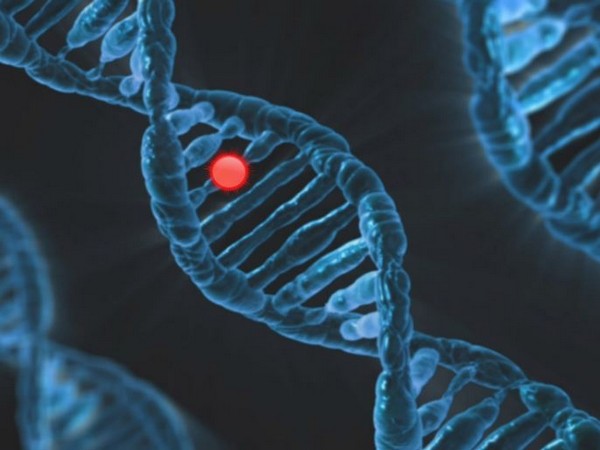
Representative image

Washington [US], June 30 (ANI): Scientists have discovered a new way to interpret unsolved Mendelian diseases which are inherited from either parent due to gene mutations in the developing egg or sperm through studying the inheritance of a protein known as SMCHD1 which is coded by the SMCHD1 gene.
A team of scientists from the National University of Singapore (NUS) led by Assistant Professor Xue Shifeng from the Department of Biological Sciences has discovered a new way to interpret unsolved Mendelian diseases inherited from either parent due to gene mutations in the developing egg or sperm through studying the inheritance of a protein known as SMCHD1 which is coded by the SMCHD1 gene. Mutations in the SMCHD1 gene can cause diseases such as facioscapulohumeral muscular dystrophy (FSHD) which is a muscle degenerative disorder, and Bosma arhinia microphthalmia syndrome (BAMS) which causes abnormalities of the nose and eyes.
The researchers found that SMCHD1 from mothers controls the expression of a group of genes in offspring, known as the HOX genes, which determines the position of body parts in an embryo along the axis from its head to tail. The researchers also found that the inactivation of SMCHD1 in female zebrafish results in alterations to HOX gene expression leading to skeletal defects in their offspring.
The study led by NUS researchers, in collaboration with A*STAR, Yale-NUS and Aix-Marseille University, was published in Nature Communications 23 June 2022.
Inheritance of mother's genes and structural defects
In mammals, SMCHD1 plays a key role in X-inactivation in females, a process where one of the copies of the X chromosome is randomly selected and disabled. This makes it challenging to study the role of the SMCHD1 gene inherited from mothers because inactivating the SMCHD1 gene is lethal for female mammals.
The research team decided to use zebrafish, a vertebrate commonly used as a model organism in biomedical research, to circumvent this issue. Zebrafish lack X-inactivation, allowing the team to study the role of the SMCHD1 gene inherited from mothers. The researchers inactivated the SMCHD1 gene in zebrafish to study how it will affect gene expression and structural development in zebrafish offspring.
NUS scientists observed that SMCHD1 protein is placed into the egg by the mother. The inactivation of the SMCHD1 gene in female zebrafish caused alterations in HOX gene expression in their fertilised eggs. HOX genes play an important role in ensuring the specific patterns and identities of different body parts in the baby. The loss of the SMCHD1 gene resulted in premature activation of HOX genes resulting in skeletal patterning defects in the zebrafish offspring.
Asst Prof Xue and her team demonstrated a new concept that gene products such as proteins from the mother's egg can control gene expression occurring in the developing embryo. Factors that control gene expression produced by the mother in the developing egg can set up the conditions for proper gene activation after the egg is fertilised with a sperm. Through further lab studies, the team found that the same principle applied to mammals.
Interpreting unsolved genetic diseases
The results of the study could change the way unsolved Mendelian diseases are interpreted. Based on this study, some genetic abnormalities in parents could manifest in their children, opening possibilities of explaining birth defects seen in children by examining the genetic make-up of their parents.
"When we think about genetic diseases, we usually think that a mutation in the patient caused the disease. In our study, we found using zebrafish, the abnormalities in the offspring are not caused by a genetic mutation in the individual but in its mother. This will change how we think about unsolved inherited diseases," said Asst Prof Xue.
Future research
Following their current study, the researchers hope to continue exploring how, at the molecular level, maternal genes control embryo gene expression after birth.
"We want to understand, molecularly, what marks are left by the maternal SMCHD1 gene on the offspring's genome that will affect the embryo. We are also interested in studying the SMCHD1 protein, its mutations that are involved in different diseases, as well as how it works," shared Asst Prof Xue. (ANI)


Get the App

What to Read Next

Science

Amphibians bounce-back from Earth’s greatest mass extinction

Amphibians bounce-back from Earth’s greatest mass extinction

Researchers at the University of Bristol discovered that ancient frog ancestors survived the biggest mass extinction of species by eating on freshwater prey that evaded terrestrial predators.

Read More
Science

New insights into how cancer evades the immune system: Study

New insights into how cancer evades the immune system: Study

Immunotherapy research primarily focuses on better recognition of cancer cells by the body's own immune system. Researchers at Amsterdam UMC and Moffitt Cancer Center have taken a different approach.

Read More
Science

Scientists use AI to better understand nanoparticles: Study

Scientists use AI to better understand nanoparticles: Study

A group of scientists has created a way to illuminate the dynamic behavior of nanoparticles, which are essential components in the production of pharmaceuticals, electronics, and industrial and energy-conversion materials.

Read More
Science

New device could allow you to taste cake in virtual reality

New device could allow you to taste cake in virtual reality

The 'e-Taste' interface employs sensors and wireless chemical dispensers to enable remote taste perception, often known as gestation. Field testing done by researchers at The Ohio State University confirmed the device's ability to digitally simulate a range of taste intensities, while still offering variety and safety for the user.

Read More
Science

Strand Life Sciences launches portal for rare disease diagnosis

Strand Life Sciences launches portal for rare disease diagnosis

Marking Rare Disease Day, Strand Life Sciences, a subsidiary of Reliance Industries and a leading genomics research company, has launched the StrandOmics Portal, an innovative digital platform designed to assist doctors in diagnosing rare diseases more efficiently.

Read More
Science

Study reveals impact of animals as architects of Earth

Study reveals impact of animals as architects of Earth

A new study led by Professor Gemma Harvey from Queen Mary University of London has revealed how hundreds of species shape the landscapes we depend on, from termite mounds visible from space to beavers creating wetlands and hippos carving drainage systems.

Read More
Science

Opposing arrows of time emerge from certain quantum systems

Opposing arrows of time emerge from certain quantum systems

Researchers at the University of Surrey made a thought-provoking discovery. A new study reveals that opposing arrows of time can theoretically emerge from certain quantum systems.

Read More
Science

COVID-19 severity may be predicted by White Blood Cell Count

COVID-19 severity may be predicted by White Blood Cell Count

A COVID-19 diagnosis is no longer as frightening as it used to be, thanks to developments in treatment choices. However, a new study reveals that leukocyte (white blood cell) count may now be used to identify who is more likely to develop more significant disease symptoms.

Read More
Science

Seals can essentially act as 'smart sensors': Study

Seals can essentially act as 'smart sensors': Study

A new study by marine biologists reports that seals can essentially act as 'smart sensors' for monitoring fish populations in the ocean's eerily dim 'twilight zone.'

Read More
Science

'Creation of black holes without singularities through gravity'

'Creation of black holes without singularities through gravity'

Traditional black holes, as predicted by Albert Einstein's theory of General Relativity, contain what are known as singularities, i.e. points where the laws of physics break down. Identifying how singularities are resolved in the context of quantum gravity is one of the fundamental problems in theoretical physics. Now, a team of experts has described the creation of regular black holes from gravitational effects without the need for the existence of exotic matter required by some previous models.

Read More
Home About Us Our Products Advertise Contact Us Terms & Condition Privacy Policy

Copyright © aninews.in | All Rights Reserved.


