

ADD ANI AS A TRUSTED SOURCE
googleads
ANI Logo
Menu
Science

Nanoparticle gel creation may unite oil, water in manufacturing-friendly approach

Washington [US], February 11 (ANI): Scientists at the National Institute of Standards and Technology (NIST) and the University of Delaware have claimed a gel made with the addition of the right nanoparticles can mix oil and water to create immiscible fluids with uses ranging from batteries to water filters and tint-changing smart windows.

ANI Feb 11, 2021 18:46 IST googleads

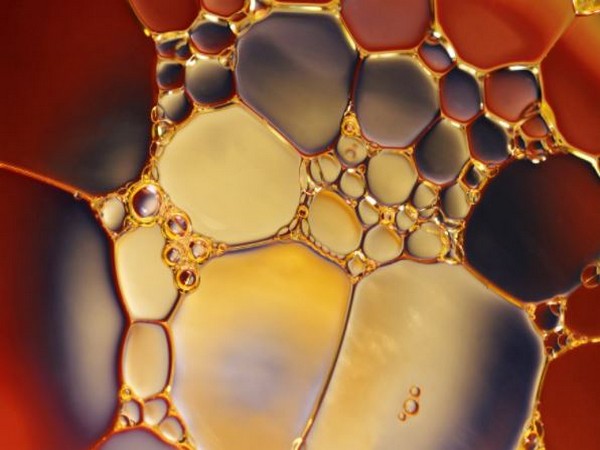
Representative image

Washington [US], February 11 (ANI): Scientists at the National Institute of Standards and Technology (NIST) and the University of Delaware have claimed a gel made with the addition of the right nanoparticles can mix oil and water to create immiscible fluids with uses ranging from batteries to water filters and tint-changing smart windows.
As described in a new Nature Communications paper, the new approach to creating this unusual class of soft materials could carry them out of the laboratory and into the marketplace.
Researchers have found that what appears to be a better way to create these gels, which have been an area of intense research focus for more than a decade. Part of their potentially broad utility is the complex set of interconnected microscopic channels that form within them, creating a spongelike structure.
These channels not only offer passageways for other materials to travel through, making them useful for filtration but also give the gel a high amount of internal surface area, a characteristic value for speeding up chemical reactions, or as scaffolding on which living tissue can grow.
While these and other advantages make it sound like gel innovators have struck oil, their creations have not yet mixed well with the marketplace. The gels are commonly formed of two liquid solvents mingled together. As with oil and water, these solvents do not mix well, but to prevent them from completely separating, researchers add custom-designed nanoparticles that can stay at the interface between them. Carefully cooking these ingredients allows a cohesive gel to form.
However, the process is demanding because custom-designing nanoparticles for each application has been difficult, and forming the gels has required carefully controlled rapid temperature change. These constraints have made it hard to create this type of gel in any more than small quantities suitable for lab experiments rather than on an industrial scale.
The NIST/Delaware team has found ways to sidestep many of these problems. Its novel approach forms what the researchers refer to as a "SeedGel," an abbreviation for "solvent segregation driven gel." Instead of designing nanoparticles to remain at the interface between the two solvents, their chosen particles concentrate within one of them.
While these particles tend to repel one another, the particles' affinity toward one of the solvents is stronger and keeps them together in the channel. Using neutron scattering tools at the NIST Center for Neutron Research (NCNR), the team unambiguously proved that it had succeeded at concentrating the nanoparticles where it wanted.
The resulting gel could be far easier to create, as its two solvents are essentially oil and water, and its nanoparticles are silicon dioxide -- essentially tiny spheres of common quartz. It also could have a variety of industrial uses.
"Our SeedGel has great mechanical strength, it's much easier to make, and the process is scalable to what manufacturers would need," said Yun Liu, who is both an NCNR scientist and an affiliated full professor at the University of Delaware. "Plus it's thermo-reversible."
This reversibility refers to an optical property that the finished SeedGel possesses: It can switch from transparent to opaque and back again, just by changing its temperature. This property could be harnessed in smart windows that sandwich a thin layer of the gel between two panes of glass.
"This optical property could make the SeedGel useful in other light-sensitive applications as well," said Yuyin Xi, a researcher from the University of Delaware also working at the NCNR. "They could be useful in sensors."
Because the team's gel-creation approach could be used with other solvent-and-nanoparticle combinations, it could become useful in filters for water purification and possibly other filtration processes depending on what type of nanoparticles are used.
Liu also said that the creative approach allows for the size of the channels within the gel to be tuned by changing the rate at which the temperature changes during the formation process, offering application designers another degree of freedom to explore.
"Ours is a generic approach working for many different nanoparticles and solvents," he said. "It greatly extends the applications of these sorts of gels." (ANI)


Get the App

What to Read Next

Science

Amphibians bounce-back from Earth’s greatest mass extinction

Amphibians bounce-back from Earth’s greatest mass extinction

Researchers at the University of Bristol discovered that ancient frog ancestors survived the biggest mass extinction of species by eating on freshwater prey that evaded terrestrial predators.

Read More
Science

Scientists use AI to better understand nanoparticles: Study

Scientists use AI to better understand nanoparticles: Study

A group of scientists has created a way to illuminate the dynamic behavior of nanoparticles, which are essential components in the production of pharmaceuticals, electronics, and industrial and energy-conversion materials.

Read More
Science

New technology enhances gravitational-wave detection: Study

New technology enhances gravitational-wave detection: Study

A team of physicists led by Jonathan Richardson of the University of California, Riverside, demonstrated how new optical technology can extend the detection range of gravitational-wave observatories such as the Laser Interferometer Gravitational-Wave Observatory, or LIGO, and pave the way for future observatories.

Read More
Science

Astronomers find the smallest main-belt asteroids ever detected:

Astronomers find the smallest main-belt asteroids ever detected:

The majority of known asteroids orbit inside the main asteroid belt, which is positioned between Mars and Jupiter at an average distance of around 250 million km from Earth. Since the discovery of the first asteroid in 1801, about 750.000 asteroids have been identified, primarily in the last decade thanks to several optical surveys that examine the sky on clear nights.

Read More
Science

Study finds connection between quantum theory, information theory

Study finds connection between quantum theory, information theory

"Our results have no clear or direct application right now. It's basic research that lays the foundation for future technologies in quantum information and quantum computers. There's enormous potential for complete discoveries in many different research fields," said Guilherme B Xavier, a researcher in quantum communication at Linkoping University, Sweden.

Read More
Science

When devices can read human emotions without a camera: Study

When devices can read human emotions without a camera: Study

Tokyo Metropolitan University researchers employed long-term skin conductance measurements to distinguish between emotions. Volunteers were given videos representing frightening scenarios, family bonding, and humour, while their skin conductance was measured.

Read More
Science

'Nuroscience study results can be better predicted by AI'

'Nuroscience study results can be better predicted by AI'

Large language models, a type of AI that analyses text, can anticipate the results of proposed neuroscience studies more correctly than human experts, according to a new study led by UCL (University College London) researchers.

Read More
Science

Thermal imaging may help fruits, veggies stay fresher longer: Study

Thermal imaging may help fruits, veggies stay fresher longer: Study

Before your favourite produce arrives at the grocery store, it must be carefully harvested and stored for extended periods of time. A recent University of Georgia assessment argues that new temperature sensing devices could make that procedure considerably easier, as agricultural issues are exacerbated by changing climates.

Read More
Science

Contrail avoidance is less likely to damage climate by mistake

Contrail avoidance is less likely to damage climate by mistake

A new study allays concerns that rerouting planes to avoid producing climate-warming contrails may accidentally exacerbate climate change.

Read More
Science

High BP linked with environmental contamination by tellurium 

High BP linked with environmental contamination by tellurium 

Higher amounts of tellurium, a pollutant transported from mining and manufacturing to foods, increase the risk of having high blood pressure (hypertension). Improved monitoring of tellurium levels in certain meals may help reduce high blood pressure in the general population.

Read More
Home About Us Our Products Advertise Contact Us Terms & Condition Privacy Policy

Copyright © aninews.in | All Rights Reserved.
