

ADD ANI AS A TRUSTED SOURCE
googleads
ANI Logo
Menu
Science

Nanomaterials' ability to cross blood-brain barrier can be influenced by their shape, form

Washington [US], July 6 (ANI): The findings of a new study suggest that nanomaterials found in consumer and health-care products can pass through the bloodstream to the brain side of a blood-brain barrier model with varying ease depending on their shape.

ANI Jul 06, 2021 16:52 IST googleads

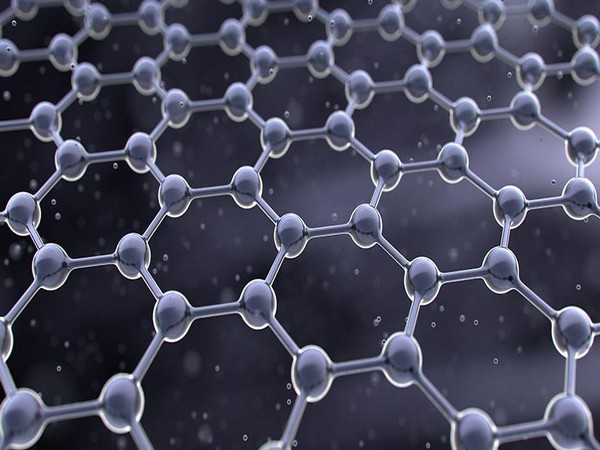
Representative image

Washington [US], July 6 (ANI): The findings of a new study suggest that nanomaterials found in consumer and health-care products can pass through the bloodstream to the brain side of a blood-brain barrier model with varying ease depending on their shape.
The study, published in Proceedings of the National Academy of Sciences, revealed that this creates potential neurological impacts that could be both positive and negative.
Scientists found that metal-based nanomaterials such as silver and zinc oxide can cross an in vitro model of the 'blood-brain barrier' (BBB) as both particles and dissolved ions - adversely affecting the health of astrocyte cells, which control neurological responses.
But the researchers also believe that their discovery will help to design safer nanomaterials and could open up new ways of targeting hard-to-reach locations when treating brain disease.
An international team of researchers discovered that the physiochemical properties of metallic nanomaterials influence how effective they are at penetrating the in vitro model of the blood-brain barrier and their potential levels of toxicity in the brain.
A higher concentration of certain shapes of silver nanomaterials and zinc oxide may impair cell growth and cause increased permeability of the BBB, which can lead to the BBB allowing easier brain access to these compounds.
The BBB plays a vital role in brain health by restricting the passage of various chemical substances and foreign molecules into the brain from surrounding blood vessels.
Impaired BBB integrity compromises the health of the central nervous system and increased permeability to foreign substances may eventually cause damage to the brain (neurotoxicity).
Study co-author Iseult Lynch, Professor of Environmental Nanosciences at the University of Birmingham, commented, "We found that silver and zinc oxide nanomaterials, which are widely used in various daily consumer and health-care products, passed through our in vitro BBB model, in the form of both particles and dissolved ions."
"Variation in shape, size and chemical composition can dramatically influence nanomaterials penetration through the (in vitro) blood-brain barrier. This is of paramount importance for tailored medical application of nanomaterials - for example, targeted delivery systems, bioimaging and assessing possible risks associated with each type of metallic nanomaterial," Lynch said.
The BBB is a physical barrier composed of a tightly packed layer of endothelial cells surrounding the brain which separates the blood from the cerebrospinal fluid allowing the transfer of oxygen and essential nutrients but preventing the access of most molecules.
Recent studies found nanomaterials such as zinc oxide can accumulate on the brain side of the in vitro BBB in altered states which can affect the neurological activity and brain health. Inhaled, ingested, and dermally-applied nanomaterials can reach the bloodstream and a small fraction of these may cross the BBB - impacting the central nervous system.
The researchers synthesised a library of metallic nanomaterials with different particle compositions, sizes, and shapes - evaluating their ability to penetrate the BBB using an in vitro BBB model, followed by assessment of their behaviour and fate in and beyond the model BBB.
Co-author Zhiling Guo, a Research Fellow at the University of Birmingham, commented: "Understanding these materials' behaviour once past the blood-brain barrier is vital for evaluating the neurological effects arising from their unintentional entry into the brain. Neurotoxicity potential is greater in some materials than others, due to the different ways their shapes allow them to move and be transported."
The research team tested varied sizes of cerium oxide and iron oxide, along with zinc oxide and four different shapes of silver - spherical (Ag NS), disc-like (Ag ND), rod-shaped (Ag NR) and nanowires (Ag NW).
Zinc oxide slipped through the in vitro BBB with the greatest ease. The researchers found spherical and disc-like silver nanomaterials that underwent different dissolution regimes - gradually transforming to silver-sulfur compounds within the BBB, creating 'easier' entry pathways.
Zinc oxide is used as a bulking agent and a colorant. In over-the-counter drug products, it is used as a skin protectant and a sunscreen - reflecting and scattering UV radiation to help reduce or prevent sunburn and premature aging of the skin. Silver is used in cosmetic and skincare products such as anti-aging creams. (ANI)


Get the App

What to Read Next

Science

Amphibians bounce-back from Earth’s greatest mass extinction

Amphibians bounce-back from Earth’s greatest mass extinction

Researchers at the University of Bristol discovered that ancient frog ancestors survived the biggest mass extinction of species by eating on freshwater prey that evaded terrestrial predators.

Read More
Science

Scientists use AI to better understand nanoparticles: Study

Scientists use AI to better understand nanoparticles: Study

A group of scientists has created a way to illuminate the dynamic behavior of nanoparticles, which are essential components in the production of pharmaceuticals, electronics, and industrial and energy-conversion materials.

Read More
Science

Study reveals impact of animals as architects of Earth

Study reveals impact of animals as architects of Earth

A new study led by Professor Gemma Harvey from Queen Mary University of London has revealed how hundreds of species shape the landscapes we depend on, from termite mounds visible from space to beavers creating wetlands and hippos carving drainage systems.

Read More
Science

COVID-19 severity may be predicted by White Blood Cell Count

COVID-19 severity may be predicted by White Blood Cell Count

A COVID-19 diagnosis is no longer as frightening as it used to be, thanks to developments in treatment choices. However, a new study reveals that leukocyte (white blood cell) count may now be used to identify who is more likely to develop more significant disease symptoms.

Read More
Science

New technology enhances gravitational-wave detection: Study

New technology enhances gravitational-wave detection: Study

A team of physicists led by Jonathan Richardson of the University of California, Riverside, demonstrated how new optical technology can extend the detection range of gravitational-wave observatories such as the Laser Interferometer Gravitational-Wave Observatory, or LIGO, and pave the way for future observatories.

Read More
Science

Astronomers find the smallest main-belt asteroids ever detected:

Astronomers find the smallest main-belt asteroids ever detected:

The majority of known asteroids orbit inside the main asteroid belt, which is positioned between Mars and Jupiter at an average distance of around 250 million km from Earth. Since the discovery of the first asteroid in 1801, about 750.000 asteroids have been identified, primarily in the last decade thanks to several optical surveys that examine the sky on clear nights.

Read More
Science

Study finds connection between quantum theory, information theory

Study finds connection between quantum theory, information theory

"Our results have no clear or direct application right now. It's basic research that lays the foundation for future technologies in quantum information and quantum computers. There's enormous potential for complete discoveries in many different research fields," said Guilherme B Xavier, a researcher in quantum communication at Linkoping University, Sweden.

Read More
Science

When devices can read human emotions without a camera: Study

When devices can read human emotions without a camera: Study

Tokyo Metropolitan University researchers employed long-term skin conductance measurements to distinguish between emotions. Volunteers were given videos representing frightening scenarios, family bonding, and humour, while their skin conductance was measured.

Read More
Science

'Nuroscience study results can be better predicted by AI'

'Nuroscience study results can be better predicted by AI'

Large language models, a type of AI that analyses text, can anticipate the results of proposed neuroscience studies more correctly than human experts, according to a new study led by UCL (University College London) researchers.

Read More
Science

Thermal imaging may help fruits, veggies stay fresher longer: Study

Thermal imaging may help fruits, veggies stay fresher longer: Study

Before your favourite produce arrives at the grocery store, it must be carefully harvested and stored for extended periods of time. A recent University of Georgia assessment argues that new temperature sensing devices could make that procedure considerably easier, as agricultural issues are exacerbated by changing climates.

Read More
Home About Us Our Products Advertise Contact Us Terms & Condition Privacy Policy

Copyright © aninews.in | All Rights Reserved.


