

ADD ANI AS A TRUSTED SOURCE
googleads
ANI Logo
Menu
Science

Mysterious object being dragged into supermassive black hole at Milky Way's centre: Scientists

Scientists are interested in an item that is close to the supermassive black hole at the centre of the Milky Way galaxy because it has undergone a rapid and dramatic evolution. According to a recent study, the object known as X7 might be a cloud of gas and dust that resulted from the collision of two stars. It will eventually be dragged towards the black hole, where it will eventually fall apart, according to the experts.

ANI Feb 25, 2023 15:35 IST googleads

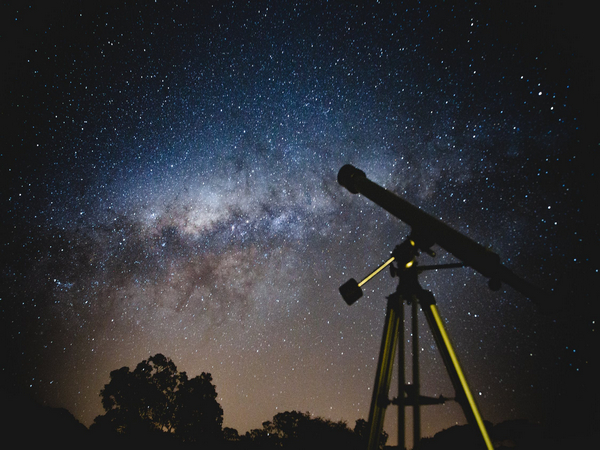
Representative Image

Los Angeles [US], February 25 (ANI): Scientists are interested in an item that is close to the supermassive black hole at the centre of the Milky Way galaxy because it has undergone a rapid and dramatic evolution. According to a recent study, the object known as X7 might be a cloud of gas and dust that resulted from the collision of two stars. It will eventually be dragged towards the black hole, where it will eventually fall apart, according to the experts.
For two decades, scientists have observed an elongated object named X7 near the supermassive black hole at the centre of the Milky Way and wondered what it was. Was it pulled off a larger structure nearby? Was its unusual form the result of stellar winds or was it shaped by jets of particles from the black hole?
Now, having examined the evolution of X7 using 20 years of data gathered by the Galactic Center Orbit Initiative, astronomers from the UCLA Galactic Center Group and the Keck Observatory propose that it could be a cloud of dust and gas that was ejected during the collision of two stars.
Over time, they report, X7 has stretched, and it is being pulled apart as the black hole drags it closer, exerting its tidal force upon the cloud. They expect that within the next few decades, X7 will disintegrate and the gas and dust of which it is composed will eventually be drawn toward the black hole, which is called Sagittarius A*, or Sgr A*.
The study is published in The Astrophysical Journal.
"No other object in this region has shown such an extreme evolution," said Anna Ciurlo, a UCLA assistant researcher and the paper's lead author. "It started off comet-shaped and people thought maybe it got that shape from stellar winds or jets of particles from the black hole. But as we followed it for 20 years we saw it becoming more elongated. Something must have put this cloud on its particular path with its particular orientation."
X7 has a mass of about 50 Earth and is on an orbital path around Sgr A* that would take 170 years to complete.
But that might never happen. Based on its trajectory, the team estimates that X7 will make its closest approach to Sgr A* around the year 2036, and then likely spiral toward Sgr A* and disappear.
"We anticipate the strong tidal forces exerted by the galactic black hole will ultimately tear X7 apart before it completes even one orbit," said co-author Mark Morris, UCLA professor of physics and astronomy.
Tidal forces are the gravitational pull that causes an object approaching a black hole to stretch; the side of the object closest to the black hole is pulled much more strongly than the opposite end.
X7 shows some of the same properties as the other strange dusty objects orbiting Sgr A*. Those so-called G objects look like gas but behave like stars. But X7's shape and velocity have changed more dramatically than G objects' have. As it accelerates toward the black hole, X7 is moving rapidly, clocking in at speeds of up to around 700 miles per second.
"It's exciting to see significant changes of X7's shape and dynamics in such great detail over a relatively short time scale as the gravitational forces of the supermassive black hole at the centre of the Milky Way influence this object," Randy Campbell, a co-author of the paper and the science operations lead at the Keck Observatory, said in a statement.
Although X7's origin is still the subject of debate, the finding suggests that it arose after two stars collided.
"One possibility is that X7's gas and dust were ejected at the moment when two stars merged," Ciurlo said. "In this process, the merged star is hidden inside a shell of dust and gas, which might fit the description of the G objects. And the ejected gas perhaps produced X7-like objects."
The merger of two stars is very common, especially when they are near black holes, Ciurlo said.
"This is a very messy process: The stars circle each other, get closer, merge, and the new star is hidden within a cloud of dust and gas," she said. "X7 could be the dust and gas ejected from a merged star that's still out there somewhere."
The findings are the first estimate of X7's mildly elliptical orbit and the most robust analysis to date of the remarkable changes to its appearance, shape, and behaviour. The research team will continue to use the Keck Observatory to monitor X7's dramatic changes as the power of the black hole's gravity yanks it apart.
"It's a privilege to be able to study the extreme environment at the centre of our galaxy," Campbell said in the statement. "This study can only be done using Keck's superb capabilities, and performed at the very special and revered Maunakea, with honour and respect to the Mauna." (ANI)


Get the App

What to Read Next

Science

New method guides magnetism without magnets

New method guides magnetism without magnets

Researchers at Paul Scherrer Institute PSI have demonstrated an innovative method to control magnetism in materials using an energy-efficient electric field.

Read More
Science

New insights into how cancer evades the immune system: Study

New insights into how cancer evades the immune system: Study

Immunotherapy research primarily focuses on better recognition of cancer cells by the body's own immune system. Researchers at Amsterdam UMC and Moffitt Cancer Center have taken a different approach.

Read More
Science

Scientists use AI to better understand nanoparticles: Study

Scientists use AI to better understand nanoparticles: Study

A group of scientists has created a way to illuminate the dynamic behavior of nanoparticles, which are essential components in the production of pharmaceuticals, electronics, and industrial and energy-conversion materials.

Read More
Science

New device could allow you to taste cake in virtual reality

New device could allow you to taste cake in virtual reality

The 'e-Taste' interface employs sensors and wireless chemical dispensers to enable remote taste perception, often known as gestation. Field testing done by researchers at The Ohio State University confirmed the device's ability to digitally simulate a range of taste intensities, while still offering variety and safety for the user.

Read More
Science

Strand Life Sciences launches portal for rare disease diagnosis

Strand Life Sciences launches portal for rare disease diagnosis

Marking Rare Disease Day, Strand Life Sciences, a subsidiary of Reliance Industries and a leading genomics research company, has launched the StrandOmics Portal, an innovative digital platform designed to assist doctors in diagnosing rare diseases more efficiently.

Read More
Science

Study reveals impact of animals as architects of Earth

Study reveals impact of animals as architects of Earth

A new study led by Professor Gemma Harvey from Queen Mary University of London has revealed how hundreds of species shape the landscapes we depend on, from termite mounds visible from space to beavers creating wetlands and hippos carving drainage systems.

Read More
Science

Opposing arrows of time emerge from certain quantum systems

Opposing arrows of time emerge from certain quantum systems

Researchers at the University of Surrey made a thought-provoking discovery. A new study reveals that opposing arrows of time can theoretically emerge from certain quantum systems.

Read More
Science

COVID-19 severity may be predicted by White Blood Cell Count

COVID-19 severity may be predicted by White Blood Cell Count

A COVID-19 diagnosis is no longer as frightening as it used to be, thanks to developments in treatment choices. However, a new study reveals that leukocyte (white blood cell) count may now be used to identify who is more likely to develop more significant disease symptoms.

Read More
Science

Seals can essentially act as 'smart sensors': Study

Seals can essentially act as 'smart sensors': Study

A new study by marine biologists reports that seals can essentially act as 'smart sensors' for monitoring fish populations in the ocean's eerily dim 'twilight zone.'

Read More
Science

'Creation of black holes without singularities through gravity'

'Creation of black holes without singularities through gravity'

Traditional black holes, as predicted by Albert Einstein's theory of General Relativity, contain what are known as singularities, i.e. points where the laws of physics break down. Identifying how singularities are resolved in the context of quantum gravity is one of the fundamental problems in theoretical physics. Now, a team of experts has described the creation of regular black holes from gravitational effects without the need for the existence of exotic matter required by some previous models.

Read More
Home About Us Our Products Advertise Contact Us Terms & Condition Privacy Policy

Copyright © aninews.in | All Rights Reserved.


