

ADD ANI AS A TRUSTED SOURCE
googleads
ANI Logo
Menu
Science

More harm than good caused by climate-friendly foam building insulation

Washington [US], February 23 (ANI): Researchers during a recent study discovered that in "eco-friendly" foam plastic building insulation, the use of the polymeric flame retardant PolyFR may be harmful to human health and the environment.

ANI Feb 23, 2021 16:12 IST googleads

Representative Image

Washington [US], February 23 (ANI): Researchers during a recent study discovered that in "eco-friendly" foam plastic building insulation, the use of the polymeric flame retardant PolyFR may be harmful to human health and the environment.
According to a new study published in 'Environmental Science and Technology', the authors' analysis identifies several points during the lifecycle of foam insulation that may expose workers, communities, and ecosystems to PolyFR and its potentially toxic breakdown products.
With the climate crisis fuelling demand for energy-efficient insulation, the production of PolyFR is increasing rapidly. That's because this flame retardant is added to all foam plastic building insulation in North America to comply with flammability codes, replacing the flame retardant hexabromocyclododecane that has been globally phased out due to its toxicity and persistence. PolyFR is commonly assumed to be safe. However, the authors question that assumption.
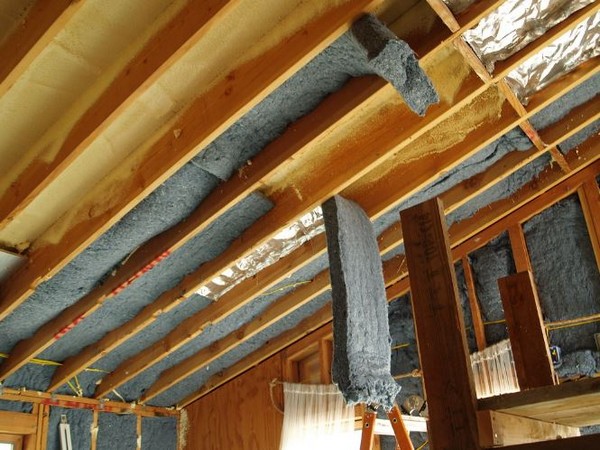
The presumed safety of PolyFR hinges on the claim that as a large molecule called a polymer, it has few opportunities for release from foam insulation. But the authors' analysis shows that in fact, PolyFR in building insulation has significant opportunities for release into the environment during manufacturing, installation, and disposal of foam insulation. Once released, the PolyFR may break down into harmful chemicals that can end up in people and ecosystems.
"Since so much PolyFR is being used and so little is known about its release into the environment, we need to have realistic assessments of the potential for PolyFR across its life cycle to harm human and environmental health," said Miriam Diamond, Professor at the University of Toronto and corresponding author of the study.
PolyFR is a polymer made from butadiene and styrene, which are both carcinogens. Bromine is added making it a brominated flame retardant--such flame retardants studied in the past were found to be toxic and many have been fazed out of use.
A greater understanding of the potential for health harm associated with the increasing production of PolyFR, as well as its eventual breakdown and disposal, is needed to protect workers, fenceline communities near waste disposal sites, and others exposed throughout this flame retardant's lifecycle.
Importantly, alternative insulation materials already exist which do not require the use of potentially hazardous flame retardants. Inherently flame-resistant mineral fibres, such as glass wool or stone wool, can be used instead. Also, the fire safety benefit of adding flame retardants should be established before such chemicals are used.
"Making buildings more energy-efficient is a key part of tackling the climate crisis," said co-author Arlene Blum, Executive Director of the Green Science Policy Institute. "But we need to be careful not to create new health and environmental problems along the way. A 'green building' with potentially hazardous insulation isn't a green building at all." (ANI)


Get the App

What to Read Next

Science

Amphibians bounce-back from Earth’s greatest mass extinction

Amphibians bounce-back from Earth’s greatest mass extinction

Researchers at the University of Bristol discovered that ancient frog ancestors survived the biggest mass extinction of species by eating on freshwater prey that evaded terrestrial predators.

Read More
Science

Scientists use AI to better understand nanoparticles: Study

Scientists use AI to better understand nanoparticles: Study

A group of scientists has created a way to illuminate the dynamic behavior of nanoparticles, which are essential components in the production of pharmaceuticals, electronics, and industrial and energy-conversion materials.

Read More
Science

New technology enhances gravitational-wave detection: Study

New technology enhances gravitational-wave detection: Study

A team of physicists led by Jonathan Richardson of the University of California, Riverside, demonstrated how new optical technology can extend the detection range of gravitational-wave observatories such as the Laser Interferometer Gravitational-Wave Observatory, or LIGO, and pave the way for future observatories.

Read More
Science

Discovering the genetics of climate adaptation 

Discovering the genetics of climate adaptation 

As climate change accelerates, plants are under increasing pressure to adapt to changing habitats and environmental conditions.

Read More
Science

Weather change linked to heightened risk of Salmonella outbreaks

Weather change linked to heightened risk of Salmonella outbreaks

According to new research from the University of Surrey, climate change has an impact on Salmonella spread. This study builds on prior work by the researchers, which discovered that weather change is contributing to the spread of deadly diarrhoeal illnesses.

Read More
Science

Astronomers find the smallest main-belt asteroids ever detected:

Astronomers find the smallest main-belt asteroids ever detected:

The majority of known asteroids orbit inside the main asteroid belt, which is positioned between Mars and Jupiter at an average distance of around 250 million km from Earth. Since the discovery of the first asteroid in 1801, about 750.000 asteroids have been identified, primarily in the last decade thanks to several optical surveys that examine the sky on clear nights.

Read More
Science

Study finds connection between quantum theory, information theory

Study finds connection between quantum theory, information theory

"Our results have no clear or direct application right now. It's basic research that lays the foundation for future technologies in quantum information and quantum computers. There's enormous potential for complete discoveries in many different research fields," said Guilherme B Xavier, a researcher in quantum communication at Linkoping University, Sweden.

Read More
Science

When devices can read human emotions without a camera: Study

When devices can read human emotions without a camera: Study

Tokyo Metropolitan University researchers employed long-term skin conductance measurements to distinguish between emotions. Volunteers were given videos representing frightening scenarios, family bonding, and humour, while their skin conductance was measured.

Read More
Science

'Nuroscience study results can be better predicted by AI'

'Nuroscience study results can be better predicted by AI'

Large language models, a type of AI that analyses text, can anticipate the results of proposed neuroscience studies more correctly than human experts, according to a new study led by UCL (University College London) researchers.

Read More
Science

Thermal imaging may help fruits, veggies stay fresher longer: Study

Thermal imaging may help fruits, veggies stay fresher longer: Study

Before your favourite produce arrives at the grocery store, it must be carefully harvested and stored for extended periods of time. A recent University of Georgia assessment argues that new temperature sensing devices could make that procedure considerably easier, as agricultural issues are exacerbated by changing climates.

Read More
Home About Us Our Products Advertise Contact Us Terms & Condition Privacy Policy

Copyright © aninews.in | All Rights Reserved.


