

ADD ANI AS A TRUSTED SOURCE
googleads
ANI Logo
Menu
Science

Monkeys make a stink in response to human noise

According to new research, monkeys increase their usage of scent markings in order to compensate for human noise pollution. Pied tamarins (Saguinus bicolor) communicate through both vocal calls and scent markings, and the current study, published in the journal Ethology Ecology & Evolution, is the first to look into how monkeys' communication tactics shift in response to noise pollution.

ANI Sep 21, 2023 15:20 IST googleads

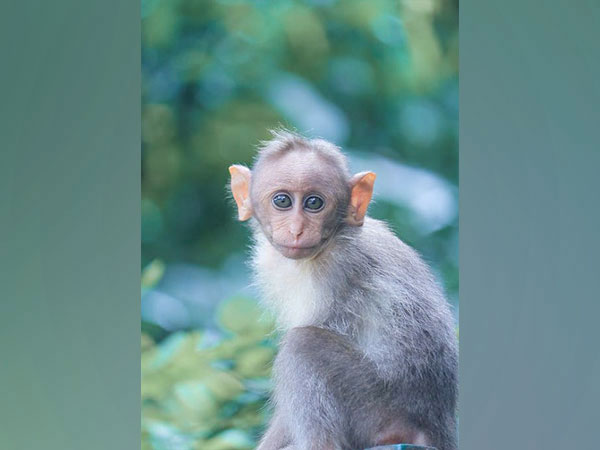
Representative image (Image source: Pexels)

London [UK], September 21 (ANI): According to new research, monkeys increase their usage of scent markings in order to compensate for human noise pollution
Pied tamarins (Saguinus bicolor) communicate through both vocal calls and scent markings, and the current study, published in the journal Ethology Ecology & Evolution, is the first to look into how monkeys' communication tactics shift in response to noise pollution.
The pied tamarin has an extremely narrow geographic range in central Brazil, much of which now lies within the city of Manaus. The city’s expansion has restricted individual groups to small patches of forest, surrounded by noisy urban environments, and the species is considered Critically Endangered by the IUCN.
The new study, led by academics from Universidade Federal do Amazonas and Anglia Ruskin University (ARU), investigated the behaviour of nine separate groups of wild pied tamarins.
The researchers used radio tracking to follow each group for 10 days. Within each area visited, the most common source of anthropogenic noise was road traffic, although there was also noise pollution caused by aircraft, park visitors, and even military activity.
Being able to communicate with other groups is vital for the health and ultimately the survival of a species. Pied tamarins use several types of scent marking which have different functions, including passing on reproductive and territorial information.
During the new study, the researchers found that the frequency of scent marking directly increased in line with noise decibel levels. The results suggest that scent marking is being used more frequently as the pied tamarins’ vocal communication becomes less effective due to the impacts of human noise.
Lead author Tainara Sobroza, of Universidade Federal do Amazonas, said, “Many species depend on acoustic signals to communicate with other members of the same species about essential information such as foraging, mate attraction, predators, and territorial defence.
“Pied tamarins produce long calls which are used for group cohesion, intergroup communication and to mark their territory. Long calls are especially important in fragmented forests which is the case in Manaus, as the urban landscape encroaches further into the pied tamarins’ territory. Our research indicates that communication is being impacted by urbanisation as the occurrence of scent marking is increasing directly in response to increased noise levels.”
Co-author Dr Jacob Dunn, Associate Professor in Evolutionary Biology at Anglia Ruskin University (ARU), said, “Humans have contributed many additional stimuli to the soundscapes that animals have evolved to deal with, and anthropogenic noise is increasingly drowning out natural sounds.
“The increased use of scent marking by pied tamarins is likely to be a flexible response towards this environmental change. This is an interesting result from a conservation perspective as it shows pied tamarins are adapting their behaviour in response to city noise.
“An advantage of scent marking over vocal communication is that it allows information to be passed on over a number of days. However, unlike vocal calls, scent markings are not an effective way of communicating over long distances. As the pied tamarins’ range is becoming more fragmented and groups are becoming more isolated, this could potentially have a detrimental impact on a species which is already critically endangered.” (ANI)


Get the App

What to Read Next

Science

Plastic pollution, seawater flooding effect on coastal plants

Plastic pollution, seawater flooding effect on coastal plants

Two of the planet's most urgent environmental stressors have the potential to affect the development and reproductive production of plants found along the world's coasts, according to new research.

Read More
Science

Study tracks air pollution, reveals demographic disparities

Study tracks air pollution, reveals demographic disparities

There are considerable variances in how much people are exposed to air pollution, according to a new study co-authored by MIT researchers that considers everyday mobility.

Read More
Science

Climate policies and children's health

Climate policies and  children's health

A recent study suggests that efforts to limit carbon dioxide (CO2) emissions from motor vehicles, along with investments in electric vehicles and public transit, would reduce air pollution and have a significant impact on children's health. They'd also save money.

Read More
Science

Air pollution related to higher hospitalisations

Air pollution related to higher hospitalisations

Short and long-term exposure to fine particulate matter (PM2.5) air pollution is linked to an increased risk of hospitalisation for serious heart and lung problems, according to two major US studies published in The British Medical Journal.

Read More
Science

Study reveals air pollution hides increases in rainfall

Study reveals air pollution hides increases in rainfall

We know that greenhouse gas emissions, such as carbon dioxide, should increase rainfall. The emissions warm the atmosphere, resulting in a one-two punch: warmer oceans make it easier for water to evaporate, and warmer air can store more water vapour, allowing more moisture to fall as rain. However, for long of the twentieth century, the data did not clearly reveal a rise in precipitation.

Read More
Science

AI predicts influence of microplastics on soil: Study

AI predicts influence of microplastics on soil: Study

Plastic waste and its accumulation in nature have recently become a major environmental concern. While plastic pollution in the oceans is certainly a concern, the presence of plastics in soils around the world is also known to pose major environmental and health issues.

Read More
Science

AI anticipates impact of microplastics on soil properties

AI anticipates impact of microplastics on soil properties

To address this gap in soil MP research, a group of scientists led by Prof. Yong Sik Ok employed machine learning (ML) algorithms to assess and forecast the influence of MPs on soil parameters.

Read More
Science

'Improved air quality can enhance carbon sequestration by plants'

'Improved air quality can enhance carbon sequestration by plants'

Air quality would improve if pollution from aerosol particles were reduced. It may also improve plants' ability to extract carbon dioxide from the atmosphere and alleviate climate change by increasing the quantity of sunlight available to them

Read More
Science

Study reveals that air purifiers don't stop you from getting sick

Study reveals that air purifiers don't stop you from getting sick

Air filtration systems do not lower the risk of catching viral infections, per recent research from the University of East Anglia.

Read More
Science

Scientists discover toxic chemicals in recycled plastics

Scientists discover toxic chemicals in recycled plastics

"Plastic recycling has been touted as a solution to the plastics pollution crisis, but toxic chemicals in plastics complicate their reuse and disposal and hinder recycling," says Professor Bethanie Carney Almroth, of the University of Gothenburg. The results are published in a study led by scientists at the University of Gothenburg.

Read More
Home About Us Our Products Advertise Contact Us Terms & Condition Privacy Policy

Copyright © aninews.in | All Rights Reserved.


