

ADD ANI AS A TRUSTED SOURCE
googleads
ANI Logo
Menu
Science

Modern microbiome rising due to professional 'guilds' of bacteria: Research

Washington [US], May 27 (ANI): According to new research from University of British Columbia (UBC) biologists, even the smallest marine invertebrates are home to distinct and diverse microbial communities or microbiomes.

ANI May 27, 2022 23:02 IST googleads

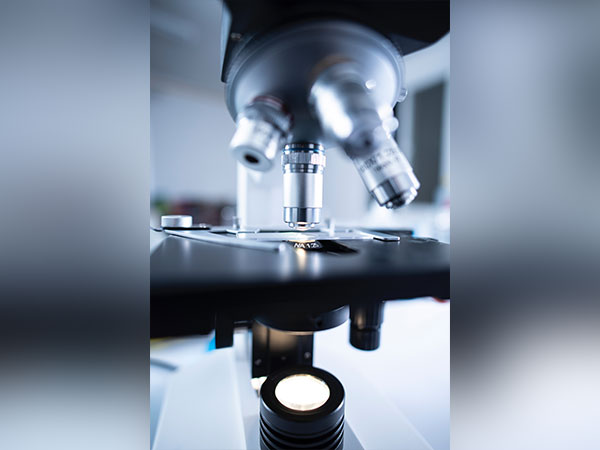
Representative image

Washington [US], May 27 (ANI): According to new research from University of British Columbia (UBC) biologists, even the smallest marine invertebrates are home to distinct and diverse microbial communities or microbiomes.
The study underscores that a vast diversity of animals have microbiomes, just as humans do. But more surprisingly, there's little correlation between how closely related most animals are and how similar their microbiomes are--something widely assumed to be true based on the study of humans, larger mammals, and insects.
"This says a lot about how microbiomes originated and how they evolve today," says UBC evolutionary microbiologist Dr. Patrick Keeling, senior author of the paper published today in Nature Microbiology.
"People might intuitively think the purpose of a microbiome is to be of benefit to the host animal, and that they co-evolve together. But the bacteria could care less about helping the animal host--they have their own agenda."
"Most animals harbour a community of bacteria that are simply good at living in animals. From this 'professional guild' of animal specialists likely evolved the more elaborate, co-evolving microbiomes that are well studied in humans and insects. But as we looked at a broader set of smaller marine animals, it became clear that the microbiomes of bigger creatures are likely exceptions, not the rule."
The team found the microbiomes of the tiny creatures differ from the microbes living in the surrounding environment, and often differed from the microbiome of even closely related invertebrates.
Digging into the microbiomes of marine invertebrates
In what might be the broadest study of its kind, Dr Keeling and colleagues sequenced the microbiomes from 1,037 animals from 21 phyla - covering most animals. Some of the lineages of animals sampled more broadly included Annelida (ringed worms), Arthropoda (the largest phylum in the animal kingdom) and Nematoda (a phylum of unsegmented, cylindrical worms). The researchers also collected samples from the surrounding habitats in British Columbia, Canada and Curacao, a Dutch Caribbean island.
"Studying such a broad range of animals was crucial-in a smaller study a number of prevalent bacteria may have been mistaken for host-specific symbionts," says Dr Corey Holt, a postdoctoral fellow at UBC and one of the study's first authors.
"We found most bacteria were only present in some individuals of a species, and most of these were also present in other host species in the same environment."
Exploring evolutionary time scales
"This survey was designed to look at an incredibly broad diversity of animals," says Dr Keeling. "The next step is to take a few of the more interesting groups and dig deeper to see how microbiomes evolved within that group to clarify the time scales at which different evolutionary processes are operating."
The international team included researchers from UBC, the Hakai Institute, the University of Copenhagen, Universidad Autonoma de Madrid, the Polish Academy of Sciences, the Swedish Museum of Natural History, and the University of Hamburg. (ANI)


Get the App

What to Read Next

Science

Seals can essentially act as 'smart sensors': Study

Seals can essentially act as 'smart sensors': Study

A new study by marine biologists reports that seals can essentially act as 'smart sensors' for monitoring fish populations in the ocean's eerily dim 'twilight zone.'

Read More
Science

Bacterial vaccine demonstrates potential as cancer treatment

Bacterial vaccine demonstrates potential as cancer treatment

Columbia researchers developed probiotic bacteria that train the immune system to eliminate cancer cells, paving the way for a new class of cancer vaccinations that take advantage of bacteria's innate tumour-targeting abilities. These microbial cancer vaccines can be tailored to each person's specific original tumour and metastases, perhaps preventing future recurrences.

Read More
Science

Study finds HPV-based screening help eliminate cervical cancer

Study finds HPV-based screening help eliminate cervical cancer

Using human papillomavirus (HPV)-based screening could eliminate cervical cancer in British Columbia by 2040, based on a modelling study.

Read More
Science

Omega-3 therapy prevents brain damage in newborn rodents

Omega-3 therapy prevents brain damage in newborn rodents

A study conducted by researchers at Columbia University Vagelos College of Physicians and Surgeons discovered that an injectable emulsion containing two omega-3 fatty acids contained in fish oil significantly reduced brain damage in newborn rodents after a disturbance in the flow of oxygen to the brain near delivery.

Read More
Science

Air pollution related to higher hospitalisations

Air pollution related to higher hospitalisations

Short and long-term exposure to fine particulate matter (PM2.5) air pollution is linked to an increased risk of hospitalisation for serious heart and lung problems, according to two major US studies published in The British Medical Journal.

Read More
Science

Do you know rare fat molecule helps drive cell death? Study finds

Do you know rare fat molecule helps drive cell death? Study finds

Researchers discovered that a rare type of lipid is essential in ferroptosis, a type of cell death pioneered by Columbia researcher Brent Stockwell.

Read More
Science

Rare fat molecule helps drive cell death: Study

Rare fat molecule helps drive cell death: Study

Researchers revealed that a rare sort of lipid plays a vital role in ferroptosis, a type of cell death described by Columbia professor Brent Stockwell.

Read More
Science

Language, culture can alter how brain processes emotional faces

Language, culture can alter how brain processes emotional faces

Understanding body language is an important aspect of communication. Humans are frequently considered to be able to perceive other people's emotions innately, but there is rising evidence that this ability is impacted by people's culturally shared knowledge of emotions.

Read More
Science

Researchers find four species of apes playfully tease each other

Researchers find four species of apes playfully tease each other

Cognitive biologists and primatologists have documented playful teasing in four species of great apes

Read More
Science

Study finds temperature influence microbial competition in rivers

Study finds temperature influence microbial competition in rivers

The finding suggests that rivers may offer a kind of defence against the spread of ARGs in wastewater. It was also contrary to what the researchers expected.

Read More
Home About Us Our Products Advertise Contact Us Terms & Condition Privacy Policy

Copyright © aninews.in | All Rights Reserved.
