

ADD ANI AS A TRUSTED SOURCE
googleads
ANI Logo
Menu
Science

Medicaid expansion not enough for diabetes patients: Study

Boston [US], November 29 (ANI): A study led by researchers from the Boston University School of Public Health (BUSPH) claims that Medicaid expansion is not enough to improve the health care for patients with diabetes.

ANI Nov 29, 2020 16:58 IST googleads

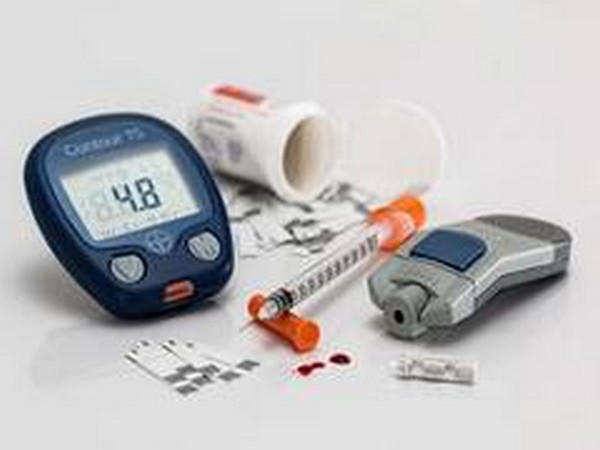
Representative Image

Boston [US], November 29 (ANI): A study led by researchers from the Boston University School of Public Health (BUSPH) claims that Medicaid expansion is not enough to improve the health care for patients with diabetes.
According to a study published in the American Journal of Preventive Medicine, the Medicaid expansion which has insured improved healthcare facilities to millions of patients with different diseases and low-income in the United States, through the Affordable Care Act has not been enough to improve outcomes for patients with diabetes.
The researchers have observed an increase in insurance coverage, the ability to see a physician, and foot examinations among patients with diabetes in states that expanded Medicaid. However, the study did not find significant changes in follow-up examinations, care, or treatment for diabetes, pointing to the need for other structural changes.
Lead author of the study Dr Lily Yan, who was a master of science in population health student at BUSPH and now a global health research fellow at Weill Cornell Medicine said, "There are likely many steps between having health insurance and successfully getting treatment for diabetes including providers needing to recognize the importance of screening and patients needing to implement rigorous lifestyle changes."
"While having health insurance through a program like Medicaid expansion may be necessary for better health, it may not be sufficient alone," she added.
The researchers used data from the Behavioral Risk Factor Surveillance System from 2008 through 2018 to compare 24 states that expanded Medicaid as of 2018 and 16 states that had not. The study included all non-pregnant, Medicaid-eligible residents of these states with self-reported diabetes.
The study examined diabetes outcomes using the 'continuum of care' model of successful diabetes management in which the screening ideally lead to a diagnosis, then linkage to care for the disease, then treatment, and ultimately control of the disease.
The researchers found improvements at the beginning of the continuum in the initial years following a state's Medicaid expansion. Health insurance coverage rates for people with diabetes increased by 7.2 percentage points, and as a result, the ability to afford a physician increased by 5.5 percentage points. This in turn led to a 5.3-percentage point increase in diabetic foot examinations by healthcare providers.
A few years after expansion, the researchers also found a 7.2-percentage point increase in self-administered foot examinations.
The researchers also found an increase in linkage to care among Hispanic patients. However, the researchers found no statistically significant improvement overall in linkage to care, lifestyle changes and self-monitoring of conditions, or treatment.
Senior author of the study Dr Kiersten Strombotne, assistant professor of health law, policy & management at BUSPH told,"Medicaid coverage on its own is not enough to manage diabetes. Our policymakers should think about insurance coverage and beyond: supporting behavioural interventions, bolstering healthcare workforces, and addressing the underlying socioeconomic determinants of health." (ANI)


Get the App

What to Read Next

Science

New method guides magnetism without magnets

New method guides magnetism without magnets

Researchers at Paul Scherrer Institute PSI have demonstrated an innovative method to control magnetism in materials using an energy-efficient electric field.

Read More
Science

Amphibians bounce-back from Earth’s greatest mass extinction

Amphibians bounce-back from Earth’s greatest mass extinction

Researchers at the University of Bristol discovered that ancient frog ancestors survived the biggest mass extinction of species by eating on freshwater prey that evaded terrestrial predators.

Read More
Science

New insights into how cancer evades the immune system: Study

New insights into how cancer evades the immune system: Study

Immunotherapy research primarily focuses on better recognition of cancer cells by the body's own immune system. Researchers at Amsterdam UMC and Moffitt Cancer Center have taken a different approach.

Read More
Science

Scientists use AI to better understand nanoparticles: Study

Scientists use AI to better understand nanoparticles: Study

A group of scientists has created a way to illuminate the dynamic behavior of nanoparticles, which are essential components in the production of pharmaceuticals, electronics, and industrial and energy-conversion materials.

Read More
Science

New device could allow you to taste cake in virtual reality

New device could allow you to taste cake in virtual reality

The 'e-Taste' interface employs sensors and wireless chemical dispensers to enable remote taste perception, often known as gestation. Field testing done by researchers at The Ohio State University confirmed the device's ability to digitally simulate a range of taste intensities, while still offering variety and safety for the user.

Read More
Science

Study reveals impact of animals as architects of Earth

Study reveals impact of animals as architects of Earth

A new study led by Professor Gemma Harvey from Queen Mary University of London has revealed how hundreds of species shape the landscapes we depend on, from termite mounds visible from space to beavers creating wetlands and hippos carving drainage systems.

Read More
Science

Opposing arrows of time emerge from certain quantum systems

Opposing arrows of time emerge from certain quantum systems

Researchers at the University of Surrey made a thought-provoking discovery. A new study reveals that opposing arrows of time can theoretically emerge from certain quantum systems.

Read More
Science

COVID-19 severity may be predicted by White Blood Cell Count

COVID-19 severity may be predicted by White Blood Cell Count

A COVID-19 diagnosis is no longer as frightening as it used to be, thanks to developments in treatment choices. However, a new study reveals that leukocyte (white blood cell) count may now be used to identify who is more likely to develop more significant disease symptoms.

Read More
Science

Seals can essentially act as 'smart sensors': Study

Seals can essentially act as 'smart sensors': Study

A new study by marine biologists reports that seals can essentially act as 'smart sensors' for monitoring fish populations in the ocean's eerily dim 'twilight zone.'

Read More
Science

New technology enhances gravitational-wave detection: Study

New technology enhances gravitational-wave detection: Study

A team of physicists led by Jonathan Richardson of the University of California, Riverside, demonstrated how new optical technology can extend the detection range of gravitational-wave observatories such as the Laser Interferometer Gravitational-Wave Observatory, or LIGO, and pave the way for future observatories.

Read More
Home About Us Our Products Advertise Contact Us Terms & Condition Privacy Policy

Copyright © aninews.in | All Rights Reserved.


