

ADD ANI AS A TRUSTED SOURCE
googleads
ANI Logo
Menu
Science

Mass die-off of puffin birds linked to climate change

Washington D.C [U.S.A], June 2 (ANI): Birds like puffins are dying in alarming numbers owing to climate change, suggests researchers.

ANI Jun 02, 2019 16:32 IST googleads

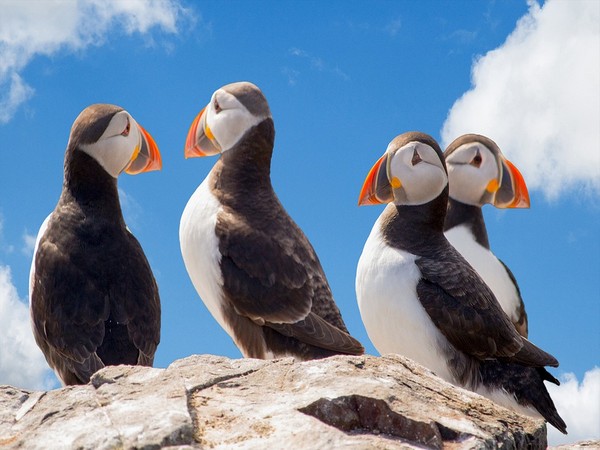
Representative image

Washington D.C [U.S.A], June 2 (ANI): Birds like puffins are dying in alarming numbers owing to climate change, suggests researchers.
Tufted puffins breeding in the Bering Sea, off the coast of Alaska, feed on fish and marine invertebrates, which in turn feed on ocean plankton. Elevation of sea temperatures has led to major changes in ocean ecosystems and has been linked to previous mass mortality events in marine birds.
Beginning in 2014, increased atmospheric temperatures and decreased winter sea ice led to declines in energy-rich prey species in the Bering Sea, as well as a shift of some species more northward, diminishing puffin food resources in the southern portion of the sea, according to the study published in the Journal of PLOS ONE.
In the current study, researchers documented a four-month-long die-off of puffins and a second species, the Crested auklet, on St. Paul Island, one of the Pribilof Islands in the southern Bering Sea, about 300 miles east of the mainland.
Beginning in October 2016, tribal and community members recovered over 350 severely emaciated carcasses, mostly adults in the process of molting, a known nutritional stressor during the avian life cycle.
A reduction in food resources before entering molt may have prevented many birds from surviving, the authors suggested.
Using wind data to model beachings, they calculated between 3,150 and 8,500 birds could have died in the event. Tufted puffins comprised 87% of this total, or 40-100% of the Pribilof Islands' population, making it highly likely that affected birds originated from colonies throughout the Bering Sea. In comparison, puffins have made up less than 1% of recovered carcasses in the region in prior years.
The authors suggested that climate-driven shifts in prey abundance and/or distribution, combined with the onset of molt, may have caused this puffin die-off, and note that further climate variability in this region is probable. Further research and observation will show whether seabirds can remain resilient in an increasingly variable environment.
Lauren Divine, one of the researchers added, "This paper is a successful application of citizen science in the real world. Island residents collected high-quality data in real time and provided COASST (Coastal Observation and Seabird Survey Team) with a detailed context for their analysis. Without the positive and mutually beneficial relationship built over years of collaboration, this massive die-off of Tufted Puffins would have gone unreported in the scientific community." (ANI)

Get the App

What to Read Next

Science

Amphibians bounce-back from Earth’s greatest mass extinction

Amphibians bounce-back from Earth’s greatest mass extinction

Researchers at the University of Bristol discovered that ancient frog ancestors survived the biggest mass extinction of species by eating on freshwater prey that evaded terrestrial predators.

Read More
Science

Weight loss could reduce chances of severe infections in people

Weight loss could reduce chances of severe infections in people

According to new research, weight loss therapies may lower the risk of severe flu cases and other infections in patients with diabetes.

Read More
Science

Fossil study finds how sea level changes shaped early life

Fossil study finds how sea level changes shaped early life

A newly developed timeline of early animal fossils suggests a relationship between sea level fluctuations, variations in marine oxygen, and the appearance of the earliest ancestors of present-day animals.

Read More
Science

Ultra-processed foods associated with increased risk of death

Ultra-processed foods associated with increased risk of death

According to a recent study, older persons who reported consuming more ultra-processed foods were nearly 10 per cent more likely to die after a median follow-up of 23 years than older adults who reported consuming less processed food.

Read More
Science

Key protein helps prevent excessive bone loss in osteoporosis

Key protein helps prevent excessive bone loss in osteoporosis

Osteoporosis, a disorder characterised by porous and weak bones, is a major hazard to skeletal health. As the foundation of the human body, bones provide critical structural support. When bone mass decreases, it not only weakens this support but also lowers general function, resulting in a lower quality of life.

Read More
Science

Study finds how obesity affects fecal incontinence

Study finds how obesity affects fecal incontinence

For millions of adults in the United States, involuntary loss of bowel control, or fecal incontinence (FI), has a major negative influence on their quality of life and mental health. Although it is believed that obesity has an impact on bowel function, it is still unknown how body mass index (BMI), the usual measure of obesity, and FI are related.

Read More
Science

Do you know obesity is a risk factor for stillbirth? Study finds

Do you know obesity is a risk factor for stillbirth? Study finds

Obesity increases the risk of stillbirth as the pregnancy progresses to full term, according to a study.

Read More
Science

Researchers find how obesity is a risk factor for stillbirth

Researchers find how obesity is a risk factor for stillbirth

According to a study, obesity raises the risk of stillbirth as a pregnancy approaches full term.

Read More
Science

Pregnancy complications may affect the child's health in long run

Pregnancy complications may affect the child's health in long run

Researchers examined whether there was a connection between hypertensive disorders of pregnancy and gestational diabetes and a child's cardiovascular health.

Read More
Science

Rising sea levels may lead to more methane emitted from wetlands

Rising sea levels may lead to more methane emitted from wetlands

Global warming is causing sea levels to rise, which is altering ecosystems. Scientists assumed that the tidal wetlands present in estuaries could create less methane, a strong greenhouse gas because the increased influx of seawater renders these habitats less hospitable to methane-producing microorganisms.

Read More
Home About Us Our Products Advertise Contact Us Terms & Condition Privacy Policy

Copyright © aninews.in | All Rights Reserved.


