

ADD ANI AS A TRUSTED SOURCE
googleads
Menu
Science

Many toxins used during manufacturing, transportation remain in your clothes, claim researchers

Washington D.C. [USA], Aug 30 (ANI): Thousands of chemicals are used in clothes during the process of manufacturing, packing and transporting and many of these remain present even in the clothes that are available for purchase, researchers have found.

ANI Aug 30, 2019 22:42 IST googleads

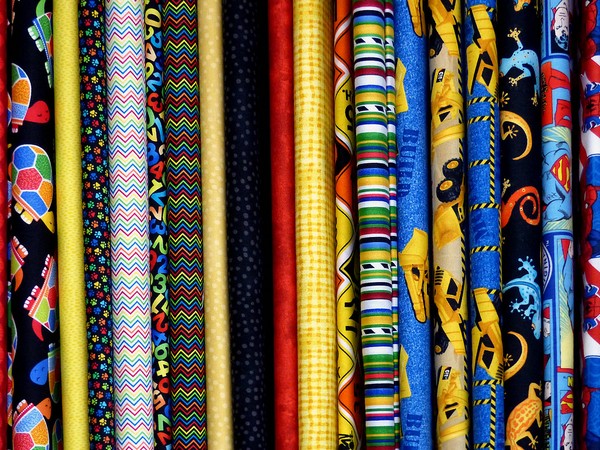
Representative image

Washington D.C. [USA], Aug 30 (ANI): Thousands of chemicals are used in clothes during the process of manufacturing, packing and transporting and many of these remain present even in the clothes that are available for purchase, researchers have found.
Several substances related to health risks were identified by the researchers who claimed that even usage of organic cotton was not a guarantee for non-toxic textiles.
In a new thesis, 60 garments from Swedish and international clothing chains have been tested. An initial analysis found thousands of chemicals in the clothes and around a hundred chemicals were preliminary identified.
Several of the substances were not on the producers' lists and are suspected to be by-products, residues or chemicals added during transport.
"Exposure to these chemicals increases the risk of allergic dermatitis, but more severe health effect for humans as well as the environment could possibly be related to these chemicals. Some of them are suspected or proved carcinogens and some have aquatic toxicity," said Giovanna Luongo, PhD in Analytical Chemistry at Stockholm University.
Depending on occurrence, quantity, toxicity and how easily they may penetrate the skin, four groups of substances were chosen for further analysis.
The highest concentrations of two of these, quinolines and aromatic amines, were found in polyester. Cotton contained high concentrations of benzothiazoles, even clothes made from organic cotton.
The researchers washed the clothes and then measured the levels of chemicals. Some of the substances were washed off, with a risk of ending up in aquatic environments.
Others remained to a high degree in the clothes, becoming a potential source of long-term dermal exposure. It is difficult to know if the levels of these harmful substances are hazardous, and what effects chemicals in our clothes can have in the long run.
"We have only scratched the surface, this is something that has to be dealt with. Clothes are worn day and night during our entire life. We must find out if textile chemicals go into our skin and what it means to our health. It is very difficult to assess and requires considerably more research," said Conny Ostman, Professor in Analytical Chemistry. (ANI)

Get the App

What to Read Next

Science

Amphibians bounce-back from Earth’s greatest mass extinction

Amphibians bounce-back from Earth’s greatest mass extinction

Researchers at the University of Bristol discovered that ancient frog ancestors survived the biggest mass extinction of species by eating on freshwater prey that evaded terrestrial predators.

Read More
Science

New insights into how cancer evades the immune system: Study

New insights into how cancer evades the immune system: Study

Immunotherapy research primarily focuses on better recognition of cancer cells by the body's own immune system. Researchers at Amsterdam UMC and Moffitt Cancer Center have taken a different approach.

Read More
Science

New device could allow you to taste cake in virtual reality

New device could allow you to taste cake in virtual reality

The 'e-Taste' interface employs sensors and wireless chemical dispensers to enable remote taste perception, often known as gestation. Field testing done by researchers at The Ohio State University confirmed the device's ability to digitally simulate a range of taste intensities, while still offering variety and safety for the user.

Read More
Science

Study reveals impact of animals as architects of Earth

Study reveals impact of animals as architects of Earth

A new study led by Professor Gemma Harvey from Queen Mary University of London has revealed how hundreds of species shape the landscapes we depend on, from termite mounds visible from space to beavers creating wetlands and hippos carving drainage systems.

Read More
Science

COVID-19 severity may be predicted by White Blood Cell Count

COVID-19 severity may be predicted by White Blood Cell Count

A COVID-19 diagnosis is no longer as frightening as it used to be, thanks to developments in treatment choices. However, a new study reveals that leukocyte (white blood cell) count may now be used to identify who is more likely to develop more significant disease symptoms.

Read More
Home About Us Our Products Advertise Contact Us Terms & Condition Privacy Policy

Copyright © aninews.in | All Rights Reserved.




