

ADD ANI AS A TRUSTED SOURCE
googleads
ANI Logo
Menu
Science

Mammoth DNA found in sediments likely came from long-dead animals: Research

Precisely when mammoths went extinct has fascinated paleontologists for generations, perhaps because their decline coincided with the arrival of people to North and South America.

ANI Dec 01, 2022 20:13 IST googleads

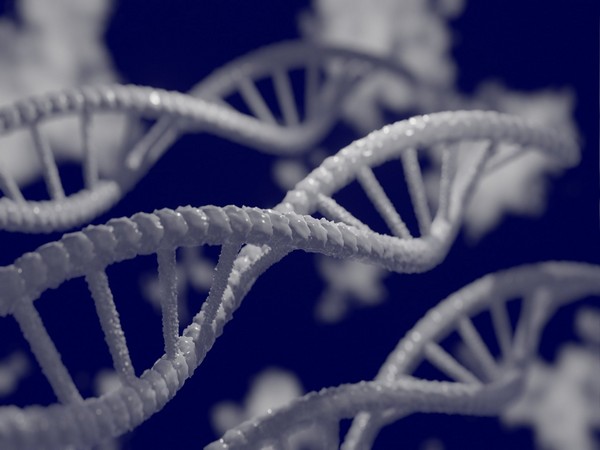
Representative Image

Washington [US], December 1 (ANI): Precisely when mammoths went extinct has fascinated paleontologists for generations, perhaps because their decline coincided with the arrival of people to North and South America.
So it's only natural to wonder if humans contributed to the extinction of these enormous beasts of the ice age more than 10,000 years ago.
A University of Cincinnati paleontologist refutes the latest timeline published in 2021 in the journal Nature that suggested mammoths met their end much more recently than we believed. An international team of researchers examined environmental DNA of mammoth remains and more than 1,500 arctic plants to conclude that a wetter climate quickly changed the landscape from tundra grassland steppe to forested wetlands that could not support many of these big grazing animals, driving mammoths to extinction as recently as 3,900 years ago.
But in a rebuttal paper in Nature, UC College of Arts and Sciences assistant professor Joshua Miller and co-author Carl Simpson at the University of Colorado Boulder argue that the environmental DNA used to establish their updated timeline is more complex than previously recognized.
"The issue is you have no idea how old that DNA is," Miller said. "Sedimentary deposits are complex. Materials of different ages are routinely buried together."
Researchers have many tools to date sedimentary deposits and the materials contained in them. But not everything can be dated, Miller said.
"We can radiocarbon date all kinds of things: bones, teeth, charcoal, leaves. That's very powerful. But currently we can't independently date DNA found in sediments," Miller said.
From recent discoveries like the baby mammoth found in Canada this year, we know that many ice age animals that died tens of thousands of years ago can become mummified in the arctic's dry, cold environment. Miller said researchers can't tell whether environmental DNA preserved in sediment was shed from a living or dead animal.
"DNA is shed from organisms all the time," Miller said. "In fact, DNA continues to be shed long after the animal dies. In places where decomposition is slow, that means long-dead and even long-extinct species can continue to make their way into surrounding sediments. In the arctic and other cold-weather places, it can take thousands of years for something to decompose."
The researchers say the slow decomposition of animals in arctic regions could explain how mammoth DNA is showing up thousands of years later than the most recent mammoth fossil discovered. The paper notes that the mummified remains of elephant seals near Antarctica can be more than 5,000 years old.
Simpson said his work studying marine environments from recently eroded hillsides demonstrates how difficult it is to date ancient specimens.
"Seashells can sit on the seafloor for thousands of years. When you see shells on the beach, some could be from animals that died recently while others might be from shellfish that died millennia ago," Simpson said. "This happens in the vertebrate record as well."
Miller said the question remains what impact, if any, humans had on the global decline and extinction of mammoths. Humans were known to use fire to alter landscapes in profound ways, Miller said. They also hunted mammoths and made use of their ivory tusks.
So when did the last mammoths die off? Scientists say most mammoths went extinct more than 10,000 years ago, but remnant populations lived on islands such as Russia's Wrangel Island until much more recently.
This cohabitation with modern humans is one reason mammoths capture our imaginations, researchers said.
"They're tantalizingly similar to animals that live among us today," Miller said. "We can almost touch them. That makes mammoths really alluring. For many people they are the poster children of ice age megafauna."
Simpson noted that mammoths once lived on the Channel Islands of California near where he grew up. The islands were home to a pygmy mammoth weighing 2,000 pounds. Today, the biggest mammal on the island is a tiny endemic fox.
"I think about how amazing it would have been to grow up with all of those big animals walking around," Simpson said. "But I just missed them." (ANI)


Get the App

What to Read Next

Science

Study reveals impact of animals as architects of Earth

Study reveals impact of animals as architects of Earth

A new study led by Professor Gemma Harvey from Queen Mary University of London has revealed how hundreds of species shape the landscapes we depend on, from termite mounds visible from space to beavers creating wetlands and hippos carving drainage systems.

Read More
Science

Discovery of unexpected collagen structure to influence research

Discovery of unexpected collagen structure to influence research

Collagen, the body's most abundant protein, has long been considered a predictable structural component of tissues.

Read More
Science

Tool for detecting problems during protein synthesis

Tool for detecting problems during protein synthesis

Protein synthesis in eukaryotic cells--found in plants, animals, and fungi--involves more than just the straightforward ribosome assembly of amino acids.

Read More
Science

When devices can read human emotions without a camera: Study

When devices can read human emotions without a camera: Study

Tokyo Metropolitan University researchers employed long-term skin conductance measurements to distinguish between emotions. Volunteers were given videos representing frightening scenarios, family bonding, and humour, while their skin conductance was measured.

Read More
Science

Alternate method to study changes during DNA replication process

Alternate method to study changes during DNA replication process

Researchers at Colorado State University discovered an alternative way for studying alterations during the DNA replication process in lab settings using genetically modified yeast. The novel methodology provides a clearer picture than current pharmacological methods for understanding cell cycle arrest, a fundamental mechanism critical to cancer treatment and genetic concerns.

Read More
Science

Study finds new ways to prevent, treat type 2 diabetes

Study finds new ways to prevent, treat type 2 diabetes

Pancreatic cells, like human cells, have a limit to how much stress they can handle before they start to break down. Through overstimulation of these cells, certain stresses like inflammation and hyperglycemia lead to the onset of type 2 diabetes.

Read More
Science

Researchers find how cells recognize, repair DNA damage

Researchers find how cells recognize, repair DNA damage

When cells divide, there is a substantial risk of genetic harm. After all, the cell must repeat its whole genetic material, including billions of genetic letters, before it can divide. This repeatedly produces "reading errors" in the genome. Other factors, including as exposure to sunlight, alcohol, and cigarettes, are also responsible for the buildup of DNA damage over a person's lifetime.

Read More
Science

Researchers shed light on possible endosymbiosis

Researchers shed light on possible endosymbiosis

Endosymbiosis is a remarkable biological phenomenon in which one creature resides within another. Such an unconventional partnership is usually advantageous to both parties. Even in human bodies, we find evidence of such cohabitation: mitochondria, the cells' powerhouses, originated from an ancient endosymbiosis. Bacteria long ago invaded and colonized other cells. This coexistence created the groundwork for mitochondria, which are found in the cells of plants, animals, and fungi.

Read More
Science

Fever promotes increased activity, mitochondrial damage

Fever promotes increased activity, mitochondrial damage

Researchers at Vanderbilt University Medical Centre showed that fever temperatures increase immune cell metabolism, proliferation, and activity, but they also promote mitochondrial stress, DNA damage, and cell death in a specific subgroup of T cells.

Read More
Science

Study: Connection between gene variants, breast, ovarian cancer

Study: Connection between gene variants, breast, ovarian cancer

Researchers have identified thousands of genetic variants in a gene that could raise an individual's risk of ovarian and breast cancer, opening the door to more accurate risk assessment and individualised treatment.

Read More
Home About Us Our Products Advertise Contact Us Terms & Condition Privacy Policy

Copyright © aninews.in | All Rights Reserved.
