

ADD ANI AS A TRUSTED SOURCE
googleads
ANI Logo
Menu
Science

Magnets could be used to clean up oil spills

Washington D.C. [USA], Apr 2 (ANI): An interdisciplinary research carried forward by a group of researchers have revealed that it could be possible to remove oil spills from the surface of the ocean by using magnets in future.

ANI Apr 02, 2019 15:24 IST googleads

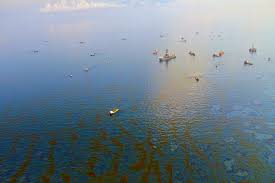
Representative image

Washington D.C. [USA], Apr 2 (ANI): An interdisciplinary research carried forward by a group of researchers have revealed that it could be possible to remove oil spills from the surface of the ocean by using magnets in future.
The researchers have published the study in the Journal of Advanced Functional Materials.
A group of researchers led by Prof. Dr Marcus Halik developed functionalised iron oxide particles that can attract any types of hydrocarbons.
The magnetic particles and their shells that are removed from the water in an environmentally friendly manner and can even be reused after being cleaned.
In the study, the researchers describe how functionalised iron oxide particles can be modified with a self-assembled monolayer so that they only absorb hydrocarbons. This group of chemical substances includes light compounds such as alkanes and aromates but also crude oil, petrol and diesel.
Such hydrocarbon molecules surround fine particles as if they are being sucked in and reach a volume that can grow to 14 times the size of the core of the particle.
A video on the researchers' website shows how iron oxide powder is applied to liquid oil and the instant transformation into a substance that can be removed by a magnet. 
In addition to the multiple re-usability of the source material, the large surface to volume ratio provided by nanoparticles and the favourable ratio to the quantity of the hydrocarbons to be adsorbed, all contribute to the very high efficiency of the process.
Conventional methods, on the other hand, create dispersions or mixtures of substances that enable the hydrocarbons to be more easily digested by bacteria but remain in the seawater until this process is complete.
In addition to manufacturing and characterising the particles, the research involved experiments using various hydrocarbons and different sources of water at different temperatures supplemented by molecular simulations that enabled the materials to be improved further.
In future, the system could help to considerably reduce the impact of contamination by oil on the environment. The researchers are currently working with partners in industry to scale up the manufacturing of the materials and to transfer the concept to real applications in clean-up operations. (ANI)

Get the App

What to Read Next

Science

Omega-3 therapy prevents brain damage in newborn rodents

Omega-3 therapy prevents brain damage in newborn rodents

A study conducted by researchers at Columbia University Vagelos College of Physicians and Surgeons discovered that an injectable emulsion containing two omega-3 fatty acids contained in fish oil significantly reduced brain damage in newborn rodents after a disturbance in the flow of oxygen to the brain near delivery.

Read More
Science

Ice age may help predict oceans’ response to global warming

Ice age may help predict oceans’ response to global warming

A team of scientists led by a Tulane University oceanographer discovered that deposits deep beneath the ocean floor provide a means to estimate ocean oxygen levels and their relationship to carbon dioxide in the Earth's atmosphere during the last ice age, which ended more than 11,000 years ago.

Read More
Science

Use of habitat for agricultural purposes puts primate in danger

Use of habitat for agricultural purposes puts primate in danger

According to a study published in Current Biology, frequent trips to oil palm farms are significantly increasing mortality rates among baby southern pig-tailed macaques (Macaca nemestrina) in the wild.

Read More
Science

Vitamins in rivers offer hope for vitamin-deficient salmon

Vitamins in rivers offer hope for vitamin-deficient salmon

Researchers at Oregon State University identified vitamin B1 generated by bacteria in rivers, which may provide hope to vitamin-deficient salmon populations.

Read More
Science

Warming, deep-sea mining cause stress in midwater animals

Warming, deep-sea mining cause stress in midwater animals

In the scientific journal Nature Communications, a recent study headed by scientists at the GEOMAR Helmholtz Centre for Ocean Research Kiel offers the first insights into the stress response of a deep pelagic jellyfish to ocean warming and sediment plumes caused by deep-sea mining.

Read More
Science

New study explains precious metals in the Earth's mantle

New study explains precious metals in the Earth's mantle

Scientists discovered that impact-driven mixing of mantle materials scenarios could prevent metals from totally sinking into the Earth's core based on simulations or models.

Read More
Science

Scientists detect sea star hybridization in North Atlantic Ocean

Scientists detect sea star hybridization in North Atlantic Ocean

In the chilly waters of the North Atlantic Ocean, scientists have long speculated that two kinds of sea stars—commonly known as starfish—found along the rocky coastlines of Europe and North America may have interbred. Hybrid starfish are already present and prospering along the coasts of New England and the Canadian Maritimes, according to freshly analysed genomic data.

Read More
Science

Study sheds more light on 'Atlantification' of Arctic Ocean

Study sheds more light on 'Atlantification' of Arctic Ocean

Researchers have discovered the source of the Arctic Ocean's sea ice decline. The findings indicate that stronger declines in sea ice will occur when an atmospheric feature known as the Arctic dipole reverses itself in its recurring cycle.

Read More
Science

New study explains 'Atlantification' of the Arctic Ocean

New study explains 'Atlantification' of the Arctic Ocean

Researchers have discovered the cause of the Arctic Ocean sea ice decrease since 2007. The results suggest that when an atmospheric phenomenon known as the Arctic dipole reverses itself in its periodic cycle, there will be more pronounced drops in sea ice.

Read More
Science

Study finds how oceans release microplastics into atmosphere

Study finds how oceans release microplastics into atmosphere

Microplastic waste can be discovered in the marine environment even at far-off places in the world. According to research led by Dr Barbara Scholz-Bottcher of the University of Oldenburg, these tiny particles originate on land but are also released back into the atmosphere by the sea.

Read More
Home About Us Our Products Advertise Contact Us Terms & Condition Privacy Policy

Copyright © aninews.in | All Rights Reserved.




