 हिंदी खबर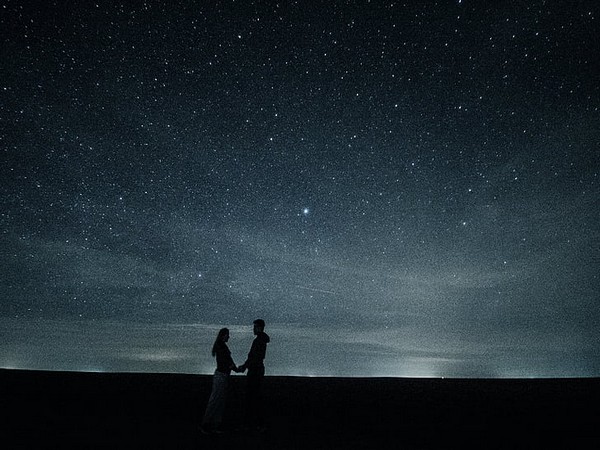

Washington D.C. [USA], Feb 11 (ANI): Few sights are more romantic than a star-filled sky, but there are fewer places on Earth where we can still enjoy a truly dark, star-filled sky. Light pollution means we risk losing one of the most romantic spectacles in nature, so this Valentine's Day astronomers are asking the public to help show their love for the stars by making light pollution observations as part of the Globe at Night program.
The night sky has inspired romance, wonder, and art for thousands of years, but we run the risk of blotting out the beauty of the stars. Though people are becoming increasingly aware of the importance of dark skies, changing technology threatens the mystery of a starry night.
As new LED lights increasingly replace older technologies illuminating our streets, gardens, and public spaces, astronomers are left asking whether the night sky is getting brighter or darker as a result. While measuring the brightness of the sky at isolated observatories is part of the night-to-night work of astronomers, knowing what's going on in backyards around the world is a lot harder, and they're turning to the public for help.
This Valentine's Day, astronomers are asking people to take part in the "Globe at Night" project, coordinated by Constance Walker at the National Science Foundation's National Optical-Infrared Astronomy Research Laboratory.
"Light pollution makes it harder to see the stars. That means that if you tell us how many stars you can see, we can estimate how bright your sky is," says Walker. The project asks participants to look up at the sky, and then choose which of a set of 8 star maps most closely matches what they see. "The project doesn't require detailed knowledge about constellations or astronomy," explains Walker. "As long as you can find Orion, you can take part!"
This year, the February Globe at Night campaign is starting on Valentine's Day. "Given the connection between the night and romance, we thought it would be a great idea to suggest adding a stargazing session to your Valentine's plans," says Walker. But even if your Valentine's night turns out cloudy, there are plenty of opportunities to take part. Campaigns for 2020, using the constellation of Orion, will also run over 14-23 February and 14-24 March.
During any of the 10-day campaigns each month, measurements can be submitted on the report page called a web app.
While it might seem surprising that astronomers are asking for observations from the general public, citizen science can lead to real breakthroughs. A paper published in Nature Astronomy in 2018 states that when it comes to discovering whether the sky is getting brighter or darker worldwide, "naked-eye observations are the key." Just as the beauty of the night sky can be enjoyed by anyone, anyone anywhere can help keep starry skies spellbinding. To emphasize the importance of maintaining starry skies and how Globe at Night can help do that, two videos are available (see below).
The Globe at Night project needs as many measurements as possible to get a global picture of the state of our night skies. So, if you've got chemistry with your date this Valentine's Day, why not treat them to some astronomy as well? (ANI)
Love the stars? Astronomers have a unique suggestion for Valentine's Day
ANI | Updated: Feb 11, 2020 22:14 IST


