

ADD ANI AS A TRUSTED SOURCE
googleads
ANI Logo
Menu
Science

Light pollution from cities poses serious threat to coastal species

London [UK], June 23 (ANI): The presence of artificial light originating from cities several kilometers away (also known as artificial skyglow) could be having a significant impact on species that rely on the moon and stars to find food, new research suggests.

ANI Jun 23, 2020 20:54 IST googleads

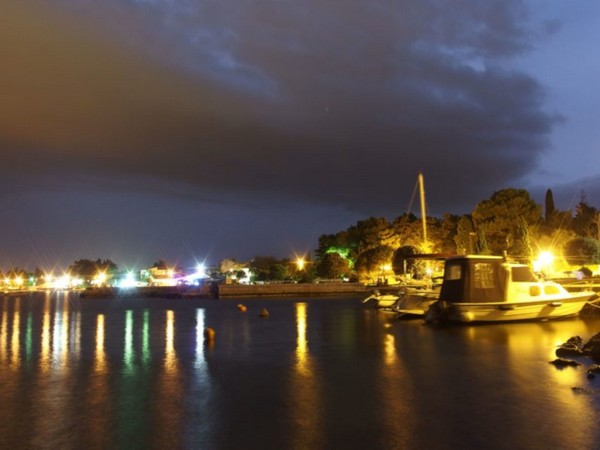
Representative Image

London [UK], June 23 (ANI): The presence of artificial light originating from cities several kilometers away (also known as artificial skyglow) could be having a significant impact on species that rely on the moon and stars to find food, new research suggests.
Creatures such as the sand hopper (Talitrus saltator) orientate their nightly migrations based on the moon's position and brightness of the natural night sky. However, a study by Bangor University and the University of Plymouth shows that such artificial lights disrupt the lunar compass they use when covering long distances.
In some cases, this can lead to them travelling towards the sea and away from food, while in others it reduces the chance of them venturing out on forays for food at all.
Writing in Current Biology, researchers say this could pose a distinct threat not just to the health of sand hopper populations but also the wider ecosystem since they play an important role in breaking down and recycling algae washed up on strandlines.
The study was conducted as part of the Artificial Light Impacts on Coastal Ecosystems (ALICE) project, funded by the Natural Environment Research Council. Dr Thomas Davies, Lecturer in Marine Conservation at the University of Plymouth (UK), is the paper's senior author and principal investigator on the ALICE project.
Davies said: "Skyglow is the most geographically widespread form of light pollution. Surveys have shown it can currently be detected above 23 per cent of the world's coasts nightly, and with coastal human populations set to at least double by 2060 its effects are only going to increase. Our results show it is already having demonstrable impacts on biological processes that are guided by celestial light cues."
"Through the ALICE project, we are finding increasing evidence that light pollution from coastal cities can influence marine species inhabiting nearby beaches, rocky shores and even the seafloor. These results highlight how pervasive city lighting could be in shaping the ecology of coastlines kilometres distant from their nearest urban centres. They also highlight the potential for artificial skyglow to impact other species that undergo migrations using the moon as a compass," Davies explained.
"While our understanding of the impacts of street lights on nature has improved dramatically, artificial skyglow has been largely overlooked. More work is urgently needed to fully understand the extent to which it is shaping the natural environment," he noted.
Stuart Jenkins, Professor of Marine Ecology at Bangor University and one of the study's co-authors, added: "It is easy to forget the critical influence of the moon in guiding many organisms' movements. However, we are increasingly realising that by disrupting patterns of night time lighting, we are potentially reducing the ability of animals to navigate. This new research on the shores of North Wales shows clearly that very low levels of artificial light can have far-reaching effects on coastal marine species."
The sand hopper is a common feature of Europe's coasts and spends daytimes buried in the sand at depths of 10-30cm, emerging at night to feed on decaying seaweed and other detritus.
For this study, researchers monitored the sand hopper population on Cable Bay beach in North Wales (UK), a naturally dark location, over 19 nights between June and September 2019.
They observed the behaviour of almost 1,000 individuals under a range of moon phases and weather conditions, before introducing artificial light that replicated the intensity and colour of skyglow from towns and cities around the UK coastline.
The results showed that artificial skyglow reduced the probability that individuals undertook their migrations during the full moon under clear sky conditions and during the new moon irrespective of cloud cover.
In the absence of artificial skyglow, when the moon was full and the sky was clear, they migrated in the expected shoreward direction to forage. However, in the presence of artificial skyglow during the same moon phase and cloud cover conditions, their movements were far more random.
The ALICE project aims to build on this study by monitoring an increased number of species but also working with conservation organisations, the lighting industry, the aquarium and aquaculture industry, and the general public to increase awareness of the issue. (ANI)


Get the App

What to Read Next

Science

Amphibians bounce-back from Earth’s greatest mass extinction

Amphibians bounce-back from Earth’s greatest mass extinction

Researchers at the University of Bristol discovered that ancient frog ancestors survived the biggest mass extinction of species by eating on freshwater prey that evaded terrestrial predators.

Read More
Science

Study reveals impact of animals as architects of Earth

Study reveals impact of animals as architects of Earth

A new study led by Professor Gemma Harvey from Queen Mary University of London has revealed how hundreds of species shape the landscapes we depend on, from termite mounds visible from space to beavers creating wetlands and hippos carving drainage systems.

Read More
Science

AI can reveals hidden hazards of chemical mixtures in rivers

AI can reveals hidden hazards of chemical mixtures in rivers

Artificial intelligence can provide important insights into how complex chemical mixes in rivers affect aquatic life, paving the path for more effective environmental protection.

Read More
Science

Study reveals role of gamma-delta T cells in cancer immunology

Study reveals role of gamma-delta T cells in cancer immunology

The significance of gamma-delta T cells in 33 different cancer types is revealed in a recent study that was published in Cell Press. This information sheds light on the cells' potential as clinical biomarkers and therapeutic targets in the treatment of cancer. This thorough examination, which was carried out under the direction of a group of Moffitt Cancer Center experts, marks a substantial breakthrough in our knowledge of these distinct immune cells and how they affect cancer therapy outcomes for patients.

Read More
Science

Study: Role of tRNA modifying enzyme in brain function

Study: Role of tRNA modifying enzyme in brain function

A pioneering study undertaken by a Kumamoto University research team shed light on the crucial role of TRMT10A, a tRNA methylation enzyme, in sustaining brain function. The findings show how TRMT10A deficiency reduces specific transfer RNA (tRNA) levels in the brain, altering protein synthesis and affecting synapse structure and function.

Read More
Science

Research sheds more light on staging of pancreatic cancer

Research sheds more light on staging of pancreatic cancer

A recent Cedars-Sinai Cancer study found that up to 80 per cent of the time, patients with early pancreatic cancer are incorrectly staged. The discovery highlights the critical need for improvements in staging and diagnostic technology, which could have a substantial impact on early pancreatic cancer research and therapy.

Read More
Science

Role of omega-3 fatty acid in prevention of arrhythmias

Role of omega-3 fatty acid in prevention of arrhythmias

Scientists have produced an enormous amount of evidence in the last few decades that indicates eating a diet high in saturated fats is sufficient to induce heart disease. Saturated fats have also been connected to potentially fatal arrhythmias, in addition to other issues including diabetes and atherosclerosis.

Read More
Science

Plastic pollution, seawater flooding effect on coastal plants

Plastic pollution, seawater flooding effect on coastal plants

Two of the planet's most urgent environmental stressors have the potential to affect the development and reproductive production of plants found along the world's coasts, according to new research.

Read More
Science

Study tracks air pollution, reveals demographic disparities

Study tracks air pollution, reveals demographic disparities

There are considerable variances in how much people are exposed to air pollution, according to a new study co-authored by MIT researchers that considers everyday mobility.

Read More
Science

Blood tests predict Parkinson’s seven years before symptoms

Blood tests predict Parkinson’s seven years before symptoms

A group of scientists from University College London (UCL) and University Medical Centre Goettingen have created a straightforward blood test that employs artificial intelligence (AI) to forecast Parkinson's disease up to seven years before symptoms appear.

Read More
Home About Us Our Products Advertise Contact Us Terms & Condition Privacy Policy

Copyright © aninews.in | All Rights Reserved.


