

ADD ANI AS A TRUSTED SOURCE
googleads
ANI Logo
Menu
Science

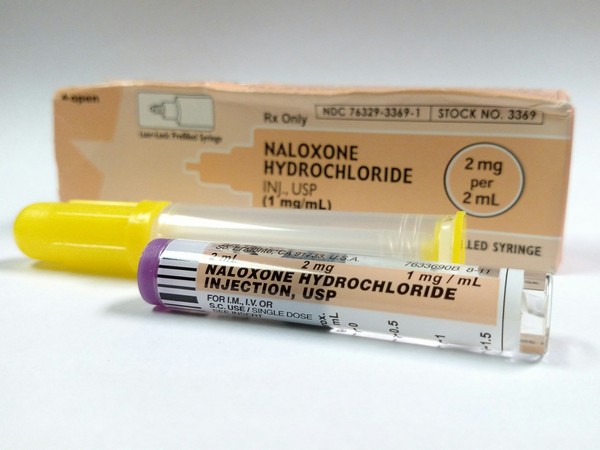
Life-saving opioid antidote accessible to only 2 pc patients, finds study

Washington D.C. [USA], Jan 11 (ANI): A life-saving drug often prescribed for opioid overdose patients is accessible to less than 2 per cent of the people who need it, according to a recent study.

ANI Jan 11, 2020 23:32 IST googleads

Naloxone, a drug that is effective in reversing opioid poisoning has failed to reach the patients who have a higher risk of succumbing to such overdoses.

Washington D.C. [USA], Jan 11 (ANI): A life-saving drug often prescribed for opioid overdose patients is accessible to less than 2 per cent of the people who need it, according to a recent study.
Naloxone, a drug that is effective in reversing opioid poisoning has failed to reach the patients who have a higher risk of succumbing to such overdoses.
The recent study used data from the records of people who opted for private health insurance and was performed by a group of researchers from VA Ann Arbor Healthcare System and the University of Michigan got published in the Journal of General Internal Medicine.
In 2016, the nationwide guideline by the Centers for Disease Control and Prevention called for physicians to prescribe the drug to patients with higher intake of the pain-relieving medicine, opioid. The risk factor hypes with a combination of opioids with benzodiazepine, a high power sedative.
The two medicines have interactive capabilities and can end up being fatal. However, since 2014, the intake of the medicine by adults has increased comparative where earlier the percentage of the medicine intake was as low as 1.6 percentage.
"The major prescription of naloxone is to patients who have also been prescribed opioid, but there are other groups at high risk for overdose but do not receive recommendation of opioids, including people using only street drugs, that warrant further attention," says Allison Lewei Lin, MD, MSc, an addiction psychiatrist at the U-M Addiction Center and the VAAAHS who led the research team.
But the limitation to the study is that it depends only on data available for people who have opted for private insurance plans. For others, data collection needs to be furthered to get an essence of the real scenario. (ANI)

Get the App

What to Read Next

Science

COVID-19 severity may be predicted by White Blood Cell Count

COVID-19 severity may be predicted by White Blood Cell Count

A COVID-19 diagnosis is no longer as frightening as it used to be, thanks to developments in treatment choices. However, a new study reveals that leukocyte (white blood cell) count may now be used to identify who is more likely to develop more significant disease symptoms.

Read More
Science

Cancer cells of fat may enhance cancer treatment

Cancer cells of fat may enhance cancer treatment

A study by Van Andel Institute scientists suggests that restricting cancer cells' access to fat may enhance the effectiveness of certain cancer treatments.

Read More
Science

Study finds novel approach to treat neurological diseases

Study finds novel approach to treat neurological diseases

The matter of what causes complicated neurological disorders like Alzheimer's or multiple sclerosis continues to perplex scientists and doctors, with unknowns impeding early diagnosis and successful treatment.

Read More
Science

Bacterial vaccine demonstrates potential as cancer treatment

Bacterial vaccine demonstrates potential as cancer treatment

Columbia researchers developed probiotic bacteria that train the immune system to eliminate cancer cells, paving the way for a new class of cancer vaccinations that take advantage of bacteria's innate tumour-targeting abilities. These microbial cancer vaccines can be tailored to each person's specific original tumour and metastases, perhaps preventing future recurrences.

Read More
Science

Alternate method to study changes during DNA replication process

Alternate method to study changes during DNA replication process

Researchers at Colorado State University discovered an alternative way for studying alterations during the DNA replication process in lab settings using genetically modified yeast. The novel methodology provides a clearer picture than current pharmacological methods for understanding cell cycle arrest, a fundamental mechanism critical to cancer treatment and genetic concerns.

Read More
Science

Study reveals role of gamma-delta T cells in cancer immunology

Study reveals role of gamma-delta T cells in cancer immunology

The significance of gamma-delta T cells in 33 different cancer types is revealed in a recent study that was published in Cell Press. This information sheds light on the cells' potential as clinical biomarkers and therapeutic targets in the treatment of cancer. This thorough examination, which was carried out under the direction of a group of Moffitt Cancer Center experts, marks a substantial breakthrough in our knowledge of these distinct immune cells and how they affect cancer therapy outcomes for patients.

Read More
Science

Study: New potential treatment for cardiac arrhythmias

Study: New potential treatment for cardiac arrhythmias

A recent study by researchers at the University of Arizona College of Medicine - Phoenix and the University of California Davis Health discovered a new target for developing a medication to treat atrial fibrillation, the most prevalent kind of irregular heart rhythm.

Read More
Science

Researchers find treatment for a cause of pregnancy loss

Researchers find treatment for a cause of pregnancy loss

Approximately 20 per cent of women, who have recurrent pregnancy loss, test positive for a particular antibody that attacks the mother's own body.

Read More
Science

'Bone marrow cancer drug shows success in blood disorder'

'Bone marrow cancer drug shows success in blood disorder'

When researchers discovered enough proof that a medication used to treat bone marrow cancer and Kaposi sarcoma is safe and effective in treating hereditary hemorrhagic telangiectasia (HHT), a rare bleeding disorder that affects 1 in 5,000 people worldwide, they decided to terminate an early clinical trial funded by the National Institutes of Health

Read More
Science

Study: Connection between gene variants, breast, ovarian cancer

Study: Connection between gene variants, breast, ovarian cancer

Researchers have identified thousands of genetic variants in a gene that could raise an individual's risk of ovarian and breast cancer, opening the door to more accurate risk assessment and individualised treatment.

Read More
Home About Us Our Products Advertise Contact Us Terms & Condition Privacy Policy

Copyright © aninews.in | All Rights Reserved.




