

ADD ANI AS A TRUSTED SOURCE
googleads
ANI Logo
Menu
Science

Large simulation finds new origin of supermassive black holes

Washington D.C. [USA], June 2 (ANI): Computer simulations conducted by astrophysicists at Tohoku University in Japan, have revealed a new theory for the origin of supermassive black holes. In this theory, the precursors of supermassive black holes grow by swallowing up not only interstellar gas but also smaller stars as well. This helps to explain the large number of supermassive black holes observed today.

ANI Jun 02, 2020 20:07 IST googleads

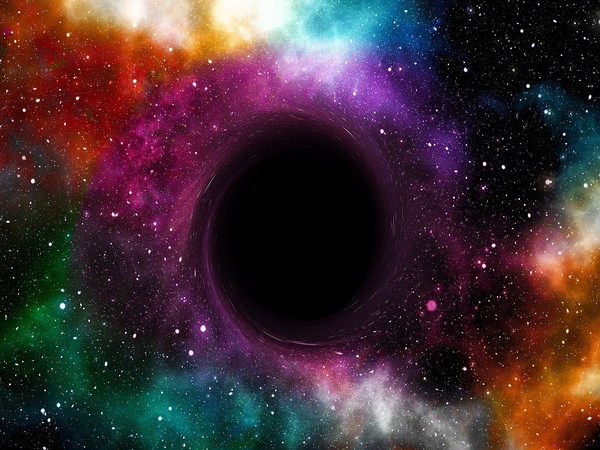
Representative image

Washington D.C. [USA], June 2 (ANI): Computer simulations conducted by astrophysicists at Tohoku University in Japan, have revealed a new theory for the origin of supermassive black holes. In this theory, the precursors of supermassive black holes grow by swallowing up not only interstellar gas but also smaller stars as well. This helps to explain the large number of supermassive black holes observed today.
Almost every galaxy in the modern Universe has a supermassive black hole at its centre. Their masses can sometimes reach up to 10 billion times the mass of the Sun. However, their origin is still one of the great mysteries of astronomy. A popular theory is the direct collapse model where primordial clouds of interstellar gas collapse under self-gravity to form supermassive stars which then evolve into supermassive black holes. But previous studies have shown that direct collapse only works with pristine gas consisting of only hydrogen and helium. Heavier elements such as carbon and oxygen change the gas dynamics, causing the collapsing gas to fragment into many smaller clouds which form small stars of their own, rather than a few supermassive stars. Direct collapse from pristine gas alone can't explain the large number of supermassive black holes seen today.
Sunmyon Chon, a postdoctoral fellow at the Japan Society for the Promotion of Science and Tohoku University and his team used the National Astronomical Observatory of Japan's supercomputer "ATERUI II" to perform long-term 3D high-resolution simulations to test the possibility that supermassive stars could form even in heavy-element-enriched gas. Star formation in gas clouds including heavy elements has been difficult to simulate because of the computational cost of simulating the violent splitting of the gas, but advances in computing power, specifically the high calculation speed of "ATERUI II" commissioned in 2018, allowed the team to overcome this challenge. These new simulations make it possible to study the formation of stars from gas clouds in more detail.
Contrary to previous predictions, the research team found that supermassive stars can still form from heavy-element enriched gas clouds. As expected, the gas cloud breaks up violently and many smaller stars form. However, there is a strong gas flow towards the centre of the cloud; the smaller stars are dragged by this flow and are swallowed up by the massive stars in the centre. The simulations resulted in the formation of a massive star 10,000 time more massive than the Sun. "This is the first time that we have shown the formation of such a large black hole precursor in clouds enriched in heavy-elements. We believe that the giant star thus formed will continue to grow and evolve into a giant black hole," says Chon.
This new model shows that not only primordial gas, but also gas containing heavy elements can form giant stars, which are the seeds of black holes. "Our new model is able to explain the origin of more black holes than the previous studies, and this result leads to a unified understanding of the origin of supermassive black holes," says Kazuyuki Omukai, a professor at Tohoku University. (ANI)


Get the App

What to Read Next

Science

New method guides magnetism without magnets

New method guides magnetism without magnets

Researchers at Paul Scherrer Institute PSI have demonstrated an innovative method to control magnetism in materials using an energy-efficient electric field.

Read More
Science

Amphibians bounce-back from Earth’s greatest mass extinction

Amphibians bounce-back from Earth’s greatest mass extinction

Researchers at the University of Bristol discovered that ancient frog ancestors survived the biggest mass extinction of species by eating on freshwater prey that evaded terrestrial predators.

Read More
Science

New insights into how cancer evades the immune system: Study

New insights into how cancer evades the immune system: Study

Immunotherapy research primarily focuses on better recognition of cancer cells by the body's own immune system. Researchers at Amsterdam UMC and Moffitt Cancer Center have taken a different approach.

Read More
Science

Scientists use AI to better understand nanoparticles: Study

Scientists use AI to better understand nanoparticles: Study

A group of scientists has created a way to illuminate the dynamic behavior of nanoparticles, which are essential components in the production of pharmaceuticals, electronics, and industrial and energy-conversion materials.

Read More
Science

New device could allow you to taste cake in virtual reality

New device could allow you to taste cake in virtual reality

The 'e-Taste' interface employs sensors and wireless chemical dispensers to enable remote taste perception, often known as gestation. Field testing done by researchers at The Ohio State University confirmed the device's ability to digitally simulate a range of taste intensities, while still offering variety and safety for the user.

Read More
Science

Study reveals impact of animals as architects of Earth

Study reveals impact of animals as architects of Earth

A new study led by Professor Gemma Harvey from Queen Mary University of London has revealed how hundreds of species shape the landscapes we depend on, from termite mounds visible from space to beavers creating wetlands and hippos carving drainage systems.

Read More
Science

Opposing arrows of time emerge from certain quantum systems

Opposing arrows of time emerge from certain quantum systems

Researchers at the University of Surrey made a thought-provoking discovery. A new study reveals that opposing arrows of time can theoretically emerge from certain quantum systems.

Read More
Science

COVID-19 severity may be predicted by White Blood Cell Count

COVID-19 severity may be predicted by White Blood Cell Count

A COVID-19 diagnosis is no longer as frightening as it used to be, thanks to developments in treatment choices. However, a new study reveals that leukocyte (white blood cell) count may now be used to identify who is more likely to develop more significant disease symptoms.

Read More
Science

Seals can essentially act as 'smart sensors': Study

Seals can essentially act as 'smart sensors': Study

A new study by marine biologists reports that seals can essentially act as 'smart sensors' for monitoring fish populations in the ocean's eerily dim 'twilight zone.'

Read More
Science

'Creation of black holes without singularities through gravity'

'Creation of black holes without singularities through gravity'

Traditional black holes, as predicted by Albert Einstein's theory of General Relativity, contain what are known as singularities, i.e. points where the laws of physics break down. Identifying how singularities are resolved in the context of quantum gravity is one of the fundamental problems in theoretical physics. Now, a team of experts has described the creation of regular black holes from gravitational effects without the need for the existence of exotic matter required by some previous models.

Read More
Home About Us Our Products Advertise Contact Us Terms & Condition Privacy Policy

Copyright © aninews.in | All Rights Reserved.


