

ADD ANI AS A TRUSTED SOURCE
googleads
ANI Logo
Menu
Science

Lab-grown 'mini eyes' unlock understanding of blindness in rare genetic condition

Researchers at UCL Great Ormond Street Institute of Child Health (UCL GOS ICH) have grown 'mini eyes', which make it possible to study and better understand the development of blindness in a rare genetic disease called Usher syndrome for the first time.

ANI Nov 22, 2022 12:19 IST googleads

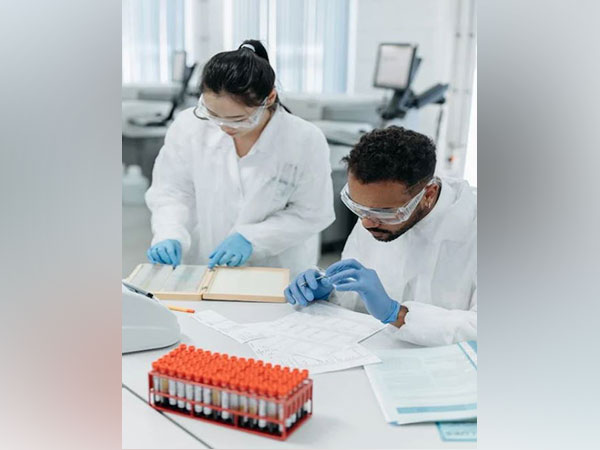
Representative Image

Washington [US], November 22 (ANI): Researchers at UCL Great Ormond Street Institute of Child Health (UCL GOS ICH) have grown 'mini eyes', which make it possible to study and better understand the development of blindness in a rare genetic disease called Usher syndrome for the first time.
The 3D 'mini eyes', known as organoids, were grown from stem cells generated from skin samples donated by patients at Great Ormond Street Hospital for Children (GOSH). In a healthy eye, rod cells the cells which detect light are arranged in the back of the eye in an important region responsible for processing images called the retina. In this research, published in Stem Cell Reports1, the team found that they could get rod cells to organise themselves into layers that mimic their organisation in the retina, producing a 'mini eye'.
These 'mini eyes' are an important step forward because previous research using animal cells couldn't mimic the same sort of sight loss as that seen in Usher syndrome.
Usher syndrome is the most common genetic cause of combined deafness and blindness, affecting approximately three to ten in 100,000 people worldwide. Children with Type 1 Usher syndrome are often born profoundly deaf, while their sight slowly deteriorates until they are blind by adulthood.
Although cochlear implants can help with hearing loss, there are currently no treatments for retinitis pigmentosa, which causes vision loss in Usher syndrome. While this research is in early stages, these steps towards understanding the condition and how to design a future treatment could give hope to those who are due to lose their sight.
The 'mini eyes' developed in this research allow scientists to study light-sensing cells from the human eye at an individual level, and in more detail than ever before. For example, using powerful single cell RNA-sequencing, it is the first time researchers have been able to view the tiny molecular changes in rod cells before they die. Using the 'mini eyes', the team discovered that Muller cells, responsible for metabolic and structural support of the retina, are also involved in Usher syndrome. They found that cells from people with Usher syndrome abnormally have genes turned on for stress responses and protein breakdown. Reversing these could be the key to preventing how the disease progresses and worsens.
As the 'mini eyes' are grown from cells donated by patients with and without the genetic 'fault' that causes Usher syndrome, the team can compare healthy cells and those that will lead to blindness.
Understanding these differences could provide clues to changes that happen in the eye before a child's vision begins to deteriorate. In turn, this could provide clues to the best targets for early treatment -- crucial to providing the best outcome.
Dr Yeh Chwan Leong, Research Associate at UCL GOS ICH and first author said: "It's difficult to study the inaccessible tiny nerve cells of the patient's retina as they are so intricately connected and delicately positioned at the back of the eye. By using a small biopsy of skin, we now have the technology to reprogramme the cells into stem cells and then create lab-grown retina with the same DNA, and therefore same genetic conditions, as our patients."
Professor Jane Sowden, Professor of Developmental Biology & Genetics at UCL, and senior author, said: "We are very grateful to patients and families who donate these samples to research so that, together, we can further our understanding of genetic eye conditions, like Usher syndrome.
Although a while off, we hope that these models can help us to one day develop treatments that could save the sight of children and young people with Usher syndrome." (ANI)


Get the App

What to Read Next

Science

Amphibians bounce-back from Earth’s greatest mass extinction

Amphibians bounce-back from Earth’s greatest mass extinction

Researchers at the University of Bristol discovered that ancient frog ancestors survived the biggest mass extinction of species by eating on freshwater prey that evaded terrestrial predators.

Read More
Science

New insights into how cancer evades the immune system: Study

New insights into how cancer evades the immune system: Study

Immunotherapy research primarily focuses on better recognition of cancer cells by the body's own immune system. Researchers at Amsterdam UMC and Moffitt Cancer Center have taken a different approach.

Read More
Science

Scientists use AI to better understand nanoparticles: Study

Scientists use AI to better understand nanoparticles: Study

A group of scientists has created a way to illuminate the dynamic behavior of nanoparticles, which are essential components in the production of pharmaceuticals, electronics, and industrial and energy-conversion materials.

Read More
Science

New device could allow you to taste cake in virtual reality

New device could allow you to taste cake in virtual reality

The 'e-Taste' interface employs sensors and wireless chemical dispensers to enable remote taste perception, often known as gestation. Field testing done by researchers at The Ohio State University confirmed the device's ability to digitally simulate a range of taste intensities, while still offering variety and safety for the user.

Read More
Science

Strand Life Sciences launches portal for rare disease diagnosis

Strand Life Sciences launches portal for rare disease diagnosis

Marking Rare Disease Day, Strand Life Sciences, a subsidiary of Reliance Industries and a leading genomics research company, has launched the StrandOmics Portal, an innovative digital platform designed to assist doctors in diagnosing rare diseases more efficiently.

Read More
Science

Study reveals impact of animals as architects of Earth

Study reveals impact of animals as architects of Earth

A new study led by Professor Gemma Harvey from Queen Mary University of London has revealed how hundreds of species shape the landscapes we depend on, from termite mounds visible from space to beavers creating wetlands and hippos carving drainage systems.

Read More
Science

Opposing arrows of time emerge from certain quantum systems

Opposing arrows of time emerge from certain quantum systems

Researchers at the University of Surrey made a thought-provoking discovery. A new study reveals that opposing arrows of time can theoretically emerge from certain quantum systems.

Read More
Science

'Creation of black holes without singularities through gravity'

'Creation of black holes without singularities through gravity'

Traditional black holes, as predicted by Albert Einstein's theory of General Relativity, contain what are known as singularities, i.e. points where the laws of physics break down. Identifying how singularities are resolved in the context of quantum gravity is one of the fundamental problems in theoretical physics. Now, a team of experts has described the creation of regular black holes from gravitational effects without the need for the existence of exotic matter required by some previous models.

Read More
Science

New technology enhances gravitational-wave detection: Study

New technology enhances gravitational-wave detection: Study

A team of physicists led by Jonathan Richardson of the University of California, Riverside, demonstrated how new optical technology can extend the detection range of gravitational-wave observatories such as the Laser Interferometer Gravitational-Wave Observatory, or LIGO, and pave the way for future observatories.

Read More
Science

Discovering the genetics of climate adaptation 

Discovering the genetics of climate adaptation 

As climate change accelerates, plants are under increasing pressure to adapt to changing habitats and environmental conditions.

Read More
Home About Us Our Products Advertise Contact Us Terms & Condition Privacy Policy

Copyright © aninews.in | All Rights Reserved.
