

ADD ANI AS A TRUSTED SOURCE
googleads
ANI Logo
Menu
Science

Invasive spotted lanternfly may not harm hardwood trees: Study

According to new long-term research done by Penn State, hardwood trees such as maple, willow, and birch may be less vulnerable than previously thought.

ANI Sep 02, 2023 23:34 IST googleads

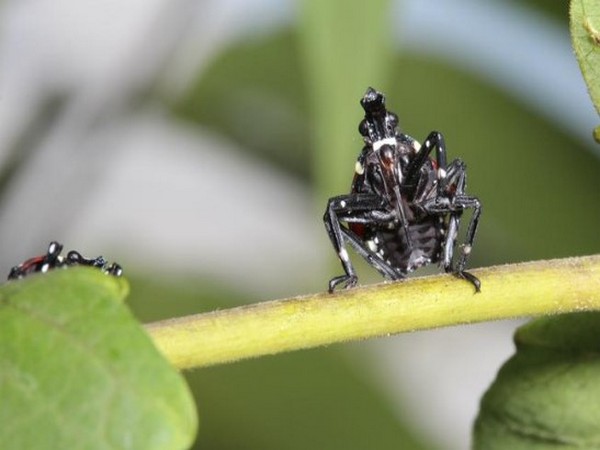
Representative Image

Washington DC [US], September 2 (ANI): Scientists, land managers, and growers were naturally concerned when the spotted lanternfly (Lycorma delicatula) came to the United States from its home in  China.
According to new long-term research done by Penn State, hardwood trees such as maple, willow, and birch may be less vulnerable than previously thought. The findings were published in the journal Environmental Entomology.
“Since the lanternfly was first introduced to the northeastern US, the question has been, ‘How at-risk are our forests?’ said Kelli Hoover, professor of entomology at Penn State.
“So far, we haven't had a good answer. Our study is the first to look at the long-term impacts of feeding pressure on northeastern hardwoods, and our results suggest that we are unlikely to see big impacts on the growth of trees.”
To determine the long-term effects of spotted lanternfly (SLF) feeding on hardwood trees, the team built large enclosures containing multiple species of tree, including the insect’s favourite food, the non-native tree-of-heaven (Ailanthus altissima), as well as native trees, including silver maple (Acer saccharinum), weeping willow (Salix babylonica) and river birch (Betula nigra).
The team included tree-of-heaven in half of the enclosures to determine whether its presence would influence the feeding pressure on the native hardwoods.
Within the enclosures, the researchers reared different densities of spotted lanternflies for all or most of their lifecycle, from eggs through adults, to see if the number of insects feeding on a tree would impact its growth and survival.
After the first two years, they reduced the density of the insects to see if the trees would recover. They monitored leaf gas exchange and concentrations of nutrients that are important for photosynthesis and growth for the first two years and tree diameter growth for the full four years.
The team found that increased feeding pressure by spotted lanternflies resulted in reductions in key nutrients, which in turn, markedly impacted tree diameter growth during the first two years when feeding pressure was the most intense.
However, in year three when the feeding pressure was reduced, the native trees recovered while tree-of-heaven’s growth remained flat. Leaf gas exchange did not differ significantly among the treatments.
“In the wild, we have seen that spotted lanternfly population numbers vary greatly from year to year on individual trees, and they move frequently among host trees,” Hoover said.
“Our study represents a worst-case scenario in which the spotted lanternfly fed on the same trees for four consecutive growing seasons. While we did see reduced growth after two years of intense feeding, the native trees recovered when feeding was less intense. Importantly, over the four years, none of the trees died. Therefore, in a natural setting where the insects are constantly on the move, we would not expect significant negative impacts on forest or ornamental trees.”
Hoover noted that these findings may come as a relief to growers.
She said, “If I had an apple or peach orchard, I wouldn't even treat my trees with insecticides because we’ve learned that the insects are not going to stick around, and the cost of treating and the potential non-target impacts of the insecticides are just not worth it.” (ANI)


Get the App

What to Read Next

Science

High BP linked with environmental contamination by tellurium 

High BP linked with environmental contamination by tellurium 

Higher amounts of tellurium, a pollutant transported from mining and manufacturing to foods, increase the risk of having high blood pressure (hypertension). Improved monitoring of tellurium levels in certain meals may help reduce high blood pressure in the general population.

Read More
Science

People with essential tremor may have increased risk of dementia

People with essential tremor may have increased risk of dementia

According to research, people with essential tremor, a movement disease characterized by involuntary shaking, may be three times more likely to develop dementia than the general population.

Read More
Science

Gardeners can help to identify possibly invasive plants: Research

Gardeners can help to identify possibly invasive plants: Research

Researchers from the University of Reading and the Royal Horticultural Society have discovered that gardeners play a vital role in identifying 'future invaders' - ornamental plants that could become invasive species.

Read More
Science

Climate change threatens global forest carbon sequestration

Climate change threatens global forest carbon sequestration

A new analysis of U.S. Forest Service data shows that climate change is changing forests differently across the country. With increasing temperatures, intensifying droughts, wildfires, and disease outbreaks wreaking havoc on trees, researchers warn that forests in the American West are facing the brunt of the repercussions.

Read More
Science

Bariatric surgery slow cognitive decline for people with obesity

Bariatric surgery slow cognitive decline for people with obesity

Within the next ten years, obesity--which has been connected to dementia and cognitive decline--is predicted to impact up to half of the population in the US.

Read More
Science

stomach bug may raise risk of Alzheimer's disease

stomach bug may raise risk of Alzheimer's disease

A common gut bacteria that is present in two-thirds of the world's population may be linked to a higher risk of Alzheimer's disease, according to new research.

Read More
Science

Hotter weather because of climate change may mean more mosquitos

Hotter weather because of climate change may mean more mosquitos

According to a recent study done by Virginia Commonwealth University experts, a warmer environment may result in more mosquitos as predators struggle to manage their population.

Read More
Science

Feeding raw meat to dogs increases risk of E.coli: Study

Feeding raw meat to dogs increases risk of E.coli: Study

Researchers at the University of Bristol revealed that feeding dogs raw meat increases their chances of excreting E. coli that cannot be killed by the antibiotic ciprofloxacin

Read More
Science

Feeding raw meat to dogs linked with antibiotic-resistant E.coli

Feeding raw meat to dogs linked with antibiotic-resistant E.coli

Researchers at the University of Bristol discovered that feeding dogs raw (uncooked) meat doubles their chance of excreting E. coli that cannot be destroyed by ciprofloxacin, a frequently used antibiotic.

Read More
Science

Sudden death is 16 times more common in homeless population

Sudden death is 16 times more common in homeless population

Homeless people have a 16-fold higher chance of dying suddenly from heart attacks and other causes, per a UC San Francisco study.

Read More


