

ADD ANI AS A TRUSTED SOURCE
googleads
Menu
Science

Interrupting RNA activity can improve survival chances in pancreatic cancer patients

Nagoya [Japan], April 24 (ANI): During a recent study, researchers uncovered a molecular pathway that enhances chemotherapy resistance in some pancreatic cancer patients. A patient's response to therapy and their overall survival chance can be increased by targeting an RNA to interrupt its activity.

ANI Apr 24, 2021 17:15 IST googleads

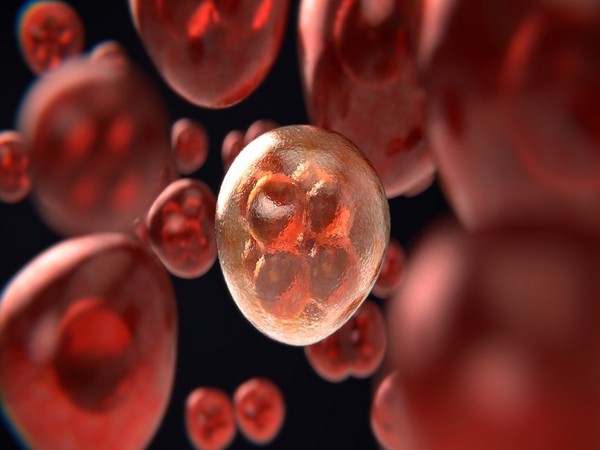
Representative Image

Nagoya [Japan], April 24 (ANI): During a recent study, researchers uncovered a molecular pathway that enhances chemotherapy resistance in some pancreatic cancer patients. A patient's response to therapy and their overall survival chance can be increased by targeting an RNA to interrupt its activity.
The study led by Nagoya University researchers and colleagues in Japan was published in the journal Cancer Research.
"Pancreatic cancer is one of the most aggressive human malignancies, with an overall med ian survival that is less than five months," says cancer biologist Yutaka Kondo of Nagoya University Graduate School of Medicine. "This poor prognosis is partially due to a lack of potent therapeutic strategies against pancreatic cancer, so more effective treatments are urgently needed."
Kondo and his colleagues focused their attention on a long noncoding RNA (lncRNA) called taurine upregulating gene 1 (TUG1). lncRNAs are gene regulators, several of which have recently been identified for helping some cancers resist chemotherapy. TUG1 is already known for being overexpressed in gastrointestinal cancers that have a poor prognosis and are resistant to chemotherapy.
The researchers found TUG1 was overexpressed in a group of patients with pancreatic ductal adenocarcinoma. These patients were resistant to the standard chemotherapy treatment 5-fluorouracil (5-FU), and died much sooner compared to cancer patients with low TUG1 expression levels.
Further laboratory tests showed TUG1 counteracts a specific microRNA, leading to increased activity of an enzyme, called dihydropyrimidine dehydrogenase, which breaks down 5-FU into a compound that can't kill cancer cells.
Kondo and his team found they could suppress TUG1 during 5-FU treatment of mice with pancreatic cancer by using antisense oligonucleotides attached to a specially designed cancer-targeting drug delivery system. Antisense oligonucleotides interfere with gene expression.
"Our data provides evidence that our therapeutic approach against pancreatic cancer could be promising," says Kondo.
The team now plans to conduct further laboratory investigations to test the effectiveness of their therapeutic strategy. (ANI)


Get the App

What to Read Next

Science

Amphibians bounce-back from Earth’s greatest mass extinction

Amphibians bounce-back from Earth’s greatest mass extinction

Researchers at the University of Bristol discovered that ancient frog ancestors survived the biggest mass extinction of species by eating on freshwater prey that evaded terrestrial predators.

Read More
Science

New insights into how cancer evades the immune system: Study

New insights into how cancer evades the immune system: Study

Immunotherapy research primarily focuses on better recognition of cancer cells by the body's own immune system. Researchers at Amsterdam UMC and Moffitt Cancer Center have taken a different approach.

Read More
Science

Scientists use AI to better understand nanoparticles: Study

Scientists use AI to better understand nanoparticles: Study

A group of scientists has created a way to illuminate the dynamic behavior of nanoparticles, which are essential components in the production of pharmaceuticals, electronics, and industrial and energy-conversion materials.

Read More
Science

New technology enhances gravitational-wave detection: Study

New technology enhances gravitational-wave detection: Study

A team of physicists led by Jonathan Richardson of the University of California, Riverside, demonstrated how new optical technology can extend the detection range of gravitational-wave observatories such as the Laser Interferometer Gravitational-Wave Observatory, or LIGO, and pave the way for future observatories.

Read More
Science

Discovering the genetics of climate adaptation 

Discovering the genetics of climate adaptation 

As climate change accelerates, plants are under increasing pressure to adapt to changing habitats and environmental conditions.

Read More
Home About Us Our Products Advertise Contact Us Terms & Condition Privacy Policy

Copyright © aninews.in | All Rights Reserved.
