

ADD ANI AS A TRUSTED SOURCE
googleads
ANI Logo
Menu
Science

Hurricanes drive evolution of more aggressive spiders: Study

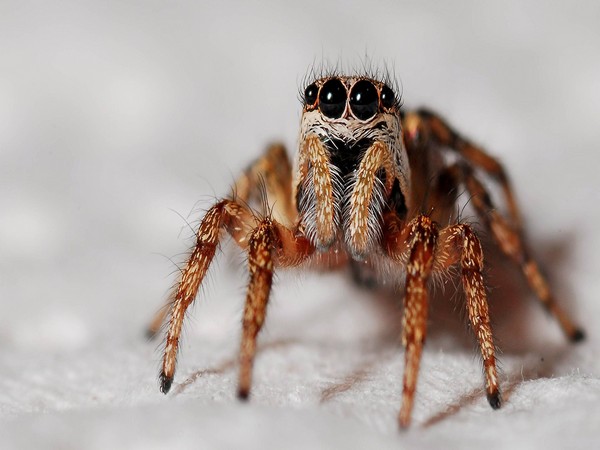
Washington D.C. [USA], Aug 26 (ANI): Extreme weather events such as tropical cyclones may have an evolutionary impact on spider's population, claims researchers who have studied their behaviour.

ANI Aug 26, 2019 19:48 IST googleads

Once a storm's path was determined, they sampled populations before landfall, and then returned to the sites within 48 hours.

Washington D.C. [USA], Aug 26 (ANI): Extreme weather events such as tropical cyclones may have an evolutionary impact on spider's population, claims researchers who have studied their behaviour.
Raging winds can demolish trees, defoliate entire canopies and scatter debris across forest floors, radically altering the habitats and reshaping the selective pressures on many organisms, says the study published in the journal -- Nature Ecology & Evolution.
"It is tremendously important to understand the environmental impacts of these 'black swan' weather events on evolution and natural selection," said lead author Jonathan Pruitt, evolutionary biologist and Canada 150 Chair in McMaster's Department of Psychology, Neuroscience, and Behaviour.
"As sea levels rise, the incidence of tropical storms will only increase. Now more than ever we need to contend with what the ecological and evolutionary impacts of these storms will be for non-human animals," he said.
Pruitt and his team examined female colonies of the spider known as Anelosimus studiosus, which lives along the Gulf and Atlantic coasts of the United States and Mexico, directly in the path of tropical cyclones that form in the Atlantic basin from May to November.
To conduct the research, scientists had to tackle many logistical and methodological challenges which included anticipating the trajectory of the tropical cyclones. Once a storm's path was determined, they sampled populations before landfall, and then returned to the sites within 48 hours.
They sampled 240 colonies throughout the storm-prone coastal regions, and compared them to control sites, with a particular interest in determining if extreme weather -- in this case area disturbed in 2018 by subtropical storm Alberto, Hurricane Florence, and Hurricane Michael -- caused particular spider traits to prevail over others.
Aggressive colonies, for example, are better at acquiring resources when scarce but are also more prone to infighting when deprived of food for long periods of time or when colonies become overheated.
"Tropical cyclones likely impact both of these stressors by altering the numbers of flying prey and increasing sun exposure from a more open canopy layer. Aggressiveness is passed down through generations in these colonies, from parent to daughter, and is a major factor in their survival and ability to reproduce," explains Pruitt.
The analysis suggested that after a tropical cyclone event, colonies with more aggressive foraging responses produced more egg cases and had more spiderlings survive into early winter.
"The trend was consistent across multiple storms that varied in size, duration, and intensity, suggesting the effects are robust evolutionary responses," said Pruitt. (ANI)

Get the App

What to Read Next

Science

Research shows logging, climate change threaten montane birds

Research shows logging, climate change threaten montane birds

The Indian Institute of Science (IISc) analysed data from over ten years to investigate the effects of forest logging and climate change on bird populations in tropical mountains.

Read More
Science

Logging, climate change threaten montane birds: Research

Logging, climate change threaten montane birds: Research

The Indian Institute of Science (IISc) examined over ten years of data to study the effects of forest logging and climate change on bird groups in tropical mountains.

Read More
Science

Newly discovered "margarita snails" are bright yellow coloured

Newly discovered

This chain of tropical islands is home to the only living coral barrier reef in the continental United States, as well as other creatures found nowhere else on the planet. One of these is a recently discovered bright yellow slug named Margaritaville.

Read More
Science

Study shows significance of grasses in preventing climate change

Study shows significance of grasses in preventing climate change

According to recent research small grasses, in addition to trees, have a significant role in carbon capture that is more significant than previously thought.

Read More
Science

Study sheds light on role of grasses in climate change control

Study sheds light on role of grasses in climate change control

The rising impact of global warming has led initiatives to counteract dangerous trends, often by planting trees to trap and store carbon dioxide from the atmosphere.

Read More
Science

Researcher finds ways to harvest fresh water

Researcher finds ways to harvest fresh water

A group of scientists is developing cutting-edge technology to capture water vapour in the air and turn it into liquid. Professor Michael Tam of the University of Waterloo and his PhD pupils Yi Wang and Weinan Zhao have created sponges or membranes with a sizable surface area that continuously absorb moisture from their surroundings.

Read More
Science

Tropical trees use social distancing to maintain biodiversity

Tropical trees use social distancing to maintain biodiversity

In a square mile of tropical forest, scientists often struggle to grasp how such a diversity of species can coexist. Researchers from The University of Texas at Austin revealed new insights into the answer in a paper published in Science by discovering a fundamental property of the spatial distribution of adult trees.

Read More
Science

Bees originated from ancient supercontinent

Bees originated from ancient supercontinent

A new study reveals that the origin of bees is tens of millions of years older than most earlier estimations. Researchers from Washington State University and their colleagues have dated the bee's ancestry back more than 120 million years to the Gondwanan supercontinent, which included the modern continents of Africa and South America.

Read More
Science

Study finds multiple uses of tropical mosaic landscapes

Study finds multiple uses of tropical mosaic landscapes

Researchers found that rural families make use of a diverse range of plant species and benefits given by a variety of local habitat types. 285 plant species, nearly half of which are uniquely found in Madagascar, are utilised for food, cattle feed, medicine, building, and weaving.

Read More
Science

Tropical mammals are not immune to human activity: Study

Tropical mammals are not immune to human activity: Study

Researchers discovered that tropical mammals living within protected areas are not immune to the effects of human activity, even when it occurs outside the boundaries of the protected areas.

Read More




