

ADD ANI AS A TRUSTED SOURCE
googleads
ANI Logo
Menu
Science

Human impacts on oceans nearly doubled in recent decade: Study

Washington D.C. [USA], Aug 15 (ANI): In the recent decade, the total human impacts on the world's oceans have nearly doubled and could double again in the next decade without adequate action, suggests researchers.

ANI Aug 15, 2019 20:46 IST googleads

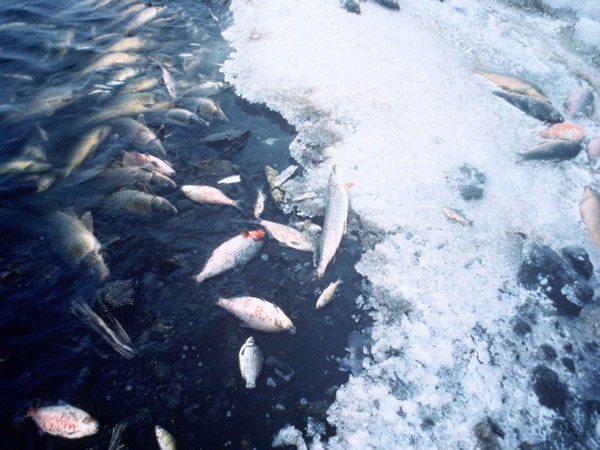
Representative Image

Washington D.C. [USA], Aug 15 (ANI): In the recent decade, the total human impacts on the world's oceans have nearly doubled and could double again in the next decade without adequate action, suggests researchers.
A study published in the journal 'Scientific Reports,' assessed for the first time where the combined impacts that humans are having on oceans, from nutrient pollution to overfishing, are changing and how quickly. In nearly 60 per cent of the ocean, the cumulative impacts are increasing significantly and, in many places, at a pace that appears to be accelerating.
"That creates even more urgency to solve these problems," said lead author Ben Halpern, director of NCEAS and a professor at UC Santa Barbara's Bren School of Environmental Science & Management.
Climate change is a key factor driving the increase across the world, as seas warm, acidify and rise. On top of that, commercial fishing, runoff from land-based pollution and shipping are intensifying progressively each year in many areas of the ocean.
"It's a multifactor problem that we need to solve. We can't just fix one thing if we want to slow and eventually stop the rate of increase in cumulative impacts," said Halpern.
The study also projected the impacts one decade into the future, based on the rate of change in the recent past, finding that they could double again if the pace of change continues unchecked.
The assessment provides a holistic perspective of where and how much human activities shape ocean change, which is essential to policy and planning.
"If you don't pay attention to the big picture, you miss the actual story. The bigger picture is critical if you want to make smart management decision, where are you going to get your biggest bang for your buck," said Halpern.
Regions of particular concern include Australia, Western Africa, the Eastern Caribbean islands and the Middle East, among others. Coastal habitats such as mangroves, coral reefs and seagrasses are among the hardest-hit ecosystems.
There is an upside to the story, however. The authors did find "success stories" around every continent, areas where impacts have declined, such as the seas of South Korea, Japan, the United Kingdom and Denmark, all of which have seen significant decreases in commercial fishing and pollution.
These declines suggested that policies and other actions to improve ocean conditions are making a difference although the analysis does not attribute specific actions to those declines.
"We can improve things. The solutions are known and within our grasp. We just need the social and political will to take action," said Halpern. (ANI)

Get the App

What to Read Next

Science

When devices can read human emotions without a camera: Study

When devices can read human emotions without a camera: Study

Tokyo Metropolitan University researchers employed long-term skin conductance measurements to distinguish between emotions. Volunteers were given videos representing frightening scenarios, family bonding, and humour, while their skin conductance was measured.

Read More
Science

'Nuroscience study results can be better predicted by AI'

'Nuroscience study results can be better predicted by AI'

Large language models, a type of AI that analyses text, can anticipate the results of proposed neuroscience studies more correctly than human experts, according to a new study led by UCL (University College London) researchers.

Read More
Science

Gut microbes play role in regulating stress responsiveness

Gut microbes play role in regulating stress responsiveness

A groundbreaking study has revealed the critical role of gut bacteria in regulating stress responses through interactions with the body's circadian rhythms.

Read More
Science

Alternate method to study changes during DNA replication process

Alternate method to study changes during DNA replication process

Researchers at Colorado State University discovered an alternative way for studying alterations during the DNA replication process in lab settings using genetically modified yeast. The novel methodology provides a clearer picture than current pharmacological methods for understanding cell cycle arrest, a fundamental mechanism critical to cancer treatment and genetic concerns.

Read More
Science

Alzheimer’s disease can damage brain in two phases

Alzheimer’s disease can damage brain in two phases

Alzheimer's disease may cause brain damage in two stages, according to new research supported by the National Institutes of Health (NIH) that uses sophisticated brain mapping methods.

Read More
Science

Study finds new ways to prevent, treat type 2 diabetes

Study finds new ways to prevent, treat type 2 diabetes

Pancreatic cells, like human cells, have a limit to how much stress they can handle before they start to break down. Through overstimulation of these cells, certain stresses like inflammation and hyperglycemia lead to the onset of type 2 diabetes.

Read More
Science

Researchers shed light on possible endosymbiosis

Researchers shed light on possible endosymbiosis

Endosymbiosis is a remarkable biological phenomenon in which one creature resides within another. Such an unconventional partnership is usually advantageous to both parties. Even in human bodies, we find evidence of such cohabitation: mitochondria, the cells' powerhouses, originated from an ancient endosymbiosis. Bacteria long ago invaded and colonized other cells. This coexistence created the groundwork for mitochondria, which are found in the cells of plants, animals, and fungi.

Read More
Science

Study: Role of tRNA modifying enzyme in brain function

Study: Role of tRNA modifying enzyme in brain function

A pioneering study undertaken by a Kumamoto University research team shed light on the crucial role of TRMT10A, a tRNA methylation enzyme, in sustaining brain function. The findings show how TRMT10A deficiency reduces specific transfer RNA (tRNA) levels in the brain, altering protein synthesis and affecting synapse structure and function.

Read More
Science

Researchers discover changes in the brain throughout pregnancy

Researchers discover changes in the brain throughout pregnancy

Pregnancy is a transforming period in a person's life during which the body undergoes rapid physiological adjustments to prepare for parenthood, as we all know. What the broad hormonal alterations caused by pregnancy do to the brain is still a mystery.

Read More
Science

Researchers give more insight into heat perception in humans

Researchers give more insight into heat perception in humans

The Medical University of Vienna's research has significantly advanced our knowledge of how humans perceive heat. A group of scientists has discovered a particular type of cell structure involved in heat recognition.

Read More
Home About Us Our Products Advertise Contact Us Terms & Condition Privacy Policy

Copyright © aninews.in | All Rights Reserved.




