 हिंदी खबर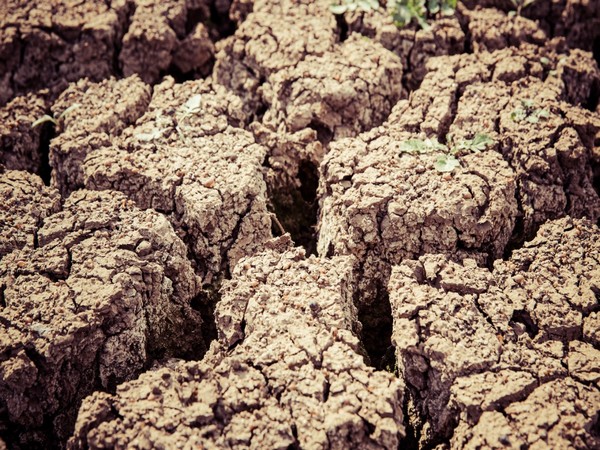

Bonn [Germany], April 28 (ANI): Land is being degraded and damaged in an unsustainable manner due to human activities, according to a new UN report.
Up to 40 per cent of earth's land has already been degraded, mainly through modern agriculture and if business as usual continues, the report projects an additional degradation by the year 2050 of an area almost the size of South America.
The second edition of the 'Global Land Outlook' (GLO) from the United Nations Convention to Combat Desertification (UNCCD), which comes ahead of the UNCCD's COP15 in Africa, sheds light on the way land resources - soil, water and biodiversity - are currently mismanaged and misused and how it threatens the health and continued survival of many species on Earth, including our own.
The report, however, says that there is hope of containing climate change and species loss if the lands are restored and protected.
Land degradation, it says directly affects half of humanity and threatens roughly half of global GDP (USD44 trillion).
The report highlights nations' current pledge to restore 1 billion degraded hectares by 2030 requires USD 1.6 trillion this decade - a fraction of annual $700 billion in fossil fuel and agricultural subsidies.
The GLO 2 report has been in the making for five years with 21 partner organizations, and with over 1,000 references.
It offers an overview of unprecedented breadth and projects the planetary consequences of three scenarios through 2050: business as usual, restoration of 50 million square km of land, and restoration measures augmented by the conservation of natural areas important for specific ecosystem functions.
It also assessed the potential contributions of land restoration investments to climate change mitigation, biodiversity conservation, poverty reduction, human health and other key sustainable development goals.
"At no other point in modern history has humanity faced such an array of familiar and unfamiliar risks and hazards, interacting in a hyper-connected and rapidly changing world. We cannot afford to underestimate the scale and impact of these existential threats. Conserving, restoring, and using our land resources sustainably is a global imperative, one that requires action on a crisis footing...Business as usual is not a viable pathway for our continued survival and prosperity," the report warned.
GLO2 also mentioned hundreds of examples from around the world that demonstrate the potential of land restoration.
The report comes ahead of the UNCCD's 15th session of the Conference of Parties to be held in Abidjan, Cote d'Ivoire (COP15, 9-20 May).
"Modern agriculture has altered the face of the planet more than any other human activity. We need to urgently rethink our global food systems, which are responsible for 80 per cent of deforestation, 70 per cent of freshwater use, and the single greatest cause of terrestrial biodiversity loss," Ibrahim Thiaw, Executive Secretary of the UNCCD, said.
"Investing in large-scale land restoration is a powerful, cost-effective tool to combat desertification, soil erosion, and loss of agricultural production. As a finite resource and our most valuable natural asset, we cannot afford to continue taking land for granted," Ibrahim added. (ANI)


