

ADD ANI AS A TRUSTED SOURCE
googleads
ANI Logo
Menu
Science

How intense and dangerous is cosmic radiation on the Moon?

Washington [US], September 26 (ANI): The Chang'e-4 lunar lander touched down on the far side of the Moon on 3 January 2019, with a German instrument for measuring space radiation on board. Since then, the Lunar Lander Neutron and Dosimetry (LND) instrument has been measuring temporally resolved cosmic radiation for the first time.

ANI Sep 26, 2020 07:45 IST googleads

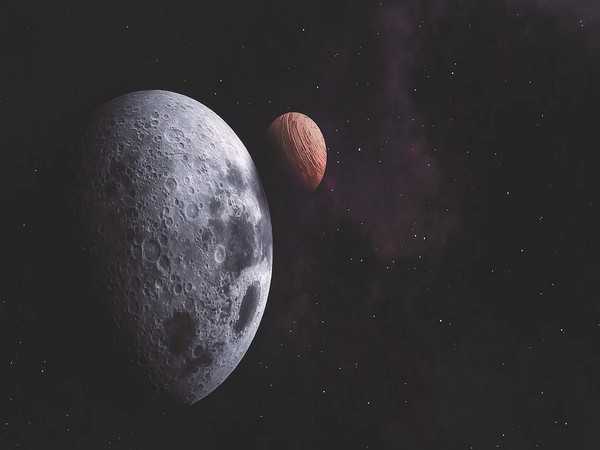
Representative image

Washington [US], September 26 (ANI): The Chang'e-4 lunar lander touched down on the far side of the Moon on 3 January 2019, with a German instrument for measuring space radiation on board. Since then, the Lunar Lander Neutron and Dosimetry (LND) instrument has been measuring temporally resolved cosmic radiation for the first time.
Earlier devices could only record the entire 'mission dose.' In its current issue, the scientific journal Science Advances reports on the work of the international group of scientists involved with the LND, including researchers from the German Aerospace Center (Deutsches Zentrum fuer Luft- und Raumfahrt; DLR). Their investigations have involved more precise radiation measurements on the Moon.
"Over the coming years and decades, various nations are planning to send crewed missions to explore the Moon. Space radiation poses a significant risk to the health of humans. The Apollo astronauts carried radiation measuring devices, referred to as dosimeters, on their bodies. But these only determined the radiation exposure over the course of the entire mission," says Oliver Angerer, LND Project Manager at the DLR Space Administration. With the LND instrument, it is possible to measure the various characteristics of the radiation field over time intervals of 1, 10, or 60 minutes. This enables researchers to calculate the 'equivalent dose,' which is important for estimating biological effects.
High radiation exposure in a spacesuit
DLR radiation physicist Thomas Berger from the DLR Institute of Aerospace Medicine, who participated in the publication explains: "The radiation exposure we measured is a good indication of the radiation inside a spacesuit. The measurements give us an equivalent dose rate -- the biologically weighted radiation dose per unit of time -- of around 60 microsieverts per hour. For comparison, during a long-haul flight from Frankfurt to New York, the dose rate is five to 10 times lower than this. On Earth's surface, it is some 200 times lower. In other words, a long-term stay on the Moon will expose astronauts' bodies to high doses of radiation."
"Human bodies are simply not made to be exposed to space radiation," adds Robert Wimmer-Schweingruber of the Christian-Albrecht University (CAU) in Kiel, whose team developed and built the LND instrument. "On longer missions to the Moon, astronauts will have to protect themselves from it -- by covering their habitat with a thick layer of lunar rock, for example. This could reduce the risk of cancer and other illnesses caused by long periods of time spent on the Moon."
The instrument developed in Kiel conducts measurements throughout the lunar day, but like all other scientific devices on the lander, remains switched off throughout the extremely cold, approximately two-week lunar night, to save power. The instrument and lander were designed to conduct their measurements for at least one year -- a target they have already surpassed. The data from the LND and the lander are transmitted to Earth via the relay satellite Queqiao ('Magpie Bridge'), which is located above the far side of the Moon.
Astronautical space exploration on the Moon and beyond
The radiation data are also relevant for future interplanetary missions. Since the Moon has neither a protective magnetic field nor an atmosphere, the radiation field on the Moon's surface is similar to that in interplanetary space. "With that in mind, the LND measurements are also used to develop computer models to calculate the expected radiation exposure, refine our models, and thus contribute towards our work on radiation protection for astronauts on future missions. It is vital that the detector also allows conclusions to be drawn about the composition of the radiation field, such as how many neutrons and high energy-charged particles are present," explains Berger. (ANI)


Get the App

What to Read Next

Science

New method guides magnetism without magnets

New method guides magnetism without magnets

Researchers at Paul Scherrer Institute PSI have demonstrated an innovative method to control magnetism in materials using an energy-efficient electric field.

Read More
Science

Amphibians bounce-back from Earth’s greatest mass extinction

Amphibians bounce-back from Earth’s greatest mass extinction

Researchers at the University of Bristol discovered that ancient frog ancestors survived the biggest mass extinction of species by eating on freshwater prey that evaded terrestrial predators.

Read More
Science

New insights into how cancer evades the immune system: Study

New insights into how cancer evades the immune system: Study

Immunotherapy research primarily focuses on better recognition of cancer cells by the body's own immune system. Researchers at Amsterdam UMC and Moffitt Cancer Center have taken a different approach.

Read More
Science

Scientists use AI to better understand nanoparticles: Study

Scientists use AI to better understand nanoparticles: Study

A group of scientists has created a way to illuminate the dynamic behavior of nanoparticles, which are essential components in the production of pharmaceuticals, electronics, and industrial and energy-conversion materials.

Read More
Science

New device could allow you to taste cake in virtual reality

New device could allow you to taste cake in virtual reality

The 'e-Taste' interface employs sensors and wireless chemical dispensers to enable remote taste perception, often known as gestation. Field testing done by researchers at The Ohio State University confirmed the device's ability to digitally simulate a range of taste intensities, while still offering variety and safety for the user.

Read More
Science

Strand Life Sciences launches portal for rare disease diagnosis

Strand Life Sciences launches portal for rare disease diagnosis

Marking Rare Disease Day, Strand Life Sciences, a subsidiary of Reliance Industries and a leading genomics research company, has launched the StrandOmics Portal, an innovative digital platform designed to assist doctors in diagnosing rare diseases more efficiently.

Read More
Science

Study reveals impact of animals as architects of Earth

Study reveals impact of animals as architects of Earth

A new study led by Professor Gemma Harvey from Queen Mary University of London has revealed how hundreds of species shape the landscapes we depend on, from termite mounds visible from space to beavers creating wetlands and hippos carving drainage systems.

Read More
Science

Opposing arrows of time emerge from certain quantum systems

Opposing arrows of time emerge from certain quantum systems

Researchers at the University of Surrey made a thought-provoking discovery. A new study reveals that opposing arrows of time can theoretically emerge from certain quantum systems.

Read More
Science

COVID-19 severity may be predicted by White Blood Cell Count

COVID-19 severity may be predicted by White Blood Cell Count

A COVID-19 diagnosis is no longer as frightening as it used to be, thanks to developments in treatment choices. However, a new study reveals that leukocyte (white blood cell) count may now be used to identify who is more likely to develop more significant disease symptoms.

Read More
Science

Seals can essentially act as 'smart sensors': Study

Seals can essentially act as 'smart sensors': Study

A new study by marine biologists reports that seals can essentially act as 'smart sensors' for monitoring fish populations in the ocean's eerily dim 'twilight zone.'

Read More
Home About Us Our Products Advertise Contact Us Terms & Condition Privacy Policy

Copyright © aninews.in | All Rights Reserved.


