

ADD ANI AS A TRUSTED SOURCE
googleads
ANI Logo
Menu
Science

Hotter weather due to climate change could lead to more mosquitos: Study

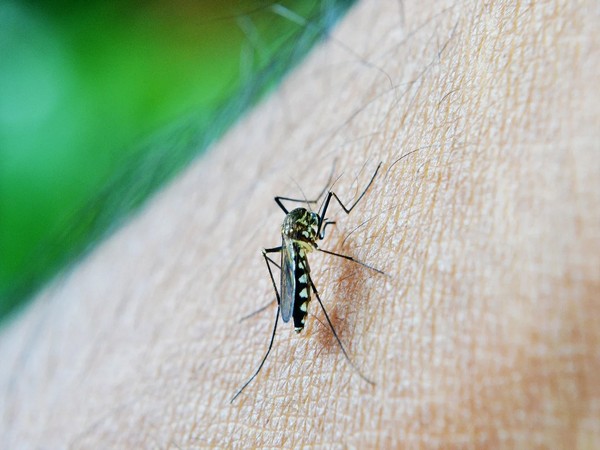
A recent study conducted by Virginia Commonwealth University scientists found that a warmer environment may result in more mosquitos as predators struggle to maintain their number.

ANI Dec 23, 2023 22:56 IST googleads

Representative Image

Virginia [US], December 23 (ANI): A recent study conducted by Virginia Commonwealth University scientists found that a warmer environment may result in more mosquitos as predators struggle to maintain their number.
As the cover feature in Ecology, a journal published by the Ecological Society of America, the study -- "Warming and Top-Down Control of Stage-Structured Prey: Linking Theory to Patterns in Natural Systems" -- found that rising temperatures, often linked to climate change, can make predators of mosquito larvae less effective at controlling mosquito populations.
Warmer temperatures accelerate the development time of larvae, leading to a smaller window of time for dragonflies could eat them.
This means there could be nearly twice as many mosquito larvae that make it to adulthood in the study area. The researchers looked at riverine rock pools at Belle Isle along the James River in Richmond and found that warmer temperature pools had more aquatic mosquito larvae, even when their predators that naturally control the populations were present.
The native rock pool mosquito is not an important disease vector, but it is one of the few local mosquitos that doesn't have to feed as an adult to lay eggs. So the findings might apply to similar taxa, like the invasive Asian rock pool mosquito.
"We might see larger populations of everyone's least favorite bug, mosquitos. While the mosquito larvae we studied here [are] the North American rock pool mosquito, these findings likely apply to species of mosquito that do act as vectors for diseases like West Nile or even Zika virus," said Andrew T Davidson, PhD, lead researcher on the study. He conducted the research through the PhD program in VCU's Center for Integrative Life Sciences Education.
Predators help stabilize ecosystems and food webs, and the study looked at predator-prey interaction between dragonfly nymphs and mosquito larvae. Before fieldwork, the research was rooted in concepts of thermal physiology and short-term lab experiments that yielded predictive models of the relationship between predators, prey and temperature in the field. The field study then tested the models in a completely natural environment.
The study builds on Davidson's earlier research in Functional Ecology as well as work by lab mate C. Ryland Stunkle and the rest of the VCU rock pool team. The team also acknowledges the collaborative support of professor Brian Byrd of Western Carolina University's College of Health and Human Sciences.
The recent work led by Davidson was part of a larger National Science Foundation grant that has involved scientists from VCU, the University of Richmond, Radford University, Western Carolina University and Eastern Carolina University. The collaborative award of nearly USD 1 million has included nearly USD 400,000 for VCU. (ANI)


Get the App

What to Read Next

Science

Amphibians bounce-back from Earth’s greatest mass extinction

Amphibians bounce-back from Earth’s greatest mass extinction

Researchers at the University of Bristol discovered that ancient frog ancestors survived the biggest mass extinction of species by eating on freshwater prey that evaded terrestrial predators.

Read More
Science

New insights into how cancer evades the immune system: Study

New insights into how cancer evades the immune system: Study

Immunotherapy research primarily focuses on better recognition of cancer cells by the body's own immune system. Researchers at Amsterdam UMC and Moffitt Cancer Center have taken a different approach.

Read More
Science

Strand Life Sciences launches portal for rare disease diagnosis

Strand Life Sciences launches portal for rare disease diagnosis

Marking Rare Disease Day, Strand Life Sciences, a subsidiary of Reliance Industries and a leading genomics research company, has launched the StrandOmics Portal, an innovative digital platform designed to assist doctors in diagnosing rare diseases more efficiently.

Read More
Science

Discovering the genetics of climate adaptation 

Discovering the genetics of climate adaptation 

As climate change accelerates, plants are under increasing pressure to adapt to changing habitats and environmental conditions.

Read More
Science

Discovery of unexpected collagen structure to influence research

Discovery of unexpected collagen structure to influence research

Collagen, the body's most abundant protein, has long been considered a predictable structural component of tissues.

Read More
Science

Shubhanshu Shukla: IAF officer becomes first Indian astronaut for

Shubhanshu Shukla: IAF officer becomes first Indian astronaut for

Shubhanshu Shukla, Indian Air Force (IAF) officer and one of four astronauts for Indian Space Research Organisation's (ISRO) Gaganyaan mission, has been sele Shubhanshu Shukla, Indian Air Force (IAF) officer and one of four astronauts for Indian Space Research Organisation's (ISRO) Gaganyaan mission, has been selected as the pilot for Axiom Mission 4, scheduled for Spring 2025.cted as the pilot for Axiom Mission 4, scheduled for Spring 2025.

Read More
Science

Weather change linked to heightened risk of Salmonella outbreaks

Weather change linked to heightened risk of Salmonella outbreaks

According to new research from the University of Surrey, climate change has an impact on Salmonella spread. This study builds on prior work by the researchers, which discovered that weather change is contributing to the spread of deadly diarrhoeal illnesses.

Read More
Science

Study finds connection between quantum theory, information theory

Study finds connection between quantum theory, information theory

"Our results have no clear or direct application right now. It's basic research that lays the foundation for future technologies in quantum information and quantum computers. There's enormous potential for complete discoveries in many different research fields," said Guilherme B Xavier, a researcher in quantum communication at Linkoping University, Sweden.

Read More
Science

Bacterial vaccine demonstrates potential as cancer treatment

Bacterial vaccine demonstrates potential as cancer treatment

Columbia researchers developed probiotic bacteria that train the immune system to eliminate cancer cells, paving the way for a new class of cancer vaccinations that take advantage of bacteria's innate tumour-targeting abilities. These microbial cancer vaccines can be tailored to each person's specific original tumour and metastases, perhaps preventing future recurrences.

Read More
Science

Alzheimer’s disease can damage brain in two phases

Alzheimer’s disease can damage brain in two phases

Alzheimer's disease may cause brain damage in two stages, according to new research supported by the National Institutes of Health (NIH) that uses sophisticated brain mapping methods.

Read More
Home About Us Our Products Advertise Contact Us Terms & Condition Privacy Policy

Copyright © aninews.in | All Rights Reserved.


