

ADD ANI AS A TRUSTED SOURCE
googleads
ANI Logo
Menu
Science

Hot temperature key factor to predict risk of wildfires, finds study

Washington D.C. [USA] Apr 25 (ANI): A recent study claims that hot temperature is the most important factor in predicting the risk of wildfire than humidity, rainfall, moisture.

ANI Apr 25, 2019 13:22 IST googleads

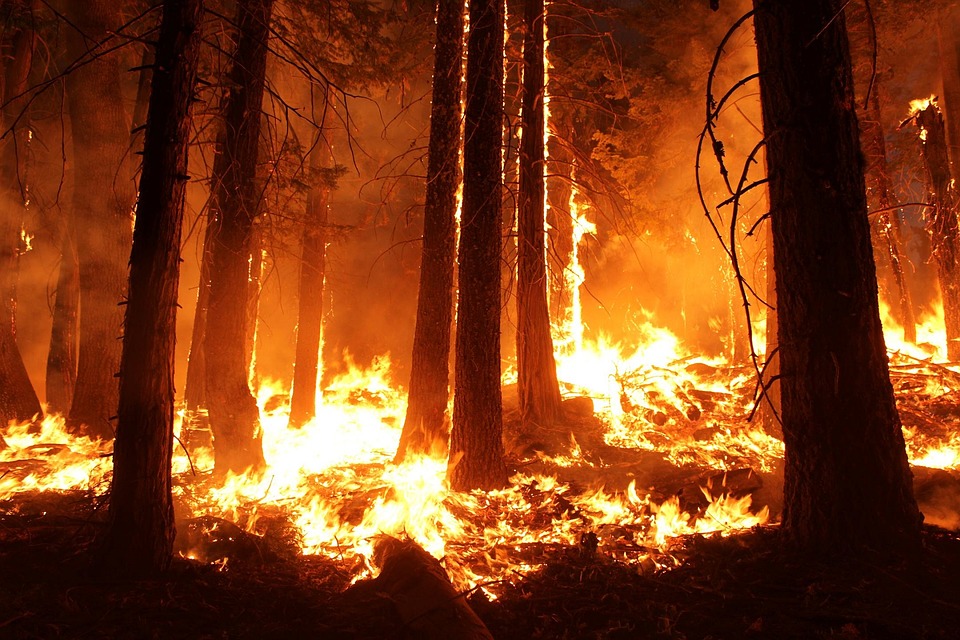
Representative Image

Washington D.C. [USA] Apr 25 (ANI): Hot temperature is the most important factor in predicting the risk of wildfire than humidity, rainfall, and moisture, a new study has revealed. 
The details were presented in the meeting of the American Association of Geographers. 
Geography professor Susanna Tong and her students studied a variety of weather, microclimate and ground conditions in historic fires around Phoenix, Arizona, and Las Vegas, Nevada, to determine which might be the most important in predicting the risk of wildfire.
They found that temperature was a better predictor than humidity, rainfall, moisture content of the vegetation and soil and other factors.
"We examined a long list of data. The results show that the maximum temperatures had the highest correlation with fires. That makes sense because if you have high temperatures, a fire is easier to ignite," student Diqi Zeng said.
"The recent California wildfire, which is the deadliest and most destructive wildfire on record, showed clearly the devastating consequences. A better understanding of wildfire incidents is therefore crucial in fire prevention and future planning," their study said.
"What I'm trying to do is investigate the causal factors to create a risk map to examine where wildfires are most likely so people will be more informed," student researcher Wan said.
Researchers used geospatial and statistical tools to study the problem. They found that the lack thereof even months prior to an event was a contributing factor.
Likewise, the researchers found that wildfires were more likely to start in woodlands than pastures, possibly because more of those pastures are owned by ranchers who plan for fire by removing dead timber or brush and adding fire breaks.
The researchers studied vegetation cover and type, moisture level, proximity to roads and population centers and historic weather data. Fires can be more harmful to vegetation in semiarid Arizona and Nevada than parts of California that get far more rainfall, Tong said.
Finding long-term solutions to reduce fire risk will require a coordinated effort, Tong said.
Climatologists can build forecasts that help forestry officials plan for fire season and forestry officials can remove dead timber to minimize fires that do break out.
"It's a complex issue. Maybe better zoning regulations, better evacuation strategies, better forecasting, and better monitoring," Tong said.
"Because of global warming, wildfires are only expected to get worse. We need to better understand what causes these fires and how to control them," student Zeng said (ANI)

Get the App

What to Read Next

Science

Thermal imaging may help fruits, veggies stay fresher longer: Study

Thermal imaging may help fruits, veggies stay fresher longer: Study

Before your favourite produce arrives at the grocery store, it must be carefully harvested and stored for extended periods of time. A recent University of Georgia assessment argues that new temperature sensing devices could make that procedure considerably easier, as agricultural issues are exacerbated by changing climates.

Read More
Science

Fever promotes increased activity, mitochondrial damage

Fever promotes increased activity, mitochondrial damage

Researchers at Vanderbilt University Medical Centre showed that fever temperatures increase immune cell metabolism, proliferation, and activity, but they also promote mitochondrial stress, DNA damage, and cell death in a specific subgroup of T cells.

Read More
Science

Simple method can increase accuracy of plant genetics research

Simple method can increase accuracy of plant genetics research

Researchers have developed a simple strategy that improves the accuracy of approaches used to understand how environmental elements like temperature affect gene activity in plants.

Read More
Science

Simple trick can improve accuracy of plant genetics research

Simple trick can improve accuracy of plant genetics research

Researchers have published a simple approach that increases the accuracy of techniques used to understand how environmental factors, such as temperature, impact gene activity in plants.

Read More
Science

Study finds temperature influence microbial competition in rivers

Study finds temperature influence microbial competition in rivers

The finding suggests that rivers may offer a kind of defence against the spread of ARGs in wastewater. It was also contrary to what the researchers expected.

Read More
Science

Study finds body temperature is linked to depression

Study finds body temperature is linked to depression

A study from UC San Francisco revealed that individuals with depression may benefit from lowering their body temperatures, as they tend to be higher.

Read More
Science

Temperature can influence microbial competition in rivers: Study

Temperature can influence microbial competition in rivers: Study

Researchers reported this week in mSphere that ARGs penetrate and initially join natural biofilms after being introduced to a river.

Read More
Science

Climate change threatens global forest carbon sequestration

Climate change threatens global forest carbon sequestration

A new analysis of U.S. Forest Service data shows that climate change is changing forests differently across the country. With increasing temperatures, intensifying droughts, wildfires, and disease outbreaks wreaking havoc on trees, researchers warn that forests in the American West are facing the brunt of the repercussions.

Read More
Science

Study explores origins of life using ancient hot springs

Study explores origins of life using ancient hot springs

Researchers use historic hot springs to investigate the beginnings of life on Earth.

Read More
Science

Hotter weather due to climate change could lead to more mosquitos

Hotter weather due to climate change could lead to more mosquitos

A recent study conducted by Virginia Commonwealth University scientists found that a warmer environment may result in more mosquitos as predators struggle to maintain their number.

Read More
Home About Us Our Products Advertise Contact Us Terms & Condition Privacy Policy

Copyright © aninews.in | All Rights Reserved.




