

ADD ANI AS A TRUSTED SOURCE
googleads
ANI Logo
Menu
Science

Highly effective measles virus-based Th1-biased coronavirus vaccine

Washington [US], December 1 (ANI): A measles-virus-based COVID-19 vaccine might be able to prevent both COVID-19 and measles, according to a new study.

ANI Dec 01, 2020 08:23 IST googleads

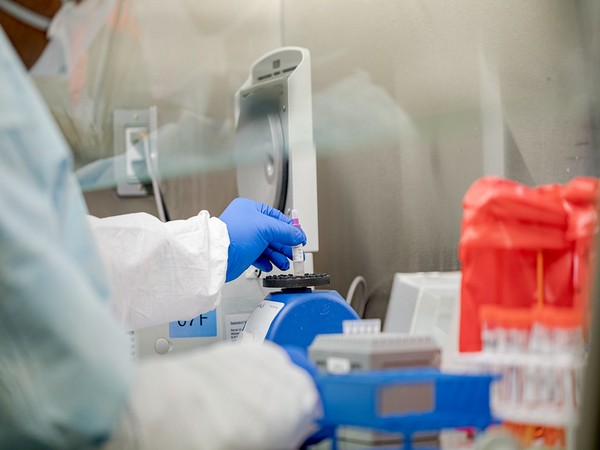
Representative image

Washington [US], December 1 (ANI): A measles-virus-based COVID-19 vaccine might be able to prevent both COVID-19 and measles, according to a new study.
As per the authors, a measles-virus-based COVID-19 vaccine could be administered as part of routine measles immunization schedules.
In the study published in the journal PNAS, researchers report a COVID-19 vaccine candidate based on a live-attenuated measles virus.
SARS-CoV-2, the virus that causes COVID-19, has killed more than 1 million people worldwide, underscoring the pressing need for an effective vaccine.
Michael Muhlebach and colleagues explored the possibility of using a live-attenuated measles virus as a vector for a coronavirus vaccine. The authors inserted the gene for the SARS-CoV-2 spike protein into the genome of a measles virus strain used in measles vaccines.
Sera of mice or hamsters vaccinated with this recombinant virus contained antibodies capable of effectively neutralising SARS-CoV-2 and measles virus.
Cytotoxic T cells from vaccinated mice selectively killed cells expressing SARS-CoV-2 spike protein upon stimulation with the spike protein.
Antibody and cytokine levels in vaccinated mice were consistent with a Th1-biased immune response, suggesting a low risk of immunopathologies such as antibody-dependent enhancement and enhanced respiratory disease.
In hamster and mouse models, vaccinated animals exhibited lower viral loads and less severe pathology following infection with SARS-CoV-2 than unvaccinated animals. (ANI)


Get the App

What to Read Next

Science

COVID-19 severity may be predicted by White Blood Cell Count

COVID-19 severity may be predicted by White Blood Cell Count

A COVID-19 diagnosis is no longer as frightening as it used to be, thanks to developments in treatment choices. However, a new study reveals that leukocyte (white blood cell) count may now be used to identify who is more likely to develop more significant disease symptoms.

Read More
Science

Discovery of unexpected collagen structure to influence research

Discovery of unexpected collagen structure to influence research

Collagen, the body's most abundant protein, has long been considered a predictable structural component of tissues.

Read More
Science

Tool for detecting problems during protein synthesis

Tool for detecting problems during protein synthesis

Protein synthesis in eukaryotic cells--found in plants, animals, and fungi--involves more than just the straightforward ribosome assembly of amino acids.

Read More
Science

Bacterial vaccine demonstrates potential as cancer treatment

Bacterial vaccine demonstrates potential as cancer treatment

Columbia researchers developed probiotic bacteria that train the immune system to eliminate cancer cells, paving the way for a new class of cancer vaccinations that take advantage of bacteria's innate tumour-targeting abilities. These microbial cancer vaccines can be tailored to each person's specific original tumour and metastases, perhaps preventing future recurrences.

Read More
Science

Study finds new ways to prevent, treat type 2 diabetes

Study finds new ways to prevent, treat type 2 diabetes

Pancreatic cells, like human cells, have a limit to how much stress they can handle before they start to break down. Through overstimulation of these cells, certain stresses like inflammation and hyperglycemia lead to the onset of type 2 diabetes.

Read More
Science

Study: Role of tRNA modifying enzyme in brain function

Study: Role of tRNA modifying enzyme in brain function

A pioneering study undertaken by a Kumamoto University research team shed light on the crucial role of TRMT10A, a tRNA methylation enzyme, in sustaining brain function. The findings show how TRMT10A deficiency reduces specific transfer RNA (tRNA) levels in the brain, altering protein synthesis and affecting synapse structure and function.

Read More
Science

Researchers give more insight into heat perception in humans

Researchers give more insight into heat perception in humans

The Medical University of Vienna's research has significantly advanced our knowledge of how humans perceive heat. A group of scientists has discovered a particular type of cell structure involved in heat recognition.

Read More
Science

Immune cells prevent lung healing following viral infection

Immune cells prevent lung healing following viral infection

Researchers found a mechanism by which immune cells impede the regeneration of the lungs' defensive barrier following viral infections such as COVID-19.

Read More
Science

Study finds certain diabetes medications might prevent dementia

Study finds certain diabetes medications might prevent dementia

According to a study published, sodium-glucose cotransporter-2 (SGLT-2) inhibitors used to treat type 2 diabetes may prevent dementia, with higher advantages with prolonged treatment.

Read More
Science

Study finds how genetic diagnostics of ultra-rare diseases

Study finds how genetic diagnostics of ultra-rare diseases

Most rare diseases are caused by genetics. A molecular genetic diagnosis can be made more quickly and readily by identifying the underlying genetic change, for instance by exome sequencing (ES). The analysis of every region of our DNA that codes for a protein is known as ES.

Read More
Home About Us Our Products Advertise Contact Us Terms & Condition Privacy Policy

Copyright © aninews.in | All Rights Reserved.


