

ADD ANI AS A TRUSTED SOURCE
googleads
ANI Logo
Menu
Science

Highly accurate non-invasive test for major liver diseases created by researchers

Washington [US], July 15 (ANI): Researchers have created a liquid biopsy test, which uses two circulating proteins, to test for major liver diseases. The test was found to be highly accurate, sensitive, and specific for both NASH and liver fibrosis.

ANI Jul 15, 2022 01:26 IST googleads

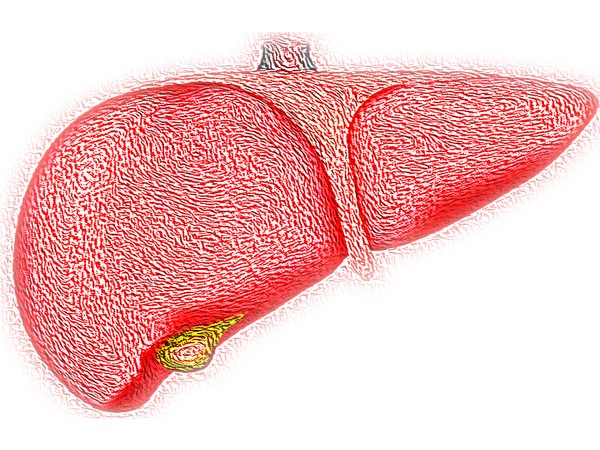
Representative image

Washington [US], July 15 (ANI): Researchers have created a liquid biopsy test, which uses two circulating proteins, to test for major liver diseases. The test was found to be highly accurate, sensitive, and specific for both NASH and liver fibrosis.
For the first time, a non-invasive test will allow for the determination of staging of both diseases without recurring invasive liver biopsy. The findings were published in the journal Gut.
Non-alcoholic steato-hepatitis (NASH) is the most severe form of non-alcoholic fatty liver disease (NAFLD) and is diagnosed in approximately 60 per cent of NAFLD patients. NASH puts people at risk of progressing to advanced liver diseases such as liver fibrosis, cirrhosis, and liver cancer.
NAFLD affects approximately 52 million people in Europe and 64 million people in the US, costing $138 billion annually to the European and US healthcare systems combined.
Currently, NASH can only be diagnosed with invasive liver biopsy, which is the standard of diagnosis, but is expensive and has co-morbidities and complications. There is also no reliable blood (i.e. liquid biopsy) tests for the diseases because of low sensitivity and specificity. Current blood tests are also unable to reliably predict NASH and fibrosis staging.
Professor Geltrude Mingrone, from King's College London and Catholic University of Rome, Italy, looked to find a more accurate liquid biopsy test.
The paper, published in the leading journal Gut, identified two protein biomarkers, PLIN2 and RAB14, that were used as part of an algorithm to identify people with NASH and/or liver fibrosis. The ability of these proteins to detect NASH was tested in cohorts of people with either biopsy-confirmed NASH or liver fibrosis.
The algorithms, which used A.I., gave impressive results, including the sensitivity of 88-95 per cent, a specificity of 90 per cent-100 per cent, and an overall accuracy of 92-93 per cent for NASH. For fibrosis, they were even better, with a sensitivity of 99 per cent-100 per cent, specificity of 90 per cent-96 per cent, and accuracy of 98 per cent-99 per cent. As well as being much more accurate than all other currently available biomarkers, it is now possible to predict the stages of the diseases without an invasive liver biopsy.
Professor Geltrude Mingrone, from King's College London, said: "This blood test will allow to define the real prevalence of NASH in large and small populations, including children and adolescents, avoiding the need for invasive liver biopsy. Importantly, it will also allow to monitor the efficacy of NASH treatments over time, reducing screen failures and helping generate better drugs."
These results show that the PLIN2/RAB14-based liquid biopsy can provide rapid and cost-effective testing to combat the growing epidemic of NASH and liver fibrosis. This will be an invaluable tool in diagnosing and monitoring cases of liver diseases, enabling people to receive earlier treatment.
The authors also believe that the testing will allow for the improved capacity for researchers to study NASH and liver fibrosis in the general population, including disease progression, and record the effects of treatment, from lifestyle to surgical and pharmacological interventions.
No NASH drug has been approved by the FDA or EMA due to the lack of an accurate, reliable, and non-invasive test. Between 65-73 per cent of patients that currently enroll in clinical trials for NASH-related therapies are found to be ineligible for the trial due to screen failure. The test - developed in collaboration with Metadeq Corp. - is expected to significantly reduce screen failures in clinical trials and improve the chances of new life-saving drugs reaching the market. (ANI)


Get the App

What to Read Next

Science

Amphibians bounce-back from Earth’s greatest mass extinction

Amphibians bounce-back from Earth’s greatest mass extinction

Researchers at the University of Bristol discovered that ancient frog ancestors survived the biggest mass extinction of species by eating on freshwater prey that evaded terrestrial predators.

Read More
Science

Scientists use AI to better understand nanoparticles: Study

Scientists use AI to better understand nanoparticles: Study

A group of scientists has created a way to illuminate the dynamic behavior of nanoparticles, which are essential components in the production of pharmaceuticals, electronics, and industrial and energy-conversion materials.

Read More
Science

Strand Life Sciences launches portal for rare disease diagnosis

Strand Life Sciences launches portal for rare disease diagnosis

Marking Rare Disease Day, Strand Life Sciences, a subsidiary of Reliance Industries and a leading genomics research company, has launched the StrandOmics Portal, an innovative digital platform designed to assist doctors in diagnosing rare diseases more efficiently.

Read More
Science

New technology enhances gravitational-wave detection: Study

New technology enhances gravitational-wave detection: Study

A team of physicists led by Jonathan Richardson of the University of California, Riverside, demonstrated how new optical technology can extend the detection range of gravitational-wave observatories such as the Laser Interferometer Gravitational-Wave Observatory, or LIGO, and pave the way for future observatories.

Read More
Science

Astronomers find the smallest main-belt asteroids ever detected:

Astronomers find the smallest main-belt asteroids ever detected:

The majority of known asteroids orbit inside the main asteroid belt, which is positioned between Mars and Jupiter at an average distance of around 250 million km from Earth. Since the discovery of the first asteroid in 1801, about 750.000 asteroids have been identified, primarily in the last decade thanks to several optical surveys that examine the sky on clear nights.

Read More
Science

Study finds connection between quantum theory, information theory

Study finds connection between quantum theory, information theory

"Our results have no clear or direct application right now. It's basic research that lays the foundation for future technologies in quantum information and quantum computers. There's enormous potential for complete discoveries in many different research fields," said Guilherme B Xavier, a researcher in quantum communication at Linkoping University, Sweden.

Read More
Science

When devices can read human emotions without a camera: Study

When devices can read human emotions without a camera: Study

Tokyo Metropolitan University researchers employed long-term skin conductance measurements to distinguish between emotions. Volunteers were given videos representing frightening scenarios, family bonding, and humour, while their skin conductance was measured.

Read More
Science

'Nuroscience study results can be better predicted by AI'

'Nuroscience study results can be better predicted by AI'

Large language models, a type of AI that analyses text, can anticipate the results of proposed neuroscience studies more correctly than human experts, according to a new study led by UCL (University College London) researchers.

Read More
Science

Thermal imaging may help fruits, veggies stay fresher longer: Study

Thermal imaging may help fruits, veggies stay fresher longer: Study

Before your favourite produce arrives at the grocery store, it must be carefully harvested and stored for extended periods of time. A recent University of Georgia assessment argues that new temperature sensing devices could make that procedure considerably easier, as agricultural issues are exacerbated by changing climates.

Read More
Science

Biomarker may predict response to immunotherapy in liver cancer

Biomarker may predict response to immunotherapy in liver cancer

According to a preclinical study conducted by Weill Cornell Medicine researchers, it may soon be feasible to detect whether individuals with hepatocellular carcinoma, a kind of liver cancer, may benefit from immunotherapy.

Read More
Home About Us Our Products Advertise Contact Us Terms & Condition Privacy Policy

Copyright © aninews.in | All Rights Reserved.
