

ADD ANI AS A TRUSTED SOURCE
googleads
ANI Logo
Menu
Science

Here's why sunscreen is harmful to seawater

Washington D.C. [USA], Aug 14 (ANI): Researchers studied how sunscreens release different compounds, such as trace metals and inorganic nutrients into Mediterranean seawater, with unknown effects on marine ecology.

ANI Aug 14, 2019 19:08 IST googleads

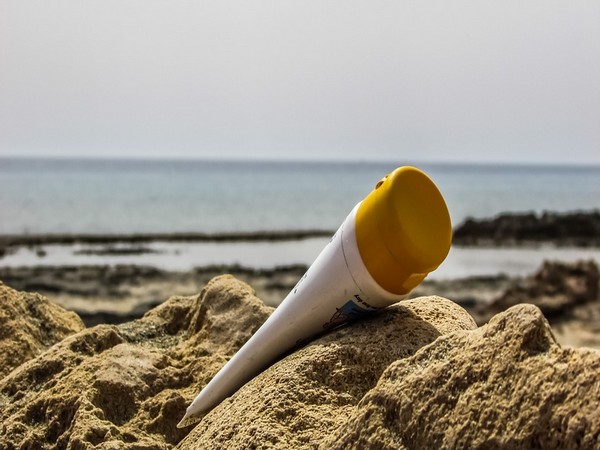
Representative image

Washington D.C. [USA], Aug 14 (ANI): Researchers studied how sunscreens release different compounds, such as trace metals and inorganic nutrients into Mediterranean seawater, with unknown effects on marine ecology.
According to the study published in the journal 'Environmental Science & Technology,' beachgoers are becoming increasingly aware of the potentially harmful effects UV filters from sunscreens can have on coral and other marine organisms when the protective lotions wash off their bodies into the ocean.
Some might choose "coral-safe" sunscreens that lack oxybenzone and octinoxate, the two substances most widely linked to coral reef damage.
However, scientists don't yet know what effects other trace compounds in sunscreens might have on marine ecosystems. As a first step, researcher Araceli Rodriguez-Romero and colleagues wanted to determine how quickly sunscreen releases trace metals and nutrients into seawater, and how sunscreen from beachgoers' bodies could impact the overall levels of the compounds in coastal waters.
The researchers added a commercial, titanium-dioxide-containing sunscreen to samples of Mediterranean seawater and observed how droplets of the lotions released various metals and nutrients into the water.
Some compounds entered the seawater more quickly after UV treatment, which simulated sun exposure. Aluminum, silica, and phosphorus had the highest release rates under both light and dark conditions.
The team used these data to develop a model that predicts the release of compounds from sunscreen under different conditions. Then, they used the model to estimate that, on a typical summer day at the beach, beachgoers could increase the concentration of aluminum in coastal waters by 4% and of titanium by almost 20%.
More research is needed to determine how these metals and nutrients, which are normally present at very low amounts in seawater, could be affecting marine ecosystems, the researchers said. (ANI)

Get the App

What to Read Next

Science

Plastic pollution, seawater flooding effect on coastal plants

Plastic pollution, seawater flooding effect on coastal plants

Two of the planet's most urgent environmental stressors have the potential to affect the development and reproductive production of plants found along the world's coasts, according to new research.

Read More
Science

Rising sea levels may lead to more methane emitted from wetlands

Rising sea levels may lead to more methane emitted from wetlands

Global warming is causing sea levels to rise, which is altering ecosystems. Scientists assumed that the tidal wetlands present in estuaries could create less methane, a strong greenhouse gas because the increased influx of seawater renders these habitats less hospitable to methane-producing microorganisms.

Read More
Science

Study explores origins of life using ancient hot springs

Study explores origins of life using ancient hot springs

Researchers use historic hot springs to investigate the beginnings of life on Earth.

Read More
Science

Study finds way to desalinate seawater using HBD technology

Study finds way to desalinate seawater using HBD technology

The hydrate desalination technique is a low-energy solution that may be used to treat large quantities of brine or polluted water.

Read More
Science

Mineral iron is important in ocean ecosystems: Study

Mineral iron is important in ocean ecosystems: Study

According to new research published in Nature, mineral forms of iron play an important role in regulating the cycling of this bio-essential nutrient in the ocean.

Read More
Science

Study discovers new isopod species that feeds on fish

Study discovers new isopod species that feeds on fish

Researchers discovered a new species of marine cryptofauna in the Florida Keys. The majority of the biodiversity in the ocean is made up of microscopic, hidden species known as cryptofauna. There are 15 species of Gnathia in the region, including the nearly three-millimetre-long isopod.

Read More
Science

Study discovers new isopod species in Florida Keys

Study discovers new isopod species in Florida Keys

A new species of marine cryptofauna has been found in the Florida Keys by an international team of researchers from the University of Miami Rosenstiel School of Marine, Atmospheric, and Earth Science and the Water Research Group from the Unit for Environmental Sciences and Management at the North-West University in South Africa. Most of the biodiversity in the ocean is made up of tiny, covert organisms called cryptofauna.

Read More
Science

Sea snakes redevelop their ability to see colours: Study

Sea snakes redevelop their ability to see colours: Study

According to a new paper published in Genome Biology and Evolution by Oxford University Press, the annulated sea snake, a species of venomous snake found in ocean waters around Australia and Asia, appears to have evolved to see an extended palette of colours after its ancestors lost that ability in response to changing environments.

Read More
Science

Sea snakes might have evolved to see colors again: Research

Sea snakes might have evolved to see colors again: Research

The annulated sea snake, a species of venomous snake found in ocean waters around Australia and Asia, appears to have evolved to see an extended palette of colours after its ancestors lost that ability in response to changing environments, according to a new paper published in Genome Biology and Evolution by Oxford University Press.

Read More
Science

Here's how carbon dioxide is pulled out of seawater

Here's how carbon dioxide is pulled out of seawater

Researchers from all around the world have been working for years to find effective techniques to remove carbon dioxide from the atmosphere as it continues to accumulate in the planet's atmosphere

Read More




