

ADD ANI AS A TRUSTED SOURCE
googleads
ANI Logo
Menu
Science

Here's how plastic upcycling can close carbon cycle

Used face masks, supermarket bags, and food packaging all hold an abundance of potentially usable raw materials. Yet, producing more of these single-use plastics has proven to be considerably less expensive than recovering and recycling them.

ANI Feb 25, 2023 16:04 IST googleads

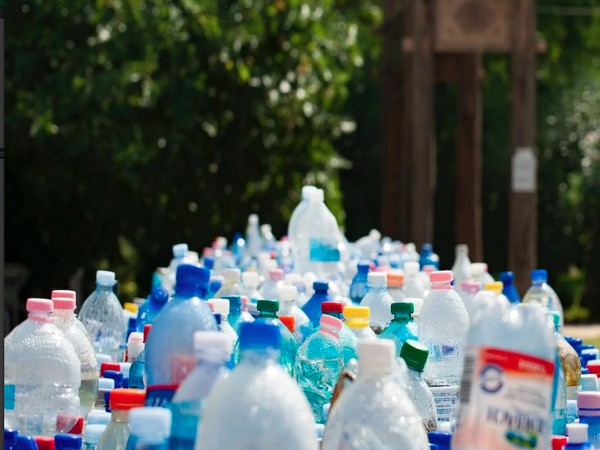
Representative Image

Washington [US], February 25 (ANI): Used face masks, supermarket bags, and food packaging all hold an abundance of potentially usable raw materials. Yet, producing more of these single-use plastics has proven to be considerably less expensive than recovering and recycling them.
Used face masks, supermarket bags, and food packaging all contain a wealth of potentially usable raw materials. Yet, producing more of these single-use plastics has proven to be considerably less expensive than recovering and recycling them.
Typically, recycling plastics requires 'cracking' or splitting apart the tough and stable bonds that also make them so persistent in the environment. This cracking step requires high temperatures, making it expensive and energy intensive.
The novelty here is combining the cracking step with a second reaction step that immediately completes the conversion to a liquid gasoline-like fuel without unwanted byproducts. The second reaction step deploys what is known as alkylation catalysts. These catalysts provide a chemical reaction currently deployed by the petroleum industry to improve the octane rating of gasoline.
Crucially in the current study, the alkylation reaction immediately follows the cracking step in a single reaction vessel, near room temperature (70 degrees C/158 degrees F).
"Cracking just to break the bonds results in them forming another one in an uncontrolled way, and that's a problem in other approaches," said Oliver Y. Gutierrez, a study author and chemist at PNNL. "The secret formula here is that when you break a bond in our system, you immediately make another one in a targeted way that gives you the end product you want. That is also the secret that enables this conversion at low temperature."
In their study, the research team, co-led by scientists from the Technical University of Munich, Germany, pointed to separate, recent developments by the petroleum industry to commercialize the second part of the process reported here for crude oil processing.
"The fact that industry has successfully deployed these emerging alkylation catalysts demonstrates their stable, robust nature," said Johannes Lercher, a senior author of the study, director of PNNL's Institute for Integrated Catalysis, and professor of chemistry at TUM. "This study points to a practical new solution to close the carbon cycle for waste plastic that is closer to implementation than many others being proposed."
In their study, the researchers note a limitation in their findings. The process works for low-density polyethene products (LDPE, plastic resin code #4), such as plastic films and squeezable bottles, and polypropylene products (PP, plastic resin code #5) that are not typically collected in curbside recycling programs in the United States. High-density polyethene (HPDE, plastic resin code #2) would require pretreatment to allow the catalyst access to the bonds it needs to break.
Petroleum-based plastic waste is an untapped resource that can serve as the starting material for useful durable materials and for fuels. More than half of the 360 million tons of plastics produced globally each year are the plastics targeted in this study. But looking at a mountain of plastic and seeing its value requires an innovator's mindset, a chemist's ingenuity, and a realist's understanding of the economics involved. These scientists are trying to change the dynamic by applying their expertise in efficiently breaking chemical bonds.
"To solve the problem of persistent waste plastic, we need to reach a critical point where it makes more sense to collect it and return it to use than to treat it as disposable," said Lercher. "We've shown here that we can make that conversion quickly, at mild conditions, which provides one of the incentives to move forward to that tipping point." (ANI)


Get the App

What to Read Next

Science

New method guides magnetism without magnets

New method guides magnetism without magnets

Researchers at Paul Scherrer Institute PSI have demonstrated an innovative method to control magnetism in materials using an energy-efficient electric field.

Read More
Science

New insights into how cancer evades the immune system: Study

New insights into how cancer evades the immune system: Study

Immunotherapy research primarily focuses on better recognition of cancer cells by the body's own immune system. Researchers at Amsterdam UMC and Moffitt Cancer Center have taken a different approach.

Read More
Science

New device could allow you to taste cake in virtual reality

New device could allow you to taste cake in virtual reality

The 'e-Taste' interface employs sensors and wireless chemical dispensers to enable remote taste perception, often known as gestation. Field testing done by researchers at The Ohio State University confirmed the device's ability to digitally simulate a range of taste intensities, while still offering variety and safety for the user.

Read More
Science

Strand Life Sciences launches portal for rare disease diagnosis

Strand Life Sciences launches portal for rare disease diagnosis

Marking Rare Disease Day, Strand Life Sciences, a subsidiary of Reliance Industries and a leading genomics research company, has launched the StrandOmics Portal, an innovative digital platform designed to assist doctors in diagnosing rare diseases more efficiently.

Read More
Science

Study reveals impact of animals as architects of Earth

Study reveals impact of animals as architects of Earth

A new study led by Professor Gemma Harvey from Queen Mary University of London has revealed how hundreds of species shape the landscapes we depend on, from termite mounds visible from space to beavers creating wetlands and hippos carving drainage systems.

Read More
Science

Opposing arrows of time emerge from certain quantum systems

Opposing arrows of time emerge from certain quantum systems

Researchers at the University of Surrey made a thought-provoking discovery. A new study reveals that opposing arrows of time can theoretically emerge from certain quantum systems.

Read More
Science

COVID-19 severity may be predicted by White Blood Cell Count

COVID-19 severity may be predicted by White Blood Cell Count

A COVID-19 diagnosis is no longer as frightening as it used to be, thanks to developments in treatment choices. However, a new study reveals that leukocyte (white blood cell) count may now be used to identify who is more likely to develop more significant disease symptoms.

Read More
Science

Seals can essentially act as 'smart sensors': Study

Seals can essentially act as 'smart sensors': Study

A new study by marine biologists reports that seals can essentially act as 'smart sensors' for monitoring fish populations in the ocean's eerily dim 'twilight zone.'

Read More
Science

New technology enhances gravitational-wave detection: Study

New technology enhances gravitational-wave detection: Study

A team of physicists led by Jonathan Richardson of the University of California, Riverside, demonstrated how new optical technology can extend the detection range of gravitational-wave observatories such as the Laser Interferometer Gravitational-Wave Observatory, or LIGO, and pave the way for future observatories.

Read More
Science

Discovery of unexpected collagen structure to influence research

Discovery of unexpected collagen structure to influence research

Collagen, the body's most abundant protein, has long been considered a predictable structural component of tissues.

Read More
Home About Us Our Products Advertise Contact Us Terms & Condition Privacy Policy

Copyright © aninews.in | All Rights Reserved.


