

ADD ANI AS A TRUSTED SOURCE
googleads
Menu
Science

Heat-tolerant coral may trade fast development for resilience: Study

Over a two-month study period, the researchers measured the growth of rice corals dominated by heat-tolerant or heat-sensitive symbiotic algae

ANI Nov 17, 2023 22:45 IST googleads

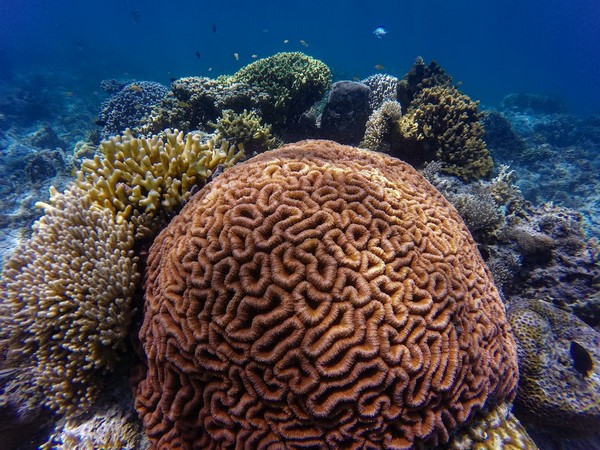
Representative Image

California [US], November 17 (ANI): Algae living within coral soft tissue provide much of the energy required by their hosts, and some symbiotic algae enable corals to withstand warmer water better than others.
In a recent study led by the University of Hawaii at Manoa, researchers discovered a tradeoff for corals dominated by thermally sensitive algae: they grow faster in cooler water.
"As the ocean continues to warm, understanding how symbionts and environmental factors affect coral growth and health will help predict reef futures and inform conservation interventions where coral stocks are selected for specific traits or symbionts," said Shayle Matsuda, a doctoral student at the Hawaii Institute of Marine Biology in the UH Manoa School of Ocean and Earth Science and Technology at the time of the research.
The study was co-led by Matsuda, now a postdoctoral fellow at the Shedd Aquarium, and Mariah Opalek, who conducted the experiment for her undergraduate thesis at UH Manoa. The research team investigated whether rice corals hosting symbiotic algae that can tolerate warmer water may grow more slowly, which could impact survivorship and competition for space on the reef, compared to coral hosting symbionts that are more susceptible to bleaching when ocean waters warm.
Over a two-month study period, the researchers measured the growth of rice corals dominated by heat-tolerant or heat-sensitive symbiotic algae. Additionally, they tested growth across decreasing light levels to see if the tradeoff between growth and tolerance to warm water would be affected by light, which is a major driver of the distribution of these symbionts in Kaneohe Bay, Hawaii.
"This research shows us the complexity of coral growth on a reef," said Opalek, who is now a grant support assistant at Kauai Community. "A coral's competitive advantage could be lost in a matter of a few degrees depending on what type of symbiont they associate with."
During the first month, when water temperatures were warmer, the symbiont present did not affect growth. However, over the cooler second month, corals with heat-sensitive algae grew up to 77 per cent faster than corals dominated by heat-tolerant algae, and this growth advantage increased in higher light treatments, which correlates to shallower depths on a reef.
"This means that the growth advantage associated with the thermally sensitive corals may only occur during a handful of the cooler months," said Matsuda. "As ocean warming continues, it is likely that the advantage of hosting thermally tolerant symbionts outweighs any growth advantage hosting the thermally sensitive species might." (ANI)


Get the App

What to Read Next

Science

Cancer cells of fat may enhance cancer treatment

Cancer cells of fat may enhance cancer treatment

A study by Van Andel Institute scientists suggests that restricting cancer cells' access to fat may enhance the effectiveness of certain cancer treatments.

Read More
Science

Study reveals role of gamma-delta T cells in cancer immunology

Study reveals role of gamma-delta T cells in cancer immunology

The significance of gamma-delta T cells in 33 different cancer types is revealed in a recent study that was published in Cell Press. This information sheds light on the cells' potential as clinical biomarkers and therapeutic targets in the treatment of cancer. This thorough examination, which was carried out under the direction of a group of Moffitt Cancer Center experts, marks a substantial breakthrough in our knowledge of these distinct immune cells and how they affect cancer therapy outcomes for patients.

Read More
Science

Study: Role of tRNA modifying enzyme in brain function

Study: Role of tRNA modifying enzyme in brain function

A pioneering study undertaken by a Kumamoto University research team shed light on the crucial role of TRMT10A, a tRNA methylation enzyme, in sustaining brain function. The findings show how TRMT10A deficiency reduces specific transfer RNA (tRNA) levels in the brain, altering protein synthesis and affecting synapse structure and function.

Read More
Science

Researchers give more insight into heat perception in humans

Researchers give more insight into heat perception in humans

The Medical University of Vienna's research has significantly advanced our knowledge of how humans perceive heat. A group of scientists has discovered a particular type of cell structure involved in heat recognition.

Read More
Science

Research sheds more light on staging of pancreatic cancer

Research sheds more light on staging of pancreatic cancer

A recent Cedars-Sinai Cancer study found that up to 80 per cent of the time, patients with early pancreatic cancer are incorrectly staged. The discovery highlights the critical need for improvements in staging and diagnostic technology, which could have a substantial impact on early pancreatic cancer research and therapy.

Read More
Home About Us Our Products Advertise Contact Us Terms & Condition Privacy Policy

Copyright © aninews.in | All Rights Reserved.


