

ADD ANI AS A TRUSTED SOURCE
googleads
ANI Logo
Menu
Science

Heart transplants from severely obese donors show comparable outcomes for patients: Study

Washington [US], September 16 (ANI): Heart transplant patients who received hearts from severely obese donors had similar short-term outcomes and long-term survival as patients who received hearts from non-obese donors, according to new research.

ANI Sep 16, 2020 15:20 IST googleads

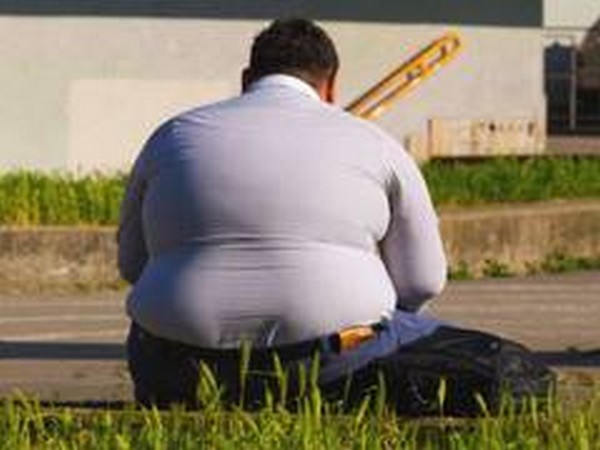
Representative image

Washington [US], September 16 (ANI): Heart transplant patients who received hearts from severely obese donors had similar short-term outcomes and long-term survival as patients who received hearts from non-obese donors, according to new research.
The research has been published in Circulation: Heart Failure, an American Heart Association journal.
The waiting list for a heart transplant in the U.S. is continuously about 3,000 people, and only half of those people receive a donor heart within a year. There is an urgent need to expand the pool of potential heart donors; however, transplant centres are hesitant to accept hearts from obese donors. In the U.S., almost 40 per cent of the adult population is classified as obese, and nearly 8 per cent have severe obesity, which is defined as a body mass index (BMI) greater than or equal to 40.
"As the prevalence of obesity in the U.S. continues to rise, it directly affects the pool of organ donors," said Leora T. Yarboro, M.D., lead study author and associate professor of surgery at the University of Virginia in Charlottesville, Virginia. "Since the prevalence of severe obesity has increased significantly over the past 15 years, we wanted to investigate the outcomes of recipients of transplant hearts from donors with severe obesity."
The study used the national United Network for Organ Sharing (UNOS) database to analyze the outcomes of 26,000 heart transplants from 2003-2017. Approximately 900, or 3.5 per cent, of the donors, had severe obesity. Severely obese donors, a BMI? 40, were more likely to be older and female. In addition:
-10 per cent of severely obese donors had diabetes vs. 3 per cent of non-obese donors;
-33 per cent of obese donors had hypertension vs. 15 per cent of donors with BMI <40;
-67 per cent of heart transplants from severely obese donors were size mismatched (the donor's weight was >130% of the recipient's weight), compared to only 10 per cent of transplants from donors without severe obesity; and
transplants from donors with severe obesity increased over time (from 2.2 per cent in 2013 to 5.3 per cent in 2017).
The analysis demonstrated no significant differences in post-transplant outcomes for patients who received a heart from a severely obese donor. Short-term outcomes, including postoperative stroke, acute rejection of the donor's heart, pacemaker need, and dialysis requirement, were similar for recipients of hearts from obese and non-obese donors. There was also no difference in one-year survival rates and long-term mortality for patients with transplants from severely obese donors.
"These findings were somewhat surprising because the severely obese donors did tend to have more medical problems, such as diabetes and high blood pressure, than the non-obese donors," Yarboro said. "This study shows that with careful selection, hearts from obese donors can be used without an increased risk to the recipient. Given the continued increase in obesity in the U.S., this research has the potential to expand the critically low donor pool by increasing the number of donors and improving outcomes for the growing list of patients with end-stage heart failure." (ANI)


Get the App

What to Read Next

Science

Amphibians bounce-back from Earth’s greatest mass extinction

Amphibians bounce-back from Earth’s greatest mass extinction

Researchers at the University of Bristol discovered that ancient frog ancestors survived the biggest mass extinction of species by eating on freshwater prey that evaded terrestrial predators.

Read More
Science

New insights into how cancer evades the immune system: Study

New insights into how cancer evades the immune system: Study

Immunotherapy research primarily focuses on better recognition of cancer cells by the body's own immune system. Researchers at Amsterdam UMC and Moffitt Cancer Center have taken a different approach.

Read More
Science

Biomarker may predict response to immunotherapy in liver cancer

Biomarker may predict response to immunotherapy in liver cancer

According to a preclinical study conducted by Weill Cornell Medicine researchers, it may soon be feasible to detect whether individuals with hepatocellular carcinoma, a kind of liver cancer, may benefit from immunotherapy.

Read More
Science

Study discovers how special immune cells stop metastatic cancer

Study discovers how special immune cells stop metastatic cancer

The majority of cancer deaths are caused by metastatic disease, which occurs when cancer spreads from the primary tumour to other areas of the body. and researchers understand how cancer cells escape the primary location to seed new tumours, it is unclear why some cancer cells produce new tumours decades later and others do not.

Read More
Science

Study reveals role of gamma-delta T cells in cancer immunology

Study reveals role of gamma-delta T cells in cancer immunology

The significance of gamma-delta T cells in 33 different cancer types is revealed in a recent study that was published in Cell Press. This information sheds light on the cells' potential as clinical biomarkers and therapeutic targets in the treatment of cancer. This thorough examination, which was carried out under the direction of a group of Moffitt Cancer Center experts, marks a substantial breakthrough in our knowledge of these distinct immune cells and how they affect cancer therapy outcomes for patients.

Read More
Science

Study: New potential treatment for cardiac arrhythmias

Study: New potential treatment for cardiac arrhythmias

A recent study by researchers at the University of Arizona College of Medicine - Phoenix and the University of California Davis Health discovered a new target for developing a medication to treat atrial fibrillation, the most prevalent kind of irregular heart rhythm.

Read More
Science

Medication increases radiation therapy's efficacy for lung cancer

Medication increases radiation therapy's efficacy for lung cancer

A group of researchers from the University of Cincinnati has discovered a possible novel approach to enhance the efficacy of radiation therapy and enhance the prognosis of patients with lung cancer metastasizing to the brain.

Read More
Science

Study: New imaging method accurately detects kidney cancer

Study: New imaging method accurately detects kidney cancer

A recent study conducted by UCLA Health Jonsson Comprehensive Cancer Center researchers found that new, non-invasive imaging technology can detect clear-cell renal cell carcinoma, the most common kind of kidney cancer.

Read More
Science

Researchers find treatment for a cause of pregnancy loss

Researchers find treatment for a cause of pregnancy loss

Approximately 20 per cent of women, who have recurrent pregnancy loss, test positive for a particular antibody that attacks the mother's own body.

Read More
Science

Obesity in mothers doubles risk of autism in babies

Obesity in mothers doubles risk of autism in babies

The University of South Australia has published new research showing that children born to obese mothers both before and during pregnancy are more likely to experience neuropsychiatric and behavioural disorders, such as attention deficit hyperactivity disorder (ADHD) and autism spectrum disorder (ASD).

Read More
Home About Us Our Products Advertise Contact Us Terms & Condition Privacy Policy

Copyright © aninews.in | All Rights Reserved.


