

ADD ANI AS A TRUSTED SOURCE
googleads
ANI Logo
Menu
Science

Gut microbe plays key role in development of some breast cancers

Washington [US], January 10 (ANI): A recent study has found a new microbe in the colon which is generally associated with the development of colon cancer and colitis along with playing an important role in the development of some kinds of breast cancer. Short-term exposure to B. fragilis toxin leaves a lasting impression in cells, increasing the risk for cancer.

ANI Jan 10, 2021 20:34 IST googleads

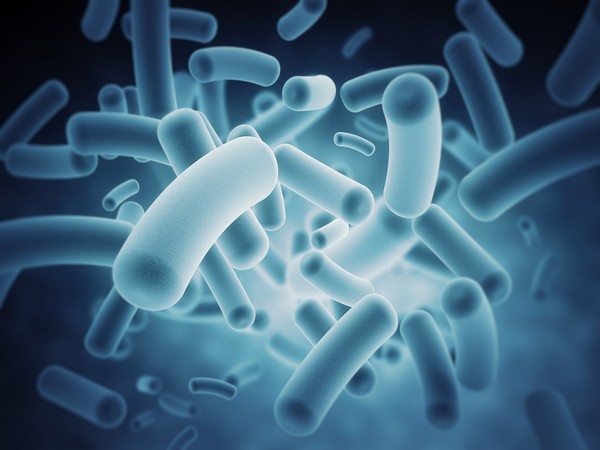
Representative Image

Washington [US], January 10 (ANI): A recent study has found a new microbe in the colon which is generally associated with the development of colon cancer and colitis along with playing an important role in the development of some kinds of breast cancer. Short-term exposure to B. fragilis toxin leaves a lasting impression in cells, increasing the risk for cancer.
According to new research from investigators with the Johns Hopkins Kimmel Cancer Center and its Bloomberg~Kimmel Institute for Cancer Immunotherapy. Breast tissue cells exposed to this toxin retain a long-term memory, increasing the risk for disease.
In a series of laboratory experiments, researchers discovered that when enterotoxigenic Bacteroides fragilis (ETBF) was introduced to the guts or breast ducts of mice, it always induced growth and metastatic progression of tumor cells. A description of the work is published in the January 6 issue of the journal Cancer Discovery.
While microbes are known to be present in body sites such as the gastrointestinal tract, nasal passages, and skin, breast tissue was considered sterile until recently, says senior study author Dipali Sharma, Ph.D., a professor of oncology at Johns Hopkins Medicine.
The study is the first step to show the involvement of ETBF in breast cancer development, Sharma says. Additional studies are needed to clarify how ETBF moves throughout the body, whether ETBF can be a sole driver to directly trigger the transformation of breast cells in humans, and/or if other microbiota also have cancer-causing activity for breast tissue.
"Despite multiple established risk factors for breast cancer, such as age, genetic changes, radiation therapy, and family history, a large number of breast cancers arise in women harboring none of these, indicating the need to look beyond," Sharma says. "Our study suggests another risk factor, which is the microbiome. If your microbiome is perturbed or if you harbor toxigenic microbes with oncogenic function, that could be considered an additional risk factor for breast cancer."
Sharma and colleagues performed several experiments to study the role of ETBF. First, they performed a meta-analysis of clinical data looking at published studies comparing microbial composition among benign and malignant breast tumors and nipple aspirate fluids of breast cancer survivors and healthy volunteers. B. fragilis was consistently detected in all breast tissue samples as well as the nipple fluids of cancer survivors.
In the lab, the team gave the ETBF bacteria by mouth to a group of mice. First, it colonized the gut. Then, within three weeks, the mouse mammary tissue had observable changes usually present in ductal hyperplasia, a precancerous condition. In additional tests, investigators found that hyperplasia-like symptoms also appeared within two to three weeks of injecting ETBF bacteria directly to the teats of mice and that cells exposed to the toxin always exhibited more rapid tumor progression and developed more aggressive tumors than cells not exposed to the toxin. Breast cells exposed to the toxin for 72 hours retained a memory of the toxin and were able to start cancer development and form metastatic lesions in different mouse models. Investigators also found the Notch1 and beta-catenin cell signaling pathways to be involved in promoting EBFT's role in breast tissue.
In clinical studies, the investigators have started looking for microbiome changes among breast cancer patients to see how this impacts tumor progression and response to therapy. Meanwhile, Sharma says, "we definitely should try to maintain a healthy microbiome, including eating a healthy diet and exercising, and maintaining the correct body mass index."
Down the road, screening for microbiome changes could be as simple as stool sample tests, said lead author Sheetal Parida, a postdoctoral fellow at Johns Hopkins Medicine. "This is just one indicator, and we think there will be multiple," she said. "If we find additional bacteria responsible for cancer development, we can easily look at the stool and check for those. Women at high risk of developing breast cancer might have a high population of some of these." (ANI)


Get the App

What to Read Next

Science

Amphibians bounce-back from Earth’s greatest mass extinction

Amphibians bounce-back from Earth’s greatest mass extinction

Researchers at the University of Bristol discovered that ancient frog ancestors survived the biggest mass extinction of species by eating on freshwater prey that evaded terrestrial predators.

Read More
Science

New insights into how cancer evades the immune system: Study

New insights into how cancer evades the immune system: Study

Immunotherapy research primarily focuses on better recognition of cancer cells by the body's own immune system. Researchers at Amsterdam UMC and Moffitt Cancer Center have taken a different approach.

Read More
Science

Scientists use AI to better understand nanoparticles: Study

Scientists use AI to better understand nanoparticles: Study

A group of scientists has created a way to illuminate the dynamic behavior of nanoparticles, which are essential components in the production of pharmaceuticals, electronics, and industrial and energy-conversion materials.

Read More
Science

New technology enhances gravitational-wave detection: Study

New technology enhances gravitational-wave detection: Study

A team of physicists led by Jonathan Richardson of the University of California, Riverside, demonstrated how new optical technology can extend the detection range of gravitational-wave observatories such as the Laser Interferometer Gravitational-Wave Observatory, or LIGO, and pave the way for future observatories.

Read More
Science

Astronomers find the smallest main-belt asteroids ever detected:

Astronomers find the smallest main-belt asteroids ever detected:

The majority of known asteroids orbit inside the main asteroid belt, which is positioned between Mars and Jupiter at an average distance of around 250 million km from Earth. Since the discovery of the first asteroid in 1801, about 750.000 asteroids have been identified, primarily in the last decade thanks to several optical surveys that examine the sky on clear nights.

Read More
Science

Study finds connection between quantum theory, information theory

Study finds connection between quantum theory, information theory

"Our results have no clear or direct application right now. It's basic research that lays the foundation for future technologies in quantum information and quantum computers. There's enormous potential for complete discoveries in many different research fields," said Guilherme B Xavier, a researcher in quantum communication at Linkoping University, Sweden.

Read More
Science

When devices can read human emotions without a camera: Study

When devices can read human emotions without a camera: Study

Tokyo Metropolitan University researchers employed long-term skin conductance measurements to distinguish between emotions. Volunteers were given videos representing frightening scenarios, family bonding, and humour, while their skin conductance was measured.

Read More
Science

'Nuroscience study results can be better predicted by AI'

'Nuroscience study results can be better predicted by AI'

Large language models, a type of AI that analyses text, can anticipate the results of proposed neuroscience studies more correctly than human experts, according to a new study led by UCL (University College London) researchers.

Read More
Science

Gut microbes play role in regulating stress responsiveness

Gut microbes play role in regulating stress responsiveness

A groundbreaking study has revealed the critical role of gut bacteria in regulating stress responses through interactions with the body's circadian rhythms.

Read More
Science

Thermal imaging may help fruits, veggies stay fresher longer: Study

Thermal imaging may help fruits, veggies stay fresher longer: Study

Before your favourite produce arrives at the grocery store, it must be carefully harvested and stored for extended periods of time. A recent University of Georgia assessment argues that new temperature sensing devices could make that procedure considerably easier, as agricultural issues are exacerbated by changing climates.

Read More
Home About Us Our Products Advertise Contact Us Terms & Condition Privacy Policy

Copyright © aninews.in | All Rights Reserved.


