

ADD ANI AS A TRUSTED SOURCE
googleads
ANI Logo
Menu
Science

Greenland may become ice-less by the year 3000: Study

Washington D.C. [USA], July 7 (ANI): The effects of global warming may melt the ice sheet of Greenland and increase global sea level by the year 3000, say researchers.

ANI Jul 07, 2019 17:33 IST googleads

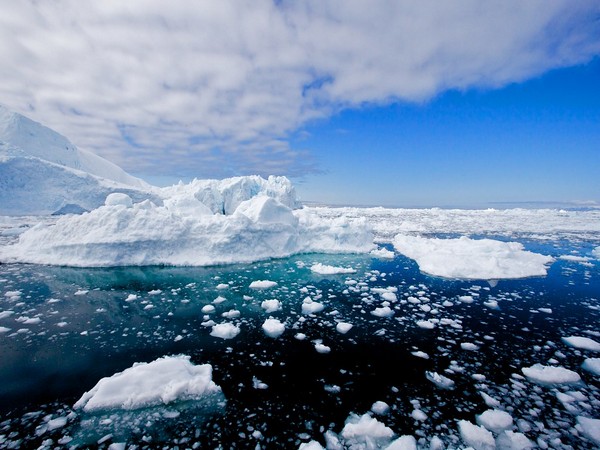
Representative image

Washington D.C. [USA], July 7 (ANI): The effects of global warming may melt the ice sheet of Greenland and increase global sea level by the year 3000, say researchers.
This research used new data on the landscape, under the ice to make breakthroughs in modelling the island's future. The findings show if greenhouse gas concentrations remain on their current path, the melting ice from Greenland alone could contribute as much as 24 feet to global sea level rise by the time it disappears, reported the study published in the Journal of Science Advances.
New research shows an iceless Greenland may be in the future. If worldwide greenhouse gas emissions remain on their current trajectory, Greenland may be ice-free by the year 3000. Even by the end of the century, the island could lose 4.5 per cent of its ice, contributing up to 13 inches of sea level rise.
"How Greenland will look in the future in a couple of hundred years or in 1,000 years whether there will be Greenland, or at least a Greenland similar to today, it's up to us," said Andy Aschwanden, lead author of the study.
This research uses new data on the landscape under the ice today to make breakthroughs in modelling the future. The findings show a wide range of scenarios for ice loss and sea level rise based on different projections for greenhouse gas concentrations and atmospheric conditions. Currently, the planet is moving toward the high estimates of greenhouse gas concentrations.
Greenland's ice sheet is huge, spanning over 660,000 square miles. It is almost the size of Alaska and 80 per cent as big as the U.S. east of the Mississippi River. Today, the ice sheet covers 81 per cent of Greenland and contains 8 per cent of Earth's fresh water.
If greenhouse gas concentrations remain on the current path, the melting ice from Greenland alone could contribute as much as 24 feet to global sea level rise by the year 3000, which would put much of San Francisco, Los Angeles, New Orleans and other cities under water.
However, if greenhouse gas emissions are cut significantly, that picture changes. Instead, by 3000 Greenland may lose 8 per cent to 25 per cent of ice and contribute up to approximately 6.5 feet of sea level rise. (ANI)

Get the App

What to Read Next

Science

Microbes help detoxify our atmosphere, says study 

Microbes help detoxify our atmosphere, says study 

Melbourne researchers have uncovered important new information on how microbes absorb huge amounts of carbon monoxide (CO) and assist in reducing levels of this deadly gas.

Read More
Science

Contrail avoidance is less likely to damage climate by mistake

Contrail avoidance is less likely to damage climate by mistake

A new study allays concerns that rerouting planes to avoid producing climate-warming contrails may accidentally exacerbate climate change.

Read More
Science

Study finds how pesticide exposure linked with stillbirth risk

Study finds how pesticide exposure linked with stillbirth risk

New research suggested that living less than 0.3 miles from a pesticide use area before getting pregnant and throughout the first trimester of pregnancy may increase the risk of stillbirths.

Read More
Science

Fossil study finds how sea level changes shaped early life

Fossil study finds how sea level changes shaped early life

A newly developed timeline of early animal fossils suggests a relationship between sea level fluctuations, variations in marine oxygen, and the appearance of the earliest ancestors of present-day animals.

Read More
Science

Ultra-processed foods associated with increased risk of death

Ultra-processed foods associated with increased risk of death

According to a recent study, older persons who reported consuming more ultra-processed foods were nearly 10 per cent more likely to die after a median follow-up of 23 years than older adults who reported consuming less processed food.

Read More
Science

Light therapy helps in brain connectivity following injury

Light therapy helps in brain connectivity following injury

A study suggested that low-level light treatment may have an impact on the healing process in the brains of individuals who have experienced serious brain injuries.

Read More
Science

Study finds biodiversity is key to better mental health

Study finds biodiversity is key to better mental health

A study by King's College London found that spaces with a variety of natural features are associated with better mental health than spaces with less natural diversity.

Read More
Science

Researchers discover potential novel biomarkers of heart disease

Researchers discover potential novel biomarkers of heart disease

Coronary heart disease is a serious global health concern, particularly among those with type 2 diabetes.

Read More
Science

Study reveals air pollution hides increases in rainfall

Study reveals air pollution hides increases in rainfall

We know that greenhouse gas emissions, such as carbon dioxide, should increase rainfall. The emissions warm the atmosphere, resulting in a one-two punch: warmer oceans make it easier for water to evaporate, and warmer air can store more water vapour, allowing more moisture to fall as rain. However, for long of the twentieth century, the data did not clearly reveal a rise in precipitation.

Read More
Science

School uniform policies and exercises

School uniform policies and exercises

New research suggests that school uniform requirements may inhibit young people, particularly primary school-aged girls, from engaging in physical activity.

Read More
Home About Us Our Products Advertise Contact Us Terms & Condition Privacy Policy

Copyright © aninews.in | All Rights Reserved.




