

ADD ANI AS A TRUSTED SOURCE
googleads
ANI Logo
Menu
Science

Genomic resources to improve climate resilience of fish: Study

Researchers discovered candidate genes that could help fish tolerate warmer and saltier water, potentially providing a valuable resource for freshwater aquaculture breeding programmes. The study's findings were recently published in the journal 'Genomics.'

ANI Jun 11, 2023 13:22 IST googleads

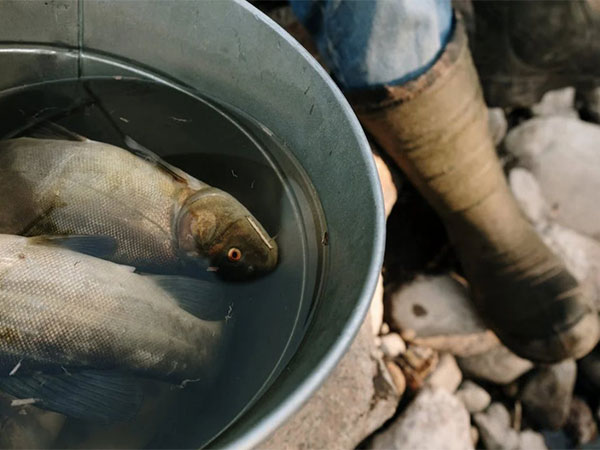
Representative image

Tokyo [Japan], June 11 (ANI): Researchers discovered candidate genes that could help fish tolerate warmer and saltier water, potentially providing a valuable resource for freshwater aquaculture breeding programmes.
The study's findings were recently published in the journal 'Genomics.'
As global warming degrades water quality and availability, these findings can be used to breed more resilient fish and protect a vital food source for millions of people.
Nile tilapia, Oreochromis niloticus, is a popular freshwater aquaculture species that provide essential nutrients and protein. Their aquaculture popularity has skyrocketed, owing largely to their adaptability to various water conditions and production systems.
Soaring global temperatures, on the other hand, have depleted freshwater resources. Fish farms, and the people who rely on them for food, urgently require strains that can thrive despite increased salinity and water temperature.
To address this issue, researchers at the Earlham Institute, the University of East Anglia, and the University of Stirling have explored the tilapia genome to locate advantageous changes responsible for increased tolerance to changing water conditions.
They examined tissue taken from the gills - a vital osmoregulatory organ in fish - and generated DNA and RNA sequence data to study different genes' activity, regulation, and function. They then identified genetic differences at gene regulatory regions in the Nile tilapia and 27 other tilapia species.
Their assumption was that differences between the Nile tilapia, a freshwater species, and species adapted to saline waters are likely to have arisen to control genes involved with adapting to different water environments.
The team optimised a genome sequencing approach that reveals the activity of potential transcription factor binding sites and genetic switches for turning expression on and off.
Their approach identified regions of the genome they believe are responsible for controlling the activity of certain osmoregulatory genes, which in turn influence the function of the gills and how the fish responds to changing water conditions.
They identified a number of genes relevant to traits that help tilapia to tolerate saltier water and also acclimatise to freshwater. These included genes involved in metabolism and general housekeeping processes responsible for reacting to environmental changes in order to maintain balance.
Dr Tarang Mehta, study author and postdoctoral research scientist at the Earlham Institute, said: "Breeders are in desperate need of genomic resources to inform their breeding programmes so traits offering greater resilience can be quickly and accurately selected for.
"By characterising the genes responsible for these desirable traits, we can now share these new resources with freshwater fish farms to help guide selective breeding programmes."
Dr Wilfried Haerty, study author and Group Leader at the Earlham Institute said: "We identified regions of the Nile tilapia genome we can target to help breed fish with higher tolerance to salt - something that has sadly become increasingly important as our freshwater resources are degraded.
"The next steps are to use similar genomic approaches to find genes and their regulators associated with other traits of interest for aquacultures, like growth and disease resistance." (ANI)


Get the App

What to Read Next

Science

New method guides magnetism without magnets

New method guides magnetism without magnets

Researchers at Paul Scherrer Institute PSI have demonstrated an innovative method to control magnetism in materials using an energy-efficient electric field.

Read More
Science

Amphibians bounce-back from Earth’s greatest mass extinction

Amphibians bounce-back from Earth’s greatest mass extinction

Researchers at the University of Bristol discovered that ancient frog ancestors survived the biggest mass extinction of species by eating on freshwater prey that evaded terrestrial predators.

Read More
Science

New insights into how cancer evades the immune system: Study

New insights into how cancer evades the immune system: Study

Immunotherapy research primarily focuses on better recognition of cancer cells by the body's own immune system. Researchers at Amsterdam UMC and Moffitt Cancer Center have taken a different approach.

Read More
Science

Scientists use AI to better understand nanoparticles: Study

Scientists use AI to better understand nanoparticles: Study

A group of scientists has created a way to illuminate the dynamic behavior of nanoparticles, which are essential components in the production of pharmaceuticals, electronics, and industrial and energy-conversion materials.

Read More
Science

New device could allow you to taste cake in virtual reality

New device could allow you to taste cake in virtual reality

The 'e-Taste' interface employs sensors and wireless chemical dispensers to enable remote taste perception, often known as gestation. Field testing done by researchers at The Ohio State University confirmed the device's ability to digitally simulate a range of taste intensities, while still offering variety and safety for the user.

Read More
Science

Strand Life Sciences launches portal for rare disease diagnosis

Strand Life Sciences launches portal for rare disease diagnosis

Marking Rare Disease Day, Strand Life Sciences, a subsidiary of Reliance Industries and a leading genomics research company, has launched the StrandOmics Portal, an innovative digital platform designed to assist doctors in diagnosing rare diseases more efficiently.

Read More
Science

Study reveals impact of animals as architects of Earth

Study reveals impact of animals as architects of Earth

A new study led by Professor Gemma Harvey from Queen Mary University of London has revealed how hundreds of species shape the landscapes we depend on, from termite mounds visible from space to beavers creating wetlands and hippos carving drainage systems.

Read More
Science

Opposing arrows of time emerge from certain quantum systems

Opposing arrows of time emerge from certain quantum systems

Researchers at the University of Surrey made a thought-provoking discovery. A new study reveals that opposing arrows of time can theoretically emerge from certain quantum systems.

Read More
Science

COVID-19 severity may be predicted by White Blood Cell Count

COVID-19 severity may be predicted by White Blood Cell Count

A COVID-19 diagnosis is no longer as frightening as it used to be, thanks to developments in treatment choices. However, a new study reveals that leukocyte (white blood cell) count may now be used to identify who is more likely to develop more significant disease symptoms.

Read More
Science

Seals can essentially act as 'smart sensors': Study

Seals can essentially act as 'smart sensors': Study

A new study by marine biologists reports that seals can essentially act as 'smart sensors' for monitoring fish populations in the ocean's eerily dim 'twilight zone.'

Read More
Home About Us Our Products Advertise Contact Us Terms & Condition Privacy Policy

Copyright © aninews.in | All Rights Reserved.


