

ADD ANI AS A TRUSTED SOURCE
googleads
Menu
Science

Future of fuel may lie in methane-consuming bacteria

Washington D.C. [USA], May 10 (ANI): Researchers have finally unveiled the mechanism behind the conversion of methane into readily usable methanol in methanotrophic bacteria. The research could contribute to the future of fuel.

ANI May 10, 2019 22:30 IST googleads

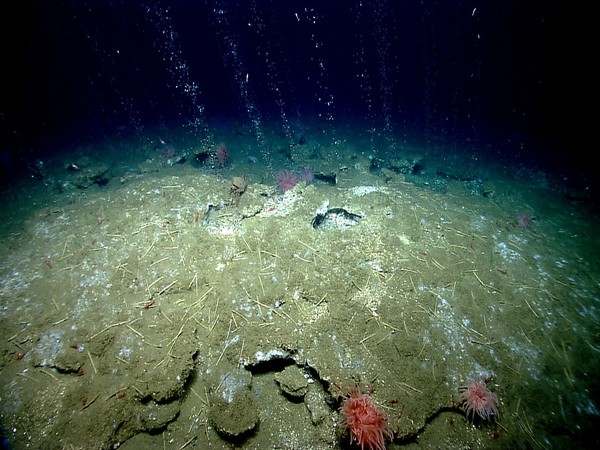
Representative image

Washington D.C. [USA], May 10 (ANI): Researchers have finally unveiled the mechanism behind the conversion of methane into readily usable methanol in methanotrophic bacteria. The research could contribute to the future of fuel.
The study published in the journal Science has found that the enzyme, present in the methanotrophic bacteria, responsible for the conversion of methane into methanol catalyses the reaction at a site that contains only one copper ion.
The finding could lead to newly designed, human-made catalysts that can convert methane -- a highly potent greenhouse gas -- to readily usable methanol with the same effortless mechanism.
"The identity and structure of the metal ions responsible for catalysis have remained elusive for decades. Our study provides a major leap forward in understanding how bacteria methane-to-methanol conversion takes place," said Northwestern's Amy C. Rosenzweig, co-senior author of the study.
"By identifying the type of copper centre involved, we have laid the foundation for determining how nature carries out one of its most challenging reactions," said Brian M. Hoffman, co-senior author.
By oxidizing methane and converting it to methanol, methanotrophic bacteria (or 'methanotrophs') can pack a punch or two. Not only are they removing harmful greenhouse gas from the environment, but they are also generating a readily usable, sustainable fuel for automobiles, electricity and more.
Current industrial processes to catalyze a methane-to-methanol reaction require tremendous pressure and extreme temperatures, reaching higher than 1,300 degrees Celsius. Methanotrophs, however, perform the reaction at room temperature and 'for free'.
"While copper sites are known to catalyze methane-to-methanol conversion in human-made materials, methane-to-methanol catalysis at a monocopper site under ambient conditions is unprecedented," said Matthew O. Ross, the paper's first author.
"If we can develop a complete understanding of how they perform this conversion at such mild conditions, we can optimize our own catalysts," said Ross. (ANI)

Get the App

What to Read Next

Science

Amphibians bounce-back from Earth’s greatest mass extinction

Amphibians bounce-back from Earth’s greatest mass extinction

Researchers at the University of Bristol discovered that ancient frog ancestors survived the biggest mass extinction of species by eating on freshwater prey that evaded terrestrial predators.

Read More
Science

New insights into how cancer evades the immune system: Study

New insights into how cancer evades the immune system: Study

Immunotherapy research primarily focuses on better recognition of cancer cells by the body's own immune system. Researchers at Amsterdam UMC and Moffitt Cancer Center have taken a different approach.

Read More
Science

Scientists use AI to better understand nanoparticles: Study

Scientists use AI to better understand nanoparticles: Study

A group of scientists has created a way to illuminate the dynamic behavior of nanoparticles, which are essential components in the production of pharmaceuticals, electronics, and industrial and energy-conversion materials.

Read More
Science

New device could allow you to taste cake in virtual reality

New device could allow you to taste cake in virtual reality

The 'e-Taste' interface employs sensors and wireless chemical dispensers to enable remote taste perception, often known as gestation. Field testing done by researchers at The Ohio State University confirmed the device's ability to digitally simulate a range of taste intensities, while still offering variety and safety for the user.

Read More
Science

Strand Life Sciences launches portal for rare disease diagnosis

Strand Life Sciences launches portal for rare disease diagnosis

Marking Rare Disease Day, Strand Life Sciences, a subsidiary of Reliance Industries and a leading genomics research company, has launched the StrandOmics Portal, an innovative digital platform designed to assist doctors in diagnosing rare diseases more efficiently.

Read More
Home About Us Our Products Advertise Contact Us Terms & Condition Privacy Policy

Copyright © aninews.in | All Rights Reserved.


