

ADD ANI AS A TRUSTED SOURCE
googleads
Menu
Science

Freshwater mussels can inhibit bacterial diseases, finds study

Helsinki [Finland], April 4 (ANI): Researchers from the University of Jyvaskyla found brown trout better survived a Flavobacterium disease outbreak if the fish had larvae of freshwater pearl mussel in their gills.

ANI Apr 04, 2022 23:01 IST googleads

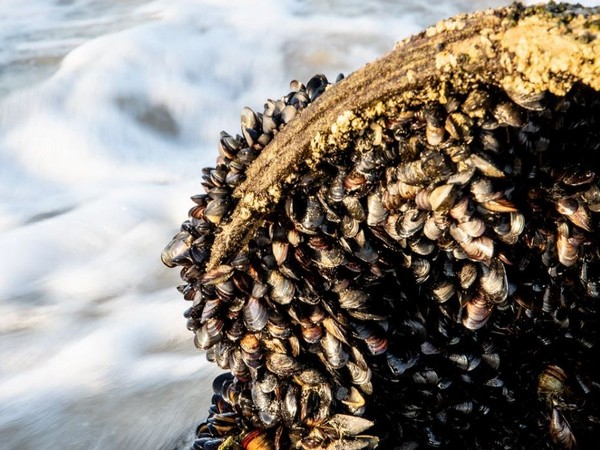
Representative image

Helsinki [Finland], April 4 (ANI): Researchers from the University of Jyvaskyla found brown trout better survived a Flavobacterium disease outbreak if the fish had larvae of freshwater pearl mussel in their gills.
In another study, duck mussels were observed to filter and remove Flavobacterium from the water.
Flavobacteria are a severe problem for fish farming and cause substantial economic losses. The 'warm water disease' caused by Flavobacterium columnare is especially problematic since a functional vaccine against the bacterium is not available. The skin and gill damage in diseased individuals can cause high mortality in young salmonids.
Glochidium larvae of the freshwater pearl mussel attach to salmon or trout gills, where they develop and grow for 9 to 11 months until they detach and sink to the river bottom, starting their life as mussels. Glochidium larva is a parasite in the gills of fish. Therefore, it was assumed that glochidia-infested fish would be more prone to bacterial infection.
Against expectations, brown trout infested with pearl mussel larvae better survived an outbreak of Flavobacterium columnare. Moreover, the protective effect of glochidia infestation against the bacterial disease was sustained several months after the larvae had dropped off from the gills of fish. The higher the number of pearl mussel larvae in the gills was, the better the trout survived.
mussels">Freshwater mussels are filter-feeders. They remove suspended materials efficiently, cleaning tens of litres of water a day. Thus, their ability to filter and remove harmful F. columnare bacteria from the water was tested. The result was clear: in aquaria, one mussel individual could halve the density of bacteria within two days.
The freshwater pearl mussel is an endangered species that has disappeared from a large part of its original distribution area. The present results indicate that with the extirpation of species we may lose important and valuable ecosystem services.
"Filtering freshwater mussels could be potentially utilized in water treatment applications, as species disappear, we may lose ecosystem services the species provide -- probably before we have even found them," said Head of Konnevesi Research Station and LIFE Revives project, professor Jouni Taskinen. (ANI)


Get the App

What to Read Next

Science

Amphibians bounce-back from Earth’s greatest mass extinction

Amphibians bounce-back from Earth’s greatest mass extinction

Researchers at the University of Bristol discovered that ancient frog ancestors survived the biggest mass extinction of species by eating on freshwater prey that evaded terrestrial predators.

Read More
Science

Strand Life Sciences launches portal for rare disease diagnosis

Strand Life Sciences launches portal for rare disease diagnosis

Marking Rare Disease Day, Strand Life Sciences, a subsidiary of Reliance Industries and a leading genomics research company, has launched the StrandOmics Portal, an innovative digital platform designed to assist doctors in diagnosing rare diseases more efficiently.

Read More
Science

Study finds novel approach to treat neurological diseases

Study finds novel approach to treat neurological diseases

The matter of what causes complicated neurological disorders like Alzheimer's or multiple sclerosis continues to perplex scientists and doctors, with unknowns impeding early diagnosis and successful treatment.

Read More
Science

Bacterial vaccine demonstrates potential as cancer treatment

Bacterial vaccine demonstrates potential as cancer treatment

Columbia researchers developed probiotic bacteria that train the immune system to eliminate cancer cells, paving the way for a new class of cancer vaccinations that take advantage of bacteria's innate tumour-targeting abilities. These microbial cancer vaccines can be tailored to each person's specific original tumour and metastases, perhaps preventing future recurrences.

Read More
Science

Study discovers how special immune cells stop metastatic cancer

Study discovers how special immune cells stop metastatic cancer

The majority of cancer deaths are caused by metastatic disease, which occurs when cancer spreads from the primary tumour to other areas of the body. and researchers understand how cancer cells escape the primary location to seed new tumours, it is unclear why some cancer cells produce new tumours decades later and others do not.

Read More
Home About Us Our Products Advertise Contact Us Terms & Condition Privacy Policy

Copyright © aninews.in | All Rights Reserved.


