

ADD ANI AS A TRUSTED SOURCE
googleads
ANI Logo
Menu
Science

Four pre-existing drugs under trial to treat COVID-19

Washington D.C. [USA], Mar 20 (ANI): As experts from across the world scramble to find a cure for the deadly COVID-19, a few pre-existing drugs have shown positive signs in treating the fast-spreading disease.

ANI Mar 20, 2020 21:20 IST googleads

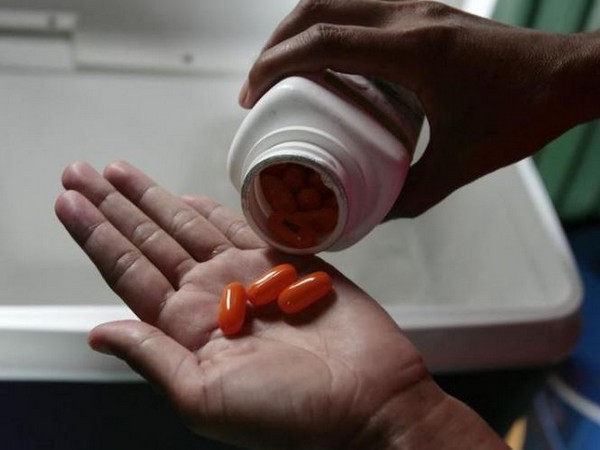
The anti-HIV drug Kaletra could possibly prove to be effective in treating COVID-19 (Picture Courtesy: Reuters)

Washington D.C. [USA], Mar 20 (ANI): As experts from across the world scramble to find a cure for the deadly COVID-19, a few pre-existing drugs have shown positive signs in treating the fast-spreading disease.
The New York Post listed four possible panaceas that are currently being evaluated for their efficacy in fighting the novel coronavirus.
1) Chloroquine and hydroxychloroquine: The two medicinal compounds are commonly used to treat malaria, which is a parasitic infection, unlike COVID-19.
However, in some studies, these drugs have been found to be effective in the treatment and prevention of SARS, which is a close cousin of the COVID-19 virus.
Dr Len Horovitz from the Lenox Hill Hospital told the New York Post that the two drugs were tested on primate cells back in 2005 during the SARS outbreak, but were never used to treat humans as the disease was contained shortly after.
"There was no reason to use it at that time but looking back, there was a feeling it could be used to reduce the possibility of being infected or as treatment," Horovitz added.
A recent study from France on Hydroxychloroquine reported that drug cured three-fourth of the 24 patients who were administered with it for six days. The findings though, cannot be confirmed as the study was neither peer-reviewed nor it got published.
Horovitz noted that these drugs haven't been officially approved for treating or preventing COVID-19.
2) Remdesivir: The experimental antiviral from Gilead Sciences which was initially tested on Ebola patients, has shown its effectiveness in treating SARS and MERS, which are two other types of coronaviruses.
The compound fights the virus by inhibiting its ability to multiply inside a cell.
The drug is undergoing trials in China and other countries, including the USA.
3) Favipiravir (Avigan): The anti-flu drug developed by a subsidiary of the Japanese camera maker Fujifilm has shown encouraging results during its clinical trials conducted in China.
Patients in China's Shenzen, who were administered this compound, came out negative after a median four days after being diagnosed with the novel coronavirus. While on the other hand, the patients who weren't given the medicine took a median of 11 days to recover.
The results were substantiated through chest scans which showed less lung damage in the people who took Favipiravir.
4) Kaletra: The anti-HIV drug Kaletra could possibly prove to be effective in treating COVID-19, as suggested by lab studies.
This medicine is a combination of two antiviral drugs, namely, lopinavir and Ritonavir.
Kaletra belongs to the drug category of protease inhibitors, which block an enzyme that enables the viruses to replicate.
In previous drug trials, the medicine showed its efficacy in curbing the maturation and replication of the SARS virus.
Also, recently, doctors from Japan and Thailand claimed to have successfully cured COVID-19 using the drug combo, but a study in China conducted on 200 patients found the drug to be ineffective. (ANI)


Get the App

What to Read Next

Science

Study finds certain diabetes medications might prevent dementia

Study finds certain diabetes medications might prevent dementia

According to a study published, sodium-glucose cotransporter-2 (SGLT-2) inhibitors used to treat type 2 diabetes may prevent dementia, with higher advantages with prolonged treatment.

Read More
Science

Use of acid reflux drugs linked to higher risk of migraine: Study

Use of acid reflux drugs linked to higher risk of migraine: Study

According to a study, people who take acid-reducing medications may be at a higher risk of migraines and other severe headaches than those who do not

Read More
Science

Study probes novel therapeutics development for metastatic tumors

Study probes novel therapeutics development for metastatic tumors

Researcher Paul Dent of Virginia Commonwealth University's Department of Biochemistry and Molecular Biology found that tumours that have metastasized to distant locations, such as the brain, are most often impossible to treat and cure, despite recent successes in some tumour types such as NSCLC and cutaneous melanoma.

Read More
Science

Perceived time has tangible effect on process of physical healing

Perceived time has tangible effect on process of physical healing

New research discovered that perceived time has a significant influence on how long it takes to cure physical wounds.

Read More
Science

Study finds diabetes medicine lower risk for colorectal cancer

Study finds diabetes medicine lower risk for colorectal cancer

According to a groundbreaking study conducted by Case Western Reserve University researchers, a class of drugs used to treat type 2 diabetes may also reduce the risk of colorectal cancer (CRC).

Read More
Science

Use of social media is linked with unhealthy behaviours

Use of social media is linked with unhealthy behaviours

Researchers found that youths who use social media are more likely to engage in dangerous health behaviours, such as increased use of alcohol, drugs, and tobacco, antisocial conduct, risky sexual behaviour, and gambling.

Read More
Science

Anti-rheumatic drugs may be able to prevent thyroid disease

Anti-rheumatic drugs may be able to prevent thyroid disease

Anti-rheumatic medications used to treat rheumatoid arthritis may help decrease the development of autoimmune thyroid illness, according to a new observational study.

Read More
Science

Our sense of taste helps us pace our eating: Study

Our sense of taste helps us pace our eating: Study

It has been generally held that when you eagerly dig into a long-awaited dinner, signals from your stomach to your brain keep you from eating so much you'll regret it. A team of scientists at UC San Francisco recently decided to test the theory and the picture, it turns out, is a little different

Read More
Science

Vaccine that offers protection against three coronavirus types

Vaccine that offers protection against three coronavirus types

A vaccine developed by Duke Human Vaccine Institute researchers that protects against three distinct fatal coronaviruses has shown success in animal studies, indicating the potential for pan-coronavirus immunisation.

Read More
Science

Gene discoveries may help prevent deadly coronary artery disease

Gene discoveries may help prevent deadly coronary artery disease

A multinational team of researchers has found nearly a dozen genes that contribute to calcium buildup in our coronary arteries, which can lead to life-threatening coronary artery disease, which accounts for up to one in every four fatalities in the United States. Doctors may be able to target these genes with existing drugs or even dietary supplements to delay or stop the progression of the disease.

Read More
Home About Us Our Products Advertise Contact Us Terms & Condition Privacy Policy

Copyright © aninews.in | All Rights Reserved.
