

ADD ANI AS A TRUSTED SOURCE
googleads
ANI Logo
Menu
Science

Fossil site reveals giant arthropods dominated seas 470 million years ago

Discoveries at a major new fossil site in Morocco suggest giant arthropods - relatives of modern creatures including shrimps, insects and spiders - dominated the seas 470 million years ago. Early evidence from the site at Taichoute, once undersea but now a desert, records numerous large "free-swimming" arthropods.

ANI Dec 13, 2022 23:45 IST googleads

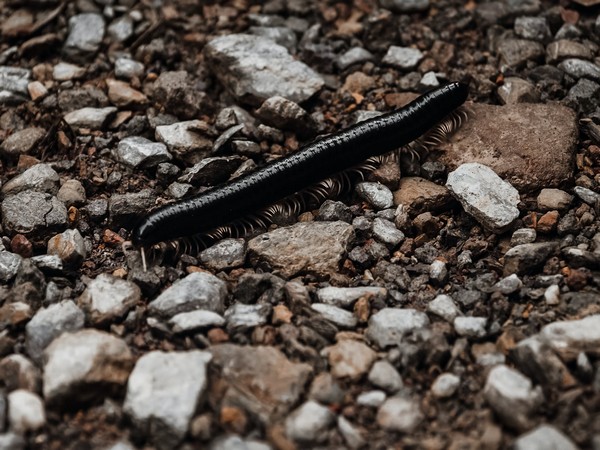
Representative Image

Exeter [UK], December 13 (ANI): Giant arthropods, cousins of contemporary species like shrimp, insects, and spiders, may have dominated the oceans 470 million years ago, according to findings at a significant new fossil site in Morocco.
Numerous huge "free-swimming" arthropods are documented in the earliest evidence from the Taichoute site, which was formerly underwater but is now a desert.
The analysis of these fragments requires further study, but based on specimens previously identified, the huge arthropods may reach lengths of up to 2 metres.
The site and its fossil record, according to an international research team, are substantially distinct from other Fezouata Shale sites that have been characterised and researched from a distance of 80 km.
They say Taichoute (considered part of the wider "Fezouata Biota") opens new avenues for paleontological and ecological research.
"Everything is new about this locality - its sedimentology, palaeontology, and even the preservation of fossils - further highlighting the importance of the Fezouata Biota in completing our understanding of past life on Earth," said lead author Dr Farid Saleh, from the University of Lausanne and Yunnan University.
Dr Xiaoya Ma, from the University of Exeter and Yunnan University, added: "While the giant arthropods we discovered have not yet been fully identified, some may belong to previously described species of the Fezouata Biota, and some will certainly be new species.
"Nevertheless, their large size and free-swimming lifestyle suggest they played a unique role in these ecosystems."
The Fezouata Shale was recently selected as one of the 100 most important geological sites worldwide because of its importance for understanding the evolution during the Early Ordovician period, about 470 million years ago.
Fossils discovered in these rocks include mineralised elements (eg shells), but some also show exceptional preservation of soft parts such as internal organs, allowing scientists to investigate the anatomy of early animal life on Earth.
Animals of the Fezouata Shale, in Morocco's Zagora region, lived in a shallow sea that experienced the repeated storm and wave activities, which buried the animal communities and preserved them in place as exceptional fossils.
However, nektonic (or free-swimming) animals remain a relatively minor component overall in the Fezouata Biota.
The new study reports the discovery of the Taichoute fossils, preserved in sediments that are a few million years younger than those from the Zagora area and are dominated by fragments of giant arthropods.
"Carcasses were transported to a relatively deep marine environment by underwater landslides, which contrasts with previous discoveries of carcass preservation in shallower settings, which were buried in place by storm deposits," said Dr Romain Vaucher, from the University of Lausanne.
Professor Allison Daley, also from the University of Lausanne, added: "Animals such as brachiopods are found attached to some arthropod fragments, indicating that these large carapaces acted as nutrient stores for the seafloor dwelling community once they were dead and lying on the seafloor."
Dr Lukas Laibl, from the Czech Academy of Sciences, who had the opportunity to participate in the initial fieldwork, said: "Taichoute is not only important due to the dominance of large nektonic arthropods.
"Even when it comes to trilobites, new species so far unknown from the Fezouata Biota are found in Taichoute."
Dr Bertrand Lefebvre, from the University of Lyon, who is the senior author of the paper, and who has been working on the Fezouata Biota for the past two decades, concluded: "The Fezouata Biota keeps surprising us with new unexpected discoveries".
The paper, published in the journal Scientific Reports, is entitled: "New fossil assemblages from the Early Ordovician Fezouata Biota." (ANI)


Get the App

What to Read Next

Science

New method guides magnetism without magnets

New method guides magnetism without magnets

Researchers at Paul Scherrer Institute PSI have demonstrated an innovative method to control magnetism in materials using an energy-efficient electric field.

Read More
Science

New insights into how cancer evades the immune system: Study

New insights into how cancer evades the immune system: Study

Immunotherapy research primarily focuses on better recognition of cancer cells by the body's own immune system. Researchers at Amsterdam UMC and Moffitt Cancer Center have taken a different approach.

Read More
Science

Scientists use AI to better understand nanoparticles: Study

Scientists use AI to better understand nanoparticles: Study

A group of scientists has created a way to illuminate the dynamic behavior of nanoparticles, which are essential components in the production of pharmaceuticals, electronics, and industrial and energy-conversion materials.

Read More
Science

New device could allow you to taste cake in virtual reality

New device could allow you to taste cake in virtual reality

The 'e-Taste' interface employs sensors and wireless chemical dispensers to enable remote taste perception, often known as gestation. Field testing done by researchers at The Ohio State University confirmed the device's ability to digitally simulate a range of taste intensities, while still offering variety and safety for the user.

Read More
Science

Strand Life Sciences launches portal for rare disease diagnosis

Strand Life Sciences launches portal for rare disease diagnosis

Marking Rare Disease Day, Strand Life Sciences, a subsidiary of Reliance Industries and a leading genomics research company, has launched the StrandOmics Portal, an innovative digital platform designed to assist doctors in diagnosing rare diseases more efficiently.

Read More
Science

Study reveals impact of animals as architects of Earth

Study reveals impact of animals as architects of Earth

A new study led by Professor Gemma Harvey from Queen Mary University of London has revealed how hundreds of species shape the landscapes we depend on, from termite mounds visible from space to beavers creating wetlands and hippos carving drainage systems.

Read More
Science

Opposing arrows of time emerge from certain quantum systems

Opposing arrows of time emerge from certain quantum systems

Researchers at the University of Surrey made a thought-provoking discovery. A new study reveals that opposing arrows of time can theoretically emerge from certain quantum systems.

Read More
Science

COVID-19 severity may be predicted by White Blood Cell Count

COVID-19 severity may be predicted by White Blood Cell Count

A COVID-19 diagnosis is no longer as frightening as it used to be, thanks to developments in treatment choices. However, a new study reveals that leukocyte (white blood cell) count may now be used to identify who is more likely to develop more significant disease symptoms.

Read More
Science

Seals can essentially act as 'smart sensors': Study

Seals can essentially act as 'smart sensors': Study

A new study by marine biologists reports that seals can essentially act as 'smart sensors' for monitoring fish populations in the ocean's eerily dim 'twilight zone.'

Read More
Science

'Creation of black holes without singularities through gravity'

'Creation of black holes without singularities through gravity'

Traditional black holes, as predicted by Albert Einstein's theory of General Relativity, contain what are known as singularities, i.e. points where the laws of physics break down. Identifying how singularities are resolved in the context of quantum gravity is one of the fundamental problems in theoretical physics. Now, a team of experts has described the creation of regular black holes from gravitational effects without the need for the existence of exotic matter required by some previous models.

Read More
Home About Us Our Products Advertise Contact Us Terms & Condition Privacy Policy

Copyright © aninews.in | All Rights Reserved.
