

ADD ANI AS A TRUSTED SOURCE
googleads
Menu
Science

For parents with multiple children, more fragmented sleep reported by mothers than fathers: Study

Montreal [Canada], January 17 (ANI): According to a new study, mothers with multiple children report more fragmented sleep than mothers of a single child. However, the number of children in a family doesn't seem to affect the quality of sleep for fathers.

ANI Jan 17, 2021 18:40 IST googleads

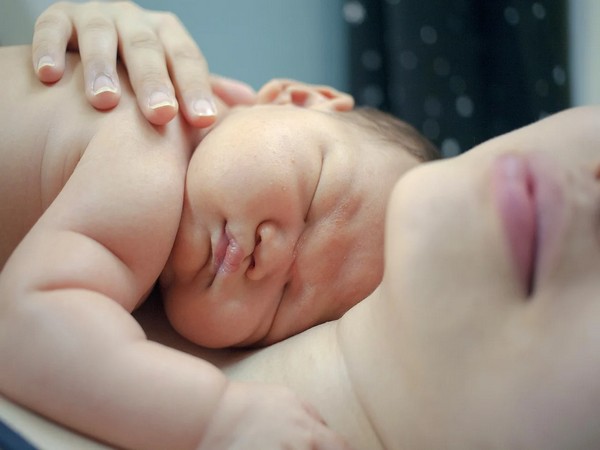
Representative image

Montreal [Canada], January 17 (ANI): According to a new study, mothers with multiple children report more fragmented sleep than mothers of a single child. However, the number of children in a family doesn't seem to affect the quality of sleep for fathers.
The study was led by researchers from McGill University.
A total of 111 parents (54 couples and 3 mothers of single-parent families) participated in the study published in the Journal of Sleep Research led by McGill doctoral student Samantha Kenny under the supervision of Marie-Helene Pennestri, Assistant Professor in the Department of Educational and Counselling Psychology.
Participants' sleep patterns were studied for two weeks. Mothers with one baby reported having less interrupted and better-quality sleep than mothers with more than one child, although the total amount of sleep did not differ depending on the number of children. No difference was noted in fathers.
"Experienced mothers perceived their sleep to be more fragmented than that of first-time mothers. Tension in the marital relationship may transpire if childcare is one-sided and not discussed collaboratively," says Pennestri, who is also a researcher at the Hospital en sante mentale Riviere-des-Prairies (CIUSSS-NIM).
According to the researchers, interventions developed by healthcare providers targeting an equal distribution of daytime and nighttime childcare tasks could be helpful. These interventions should be tailored to each family member, depending on their situation.
As next steps, the researchers aim to explain the differences between mothers and fathers, and determine why mothers with more than one child report worse sleep. (ANI)


Get the App

What to Read Next

Science

New method guides magnetism without magnets

New method guides magnetism without magnets

Researchers at Paul Scherrer Institute PSI have demonstrated an innovative method to control magnetism in materials using an energy-efficient electric field.

Read More
Science

Amphibians bounce-back from Earth’s greatest mass extinction

Amphibians bounce-back from Earth’s greatest mass extinction

Researchers at the University of Bristol discovered that ancient frog ancestors survived the biggest mass extinction of species by eating on freshwater prey that evaded terrestrial predators.

Read More
Science

New insights into how cancer evades the immune system: Study

New insights into how cancer evades the immune system: Study

Immunotherapy research primarily focuses on better recognition of cancer cells by the body's own immune system. Researchers at Amsterdam UMC and Moffitt Cancer Center have taken a different approach.

Read More
Science

Scientists use AI to better understand nanoparticles: Study

Scientists use AI to better understand nanoparticles: Study

A group of scientists has created a way to illuminate the dynamic behavior of nanoparticles, which are essential components in the production of pharmaceuticals, electronics, and industrial and energy-conversion materials.

Read More
Science

New device could allow you to taste cake in virtual reality

New device could allow you to taste cake in virtual reality

The 'e-Taste' interface employs sensors and wireless chemical dispensers to enable remote taste perception, often known as gestation. Field testing done by researchers at The Ohio State University confirmed the device's ability to digitally simulate a range of taste intensities, while still offering variety and safety for the user.

Read More
Home About Us Our Products Advertise Contact Us Terms & Condition Privacy Policy

Copyright © aninews.in | All Rights Reserved.
