

ADD ANI AS A TRUSTED SOURCE
googleads
ANI Logo
Menu
Science

Five-year survival rate for children with acute lymphatic leukemia has increased: Study

The five-year survival rate for all children with acute lymphatic leukaemia (ALL) has risen to 94 per cent. A study of 800 Dutch youngsters demonstrates this. Modified treatment procedures for four subgroups were investigated in the research. The changes were discovered to have a favourable impact on survival and quality of life.

ANI Jul 18, 2023 09:24 IST googleads

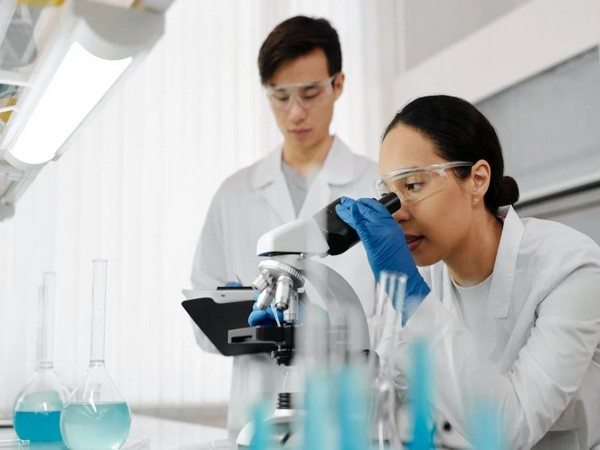
Representative Image

Utrecht [Netherlands], July 18 (ANI): In the Netherlands, the most frequent kind of paediatric cancer is acute lymphatic leukaemia. Each year, around 110 children are diagnosed with this kind of cancer. The prognosis is bright for many children, but not for all. To enhance survival rates and quality of life for all children with leukaemia, the treatment strategy is continually being revised based on new scientific discoveries.
The study results of the ALL-11 treatment protocol, led by researchers at the Princess Máxima Center, were published in the scientific journal Journal of Clinical Oncology.
The five-year survival rate for all children with acute lymphatic leukaemia (ALL) has risen to 94 per cent. A study of 800 Dutch youngsters demonstrates this. Modified treatment procedures for four subgroups were investigated in the research. The changes were discovered to have a favourable impact on survival and quality of life.
For example, the risk of disease recurrence became as much as three times smaller for children with an aggressive form of leukemia. Said Prof. Dr. Rob Pieters: ‘The five-year survival rate for children with acute lymphatic leukemia has increased dramatically since the 1960s, from zero to 94 per cent, but the last steps are the most difficult.’
Between April 2012 and July 2020, more than 800 children in the Netherlands were treated according to this protocol. The study looked at the effect of modified treatment in specific groups of children with leukemia, including those with a so-called Ikaros abnormality. Prof. Dr. Rob Pieters, pediatric oncologist and medical director of the Princess Máxima Center, led the clinical study. He says: ‘There is broad interest worldwide in this research, because it was still unknown how to improve therapy for children with Ikaros leukemia.’
Children with an Ikaros abnormality in the DNA of their leukemia cells are more likely to have their disease return after treatment. In this study, these children received an additional year of ‘maintenance phase’ chemotherapy on top of the first two years of treatment. This modification led to a three times lower risk of the cancer returning: it only happened in 9% of them, compared to 26% of children in the previous treatment protocol.
In the ALL-11 protocol, doctors and researchers also looked at the effect of less intensive treatment for three other groups of children. These included children with a DNA abnormality in their leukemia cells that is associated with a very high cure rate, and children with Down syndrome who suffer a lot of side effects from therapy. These children were given lower amounts of anthracyclines, a particular type of chemotherapy that increases the risk of heart damage and infections. The modification turned out to be a good choice: the children had the same or even better survival rate while their quality of life improved due to a lower risk of infections and less risk of heart damage.
Prof. Dr. Rob Pieters: ‘The five-year survival rate for children with acute lymphoblastic leukemia has increased tremendously since the 1960s, from zero to 94%, but the last steps are the hardest. We are now one step closer to curing all children with ALL. We have also been able to remove a drug that gives risk of heart damage largely from the treatment of children with less aggressive disease. So the latest results for children with leukemia fit exactly with our mission: more cure, with fewer side effects.' (ANI)


Get the App

What to Read Next

Science

New insights into how cancer evades the immune system: Study

New insights into how cancer evades the immune system: Study

Immunotherapy research primarily focuses on better recognition of cancer cells by the body's own immune system. Researchers at Amsterdam UMC and Moffitt Cancer Center have taken a different approach.

Read More
Science

Strand Life Sciences launches portal for rare disease diagnosis

Strand Life Sciences launches portal for rare disease diagnosis

Marking Rare Disease Day, Strand Life Sciences, a subsidiary of Reliance Industries and a leading genomics research company, has launched the StrandOmics Portal, an innovative digital platform designed to assist doctors in diagnosing rare diseases more efficiently.

Read More
Science

COVID-19 severity may be predicted by White Blood Cell Count

COVID-19 severity may be predicted by White Blood Cell Count

A COVID-19 diagnosis is no longer as frightening as it used to be, thanks to developments in treatment choices. However, a new study reveals that leukocyte (white blood cell) count may now be used to identify who is more likely to develop more significant disease symptoms.

Read More
Science

Discovery of unexpected collagen structure to influence research

Discovery of unexpected collagen structure to influence research

Collagen, the body's most abundant protein, has long been considered a predictable structural component of tissues.

Read More
Science

Shubhanshu Shukla: IAF officer becomes first Indian astronaut for

Shubhanshu Shukla: IAF officer becomes first Indian astronaut for

Shubhanshu Shukla, Indian Air Force (IAF) officer and one of four astronauts for Indian Space Research Organisation's (ISRO) Gaganyaan mission, has been sele Shubhanshu Shukla, Indian Air Force (IAF) officer and one of four astronauts for Indian Space Research Organisation's (ISRO) Gaganyaan mission, has been selected as the pilot for Axiom Mission 4, scheduled for Spring 2025.cted as the pilot for Axiom Mission 4, scheduled for Spring 2025.

Read More
Science

Weather change linked to heightened risk of Salmonella outbreaks

Weather change linked to heightened risk of Salmonella outbreaks

According to new research from the University of Surrey, climate change has an impact on Salmonella spread. This study builds on prior work by the researchers, which discovered that weather change is contributing to the spread of deadly diarrhoeal illnesses.

Read More
Science

Study finds connection between quantum theory, information theory

Study finds connection between quantum theory, information theory

"Our results have no clear or direct application right now. It's basic research that lays the foundation for future technologies in quantum information and quantum computers. There's enormous potential for complete discoveries in many different research fields," said Guilherme B Xavier, a researcher in quantum communication at Linkoping University, Sweden.

Read More
Science

'Nuroscience study results can be better predicted by AI'

'Nuroscience study results can be better predicted by AI'

Large language models, a type of AI that analyses text, can anticipate the results of proposed neuroscience studies more correctly than human experts, according to a new study led by UCL (University College London) researchers.

Read More
Science

Cancer cells of fat may enhance cancer treatment

Cancer cells of fat may enhance cancer treatment

A study by Van Andel Institute scientists suggests that restricting cancer cells' access to fat may enhance the effectiveness of certain cancer treatments.

Read More
Science

Biomarker may predict response to immunotherapy in liver cancer

Biomarker may predict response to immunotherapy in liver cancer

According to a preclinical study conducted by Weill Cornell Medicine researchers, it may soon be feasible to detect whether individuals with hepatocellular carcinoma, a kind of liver cancer, may benefit from immunotherapy.

Read More
Home About Us Our Products Advertise Contact Us Terms & Condition Privacy Policy

Copyright © aninews.in | All Rights Reserved.


