 हिंदी खबर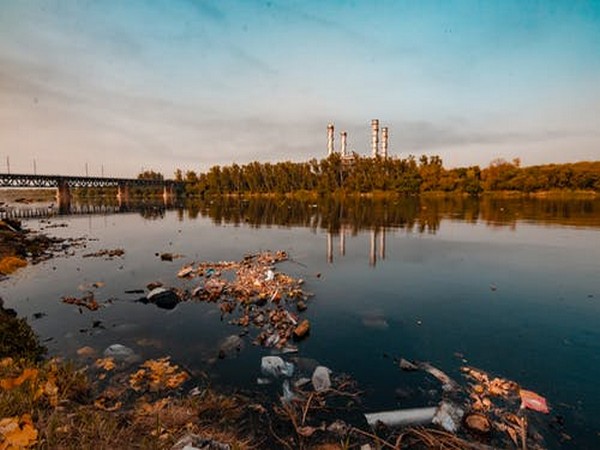

Heslington [United Kingdom], March 14 (ANI): A new study led by the University of York's Centre of Excellence in Mass Spectrometry has found that pharmaceutical pollution is contaminating the world's rivers to a greater extent.
The story was published in the journal, 'Proceedings of the National Academy of Sciences.'
The researchers studied rivers in over half of the world's countries -- with rivers in 36 of these countries having never previously been monitored for pharmaceuticals.
With their latest study, the researchers found that:
pollution">Pharmaceutical pollution is contaminating water on every continent.
Strong correlations between the socioeconomic status of a country and higher pollution of pharmaceuticals in its rivers (with lower-middle-income nations the most polluted).
High levels of pharmaceutical pollution was most positively associated with regions of high median age as well as high local unemployment and poverty rates,
The most polluted countries and regions of the world are the ones that have been researched the least (namely sub-Saharan Africa, South America and parts of southern Asia).
The activities most associated with the highest levels of pharmaceutical pollution included rubbish dumping along river banks, inadequate wastewater infrastructure and pharmaceutical manufacturing, and the dumping of the contents of residual septic tanks into rivers.
The study revealed that a quarter of the sites contained contaminants (such as sulfamethoxazole, propranolol, ciprofloxacin and loratadine) at potentially harmful concentrations.
The researchers hope that by increasing the monitoring of pharmaceuticals in the environment, they can develop strategies to limit the effects potentially caused by the presence of pollutants.
The study included noteworthy rivers such as the Amazon, Mississippi, Thames and the Mekong. Water samples were obtained from sites spanning from a Yanomami Village in Venezuela, where modern medicines are not used, to some of the most populated cities on the planet, such as Delhi, London, New York, Lagos, Las Vegas, and Guangzhou.
Areas of political instability such as Baghdad, the Palestinian West Bank and Yaounde in Cameroon were also included. The climates where samples were obtained varied from high altitude alpine tundra in Colorado and Polar Regions in Antarctica, to Tunisian deserts.
While previous studies have monitored active pharmaceuticals ingredients (APIs) in rivers, these have ignored many of the countries of the world, have typically measured only a select few contaminants and employed different analytical methods. Cumulatively, this has made it difficult to quantify the scale of the problem from a global perspective.
Co-leader of the project Dr John Wilkinson, from the Department of Environment and Geography, said, "With 127 collaborators across 86 institutions worldwide, the Global Monitoring of Pharmaceuticals Project is an excellent example of how the global scientific community can come together to tackle large-scale environmental issues".
"We've known for over two decades now that pharmaceuticals make their way into the aquatic environment where they may affect the biology of living organisms. But one of the largest problems we have faced in tackling this issue is that we have not been very representative when monitoring these contaminants, with almost all of the data focused on a select few areas in North America, Western Europe and China," he continued.
"Through our project, our knowledge of the global distribution of pharmaceuticals in the aquatic environment has now been considerably enhanced. This one study presents data from more countries around the world than the entire scientific community was previously aware of 36 new countries to be precise where only 75 had ever been studied before," he added.
The researchers suggested their approach could also be expanded in the future to include other environmental media such as sediments, soils and biota, and could allow for the development of global-scale datasets on pollution.
The study used 'predicted no adverse effect concentrations (PNECs)' to determine where there may be a risk for adverse effects (such as toxicity). If the team measured a concentration in the environment above the PNEC, then there was potential for organisms living there to be adversely affected by the pharmaceutical. This can manifest in many ways largely dependent on what the pharmaceutical is, what organism is being exposed and at what concentration. Examples can include disrupted reproductive capabilities, altered behaviour or physiology and even changes in heart rate.
The contaminants found at potentially harmful concentrations include--Propranolol (a beta-blocker for heart problems such as high blood pressure), Sulfamethoxazole (an antibiotic for bacterial infection), Ciprofloxacin (an antibiotic for bacterial infection) and Loratadine (an antihistamine for allergies). (ANI)




