

ADD ANI AS A TRUSTED SOURCE
googleads
ANI Logo
Menu
Science

Environmental destruction from volcanic eruptions can cause mass extinctions, reveals study

Tohuku Region [Japan], July 23 (ANI): Research conducted at Tohuku University have found evidence pointing to a relationship between the magnitude of mass extinctions and global temperature changes in geologic times.

ANI Jul 23, 2022 22:55 IST googleads

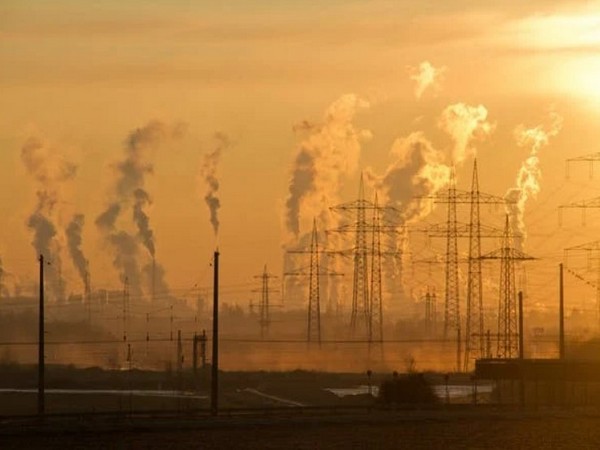
Representative image

Tohuku Region [Japan], July 23 (ANI): Research conducted at Tohuku University have found evidence pointing to a relationship between the magnitude of mass extinctions and global temperature changes in geologic times.
The research was published in the journal, 'Biogeosciences'.
Abrupt climate change, accompanied by environmental destruction from large volcanic eruptions and meteorites, has caused major mass extinctions throughout the Phanerozoic Eon - covering 539 million years to the present.
To date, there have been few quantitative evaluations of the relationship between land temperature anomalies and terrestrial animal extinctions. Moreover, marine animals and terrestrial animals have experienced divergent extinction rates, and this phenomenon remains under-explored.
Professor Emeritus Kunio Kaiho demonstrated that marine invertebrates and terrestrial tetrapods' extinction rates corresponded to deviations in global and habitat surface temperatures, regardless of whether it was cooling or warming. Loss of species during the 'big five' major extinctions correlated with a > 7°C global cooling and a > 7-9°C global warming for marine animals, and a > 7°C global cooling and a > ~7°C global warming for terrestrial tetrapods.
"These findings indicate that the bigger the shifts in climate, the larger the mass extinction," Kaiho said. "They also tell us that any prospective extinction related to human activity will not be of the same proportions when the extinction magnitude changes in conjunction with global surface temperature anomaly."
Kaiho cites an earlier study, which claimed a 5.2°C temperature increase in average global temperature would result in a mass extinction event comparable to previous ones. Yet, based on this study's analysis, the temperature will need to change by 9°C, and this will not appear until 2500 in a worst-case scenario.
"Although predicting the extent of future extinctions is difficult because causes will differ from preceding ones, there is sufficient evidence to suggest that any forthcoming extinction will not reach past magnitudes if global surface temperature anomalies and other environmental anomalies correspondingly change," Kaiho said.
Kaiho also found a lower tolerance for terrestrial tetrapods than marine animals for global warming events. However, marine animals had a smaller tolerance to the same habitat temperature changes than terrestrial animals. This is because the temperature anomaly on land is 2.2 times higher than sea surface temperature. These phenomena fit ongoing extinction patterns. (ANI)


Get the App

What to Read Next

Science

Amphibians bounce-back from Earth’s greatest mass extinction

Amphibians bounce-back from Earth’s greatest mass extinction

Researchers at the University of Bristol discovered that ancient frog ancestors survived the biggest mass extinction of species by eating on freshwater prey that evaded terrestrial predators.

Read More
Science

New device could allow you to taste cake in virtual reality

New device could allow you to taste cake in virtual reality

The 'e-Taste' interface employs sensors and wireless chemical dispensers to enable remote taste perception, often known as gestation. Field testing done by researchers at The Ohio State University confirmed the device's ability to digitally simulate a range of taste intensities, while still offering variety and safety for the user.

Read More
Science

Study reveals impact of animals as architects of Earth

Study reveals impact of animals as architects of Earth

A new study led by Professor Gemma Harvey from Queen Mary University of London has revealed how hundreds of species shape the landscapes we depend on, from termite mounds visible from space to beavers creating wetlands and hippos carving drainage systems.

Read More
Science

Opposing arrows of time emerge from certain quantum systems

Opposing arrows of time emerge from certain quantum systems

Researchers at the University of Surrey made a thought-provoking discovery. A new study reveals that opposing arrows of time can theoretically emerge from certain quantum systems.

Read More
Science

New technology enhances gravitational-wave detection: Study

New technology enhances gravitational-wave detection: Study

A team of physicists led by Jonathan Richardson of the University of California, Riverside, demonstrated how new optical technology can extend the detection range of gravitational-wave observatories such as the Laser Interferometer Gravitational-Wave Observatory, or LIGO, and pave the way for future observatories.

Read More
Science

Discovering the genetics of climate adaptation 

Discovering the genetics of climate adaptation 

As climate change accelerates, plants are under increasing pressure to adapt to changing habitats and environmental conditions.

Read More
Science

Weather change linked to heightened risk of Salmonella outbreaks

Weather change linked to heightened risk of Salmonella outbreaks

According to new research from the University of Surrey, climate change has an impact on Salmonella spread. This study builds on prior work by the researchers, which discovered that weather change is contributing to the spread of deadly diarrhoeal illnesses.

Read More
Science

Large, small galaxies may grow in ways more similar

 Large, small galaxies may grow in ways more similar

A team of astronomers led by University of Arizona researcher Catherine Fielder captured the most precise photographs of a small galaxy and its surroundings, revealing features typically found in much larger galaxies.

Read More
Science

AI can reveals hidden hazards of chemical mixtures in rivers

AI can reveals hidden hazards of chemical mixtures in rivers

Artificial intelligence can provide important insights into how complex chemical mixes in rivers affect aquatic life, paving the path for more effective environmental protection.

Read More
Science

Study finds connection between quantum theory, information theory

Study finds connection between quantum theory, information theory

"Our results have no clear or direct application right now. It's basic research that lays the foundation for future technologies in quantum information and quantum computers. There's enormous potential for complete discoveries in many different research fields," said Guilherme B Xavier, a researcher in quantum communication at Linkoping University, Sweden.

Read More
Home About Us Our Products Advertise Contact Us Terms & Condition Privacy Policy

Copyright © aninews.in | All Rights Reserved.


