

ADD ANI AS A TRUSTED SOURCE
googleads
ANI Logo
Menu
Science

Earth's oldest groundwaters have life's power generators, find researchers

Toronto [Canada], July 9 (ANI): As per new research, scientists have now discovered 1.2 billion-year-old deep groundwater in a gold and uranium mine in South Africa, throwing more light on how life is sustained below the Earth's surface and how it may survive on other worlds.

ANI Jul 09, 2022 20:19 IST googleads

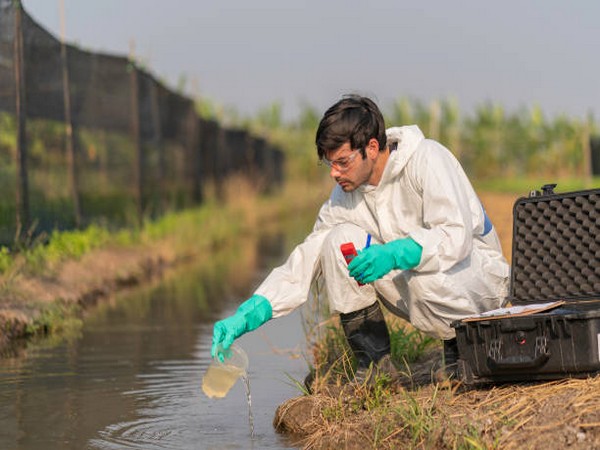
Representative Image

Toronto [Canada], July 9 (ANI): As per new research, scientists have now discovered 1.2 billion-year-old deep groundwater in a gold and uranium mine in South Africa, throwing more light on how life is sustained below the Earth's surface and how it may survive on other worlds.
The findings of the research were published in the journal 'Nature Communications'.
"For the first time, we have insight into how energy stored deep in the Earth's subsurface can be released and distributed more broadly through its crust over time," said Oliver Warr, research associate in the Department of Earth Sciences at the University of Toronto and lead author of the study. "Think of it as a Pandora's Box of helium-and-hydrogen-producing power, one that we can learn how to harness for the benefit of the deep biosphere on a global scale."
"Ten years ago, we discovered billion-year-old groundwater from below the Canadian Shield - this was just the beginning, it seems," said Barbara Sherwood Lollar, professor in the Department of Earth Sciences at the University of Toronto and corresponding author. "Now, 2.9 km below the Earth's surface in Moab Khotsong, we have found that the extreme outposts of the world's water cycle are more widespread than once thought."
Uranium and other radioactive elements naturally occur in the surrounding host rock that contains mineral and ore deposits. These elements hold new information about the groundwater's role as a power generator for chemolithotrophic, or rock-eating, groups of cohabitating microorganisms previously discovered in the Earth's deep subsurface.
When elements like uranium, thorium and potassium decay in the subsurface, the resulting alpha, beta, and gamma radiation has ripple effects, triggering what is called radiogenic reactions in the surrounding rocks and fluids.
At Moab Khotsong, the researchers found large amounts of radiogenic helium, neon, argon and xenon, and an unprecedented discovery of an isotope of krypton - a never-before-seen tracer of this powerful reaction history. The radiation also breaks apart water molecules in a process called radiolysis, producing large concentrations of hydrogen, an essential energy source for subsurface microbial communities deep in the Earth that is unable to access energy from the sun for photosynthesis.
Due to their extremely small masses, helium and neon are uniquely valuable for identifying and quantifying transport potential. While the extremely low porosity of crystalline basement rocks in which these waters are found means the groundwaters themselves are largely isolated and rarely mix, accounting for their 1.2-billion-year age, diffusion can still take place.
"Solid materials such as plastic, stainless steel and even solid rock are eventually penetrated by diffusing helium, much like the deflation of a helium-filled balloon," said Warr. "Our results show that diffusion has provided a way for 75 to 82 per cent of the helium and neon originally produced by the radiogenic reactions to be transported through the overlying crust."
The researchers stress that the study's new insights on how much helium diffuses up from the deep Earth is a critical step forward, as global helium reserves run out, and the transition to more sustainable resources gains traction.
"Humans are not the only life-forms relying on the energy resources of the Earth's deep subsurface," said Warr. "Since the radiogenic reactions produce both helium and hydrogen, we can not only learn about helium reservoirs and transport but also calculate hydrogen energy flux from the deep Earth that can sustain subsurface microbes on a global scale."
Warr notes that these calculations are vital for understanding how subsurface life is sustained on Earth, and what energy might be available from radiogenic-driven power on other planets and moons in the solar system and beyond, informing upcoming missions to Mars, Titan, Enceladus and Europa. (ANI)


Get the App

What to Read Next

Science

New method guides magnetism without magnets

New method guides magnetism without magnets

Researchers at Paul Scherrer Institute PSI have demonstrated an innovative method to control magnetism in materials using an energy-efficient electric field.

Read More
Science

Amphibians bounce-back from Earth’s greatest mass extinction

Amphibians bounce-back from Earth’s greatest mass extinction

Researchers at the University of Bristol discovered that ancient frog ancestors survived the biggest mass extinction of species by eating on freshwater prey that evaded terrestrial predators.

Read More
Science

New insights into how cancer evades the immune system: Study

New insights into how cancer evades the immune system: Study

Immunotherapy research primarily focuses on better recognition of cancer cells by the body's own immune system. Researchers at Amsterdam UMC and Moffitt Cancer Center have taken a different approach.

Read More
Science

Scientists use AI to better understand nanoparticles: Study

Scientists use AI to better understand nanoparticles: Study

A group of scientists has created a way to illuminate the dynamic behavior of nanoparticles, which are essential components in the production of pharmaceuticals, electronics, and industrial and energy-conversion materials.

Read More
Science

New device could allow you to taste cake in virtual reality

New device could allow you to taste cake in virtual reality

The 'e-Taste' interface employs sensors and wireless chemical dispensers to enable remote taste perception, often known as gestation. Field testing done by researchers at The Ohio State University confirmed the device's ability to digitally simulate a range of taste intensities, while still offering variety and safety for the user.

Read More
Science

Strand Life Sciences launches portal for rare disease diagnosis

Strand Life Sciences launches portal for rare disease diagnosis

Marking Rare Disease Day, Strand Life Sciences, a subsidiary of Reliance Industries and a leading genomics research company, has launched the StrandOmics Portal, an innovative digital platform designed to assist doctors in diagnosing rare diseases more efficiently.

Read More
Science

COVID-19 severity may be predicted by White Blood Cell Count

COVID-19 severity may be predicted by White Blood Cell Count

A COVID-19 diagnosis is no longer as frightening as it used to be, thanks to developments in treatment choices. However, a new study reveals that leukocyte (white blood cell) count may now be used to identify who is more likely to develop more significant disease symptoms.

Read More
Science

Seals can essentially act as 'smart sensors': Study

Seals can essentially act as 'smart sensors': Study

A new study by marine biologists reports that seals can essentially act as 'smart sensors' for monitoring fish populations in the ocean's eerily dim 'twilight zone.'

Read More
Science

'Creation of black holes without singularities through gravity'

'Creation of black holes without singularities through gravity'

Traditional black holes, as predicted by Albert Einstein's theory of General Relativity, contain what are known as singularities, i.e. points where the laws of physics break down. Identifying how singularities are resolved in the context of quantum gravity is one of the fundamental problems in theoretical physics. Now, a team of experts has described the creation of regular black holes from gravitational effects without the need for the existence of exotic matter required by some previous models.

Read More
Science

Discovery of unexpected collagen structure to influence research

Discovery of unexpected collagen structure to influence research

Collagen, the body's most abundant protein, has long been considered a predictable structural component of tissues.

Read More
Home About Us Our Products Advertise Contact Us Terms & Condition Privacy Policy

Copyright © aninews.in | All Rights Reserved.
