

ADD ANI AS A TRUSTED SOURCE
googleads
ANI Logo
Menu
Science

Drive-thru type test to detect viral infections in bacteria

Washington [US], February 26 (ANI): A team led by researchers of Johns Hopkins University have developed a test to determine if bacteria are sick, similar to the one used to test humans for COVID-19.

ANI Feb 26, 2021 23:24 IST googleads

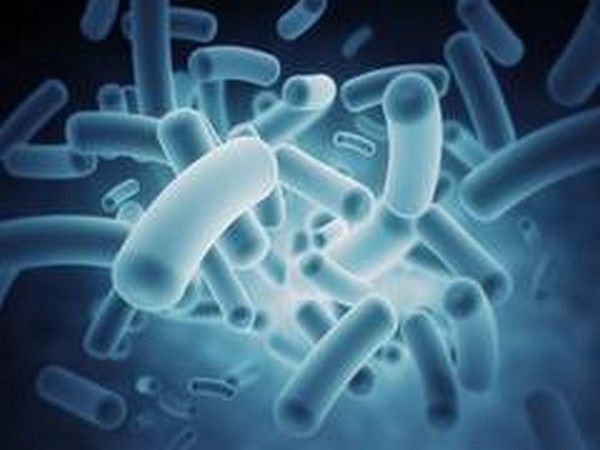
Representative Image

Washington [US], February 26 (ANI): A team led by researchers of Johns Hopkins University has developed a test to determine if bacteria are sick, similar to the one used to test humans for COVID-19.
The findings published in Nature Microbiology highlighted that the pandemic has made clear the threat that some viruses pose to people. But viruses can also infect life-sustaining bacteria.
"If there was a COVID-like pandemic occurring in important bacterial populations it would be difficult to tell because, before this study, we lacked the affordable and accurate tools necessary to study viral infections in uncultured bacterial populations," said study corresponding author Sarah Preheim, a Johns Hopkins assistant professor of environmental health and engineering.
Sick bacteria are stymied in their function as decomposers and as part of the foundation of the food web in the Chesapeake Bay and other waterways. Determining viral infections in bacteria traditionally relies on culturing both bacteria and virus, which misses 99% of bacteria found in the environment because they cannot be grown in culture, Preheim says, adding that tests of viral infections in uncultured bacteria are expensive and difficult to apply widely, not unlike the early stages of COVID-19 testing.
The key to making a test of viral infections for uncultured bacteria faster and more affordable was to isolate single bacterial cells in a small bubble (i.e. an emulsion droplet) and fuse the genes of the virus and bacteria together once inside.
"The fused genes act like name tags for the bacteria and viruses," said lead author Eric Sakowski, a former postdoctoral researcher in Preheim's laboratory who is now an assistant professor at Mount St. Mary's University. "By fusing the genes together, we are able to identify which bacteria are infected, as well as the variant of the virus that is causing the infection."
The resulting test provides a novel way to screen for viral infections in a subset of bacterial populations. The test allows researchers to identify a link between environmental conditions and infections in Actinobacteria, one of the most abundant bacterial groups in the Chesapeake Bay and one that plays a crucial role in decomposing organic matter, making nutrients available to plants and photosynthetic algae.
Though the researchers developed this tool studying the Chesapeake Bay, they say their approach could be widely applied across aquatic ecosystems, shedding light on viral ecology and helping predict -- and even prevent -- devastating environmental impacts.
"This testing tool allows us to track viral infections more easily, so we can monitor these infections to see when they are most likely to have important environmental consequences," Preheim said.
Sakowski said the new test could someday also affect how we treat bacterial infections.
"Viruses show potential for treating infections caused by antibiotic-resistant bacteria," he said. "Knowing which viruses most effectively infect bacteria will be critical to this type of treatment."
Preheim's team also included Johns Hopkins doctoral student Keith Arora-Williams, and Funing Tian, Ahmed A. Zayed, Olivier Zablocki, and Matthew B. Sullivan, all from the Ohio State University. (ANI)


Get the App

What to Read Next

Science

New method guides magnetism without magnets

New method guides magnetism without magnets

Researchers at Paul Scherrer Institute PSI have demonstrated an innovative method to control magnetism in materials using an energy-efficient electric field.

Read More
Science

Amphibians bounce-back from Earth’s greatest mass extinction

Amphibians bounce-back from Earth’s greatest mass extinction

Researchers at the University of Bristol discovered that ancient frog ancestors survived the biggest mass extinction of species by eating on freshwater prey that evaded terrestrial predators.

Read More
Science

New insights into how cancer evades the immune system: Study

New insights into how cancer evades the immune system: Study

Immunotherapy research primarily focuses on better recognition of cancer cells by the body's own immune system. Researchers at Amsterdam UMC and Moffitt Cancer Center have taken a different approach.

Read More
Science

Scientists use AI to better understand nanoparticles: Study

Scientists use AI to better understand nanoparticles: Study

A group of scientists has created a way to illuminate the dynamic behavior of nanoparticles, which are essential components in the production of pharmaceuticals, electronics, and industrial and energy-conversion materials.

Read More
Science

New device could allow you to taste cake in virtual reality

New device could allow you to taste cake in virtual reality

The 'e-Taste' interface employs sensors and wireless chemical dispensers to enable remote taste perception, often known as gestation. Field testing done by researchers at The Ohio State University confirmed the device's ability to digitally simulate a range of taste intensities, while still offering variety and safety for the user.

Read More
Science

Study reveals impact of animals as architects of Earth

Study reveals impact of animals as architects of Earth

A new study led by Professor Gemma Harvey from Queen Mary University of London has revealed how hundreds of species shape the landscapes we depend on, from termite mounds visible from space to beavers creating wetlands and hippos carving drainage systems.

Read More
Science

Opposing arrows of time emerge from certain quantum systems

Opposing arrows of time emerge from certain quantum systems

Researchers at the University of Surrey made a thought-provoking discovery. A new study reveals that opposing arrows of time can theoretically emerge from certain quantum systems.

Read More
Science

COVID-19 severity may be predicted by White Blood Cell Count

COVID-19 severity may be predicted by White Blood Cell Count

A COVID-19 diagnosis is no longer as frightening as it used to be, thanks to developments in treatment choices. However, a new study reveals that leukocyte (white blood cell) count may now be used to identify who is more likely to develop more significant disease symptoms.

Read More
Science

Seals can essentially act as 'smart sensors': Study

Seals can essentially act as 'smart sensors': Study

A new study by marine biologists reports that seals can essentially act as 'smart sensors' for monitoring fish populations in the ocean's eerily dim 'twilight zone.'

Read More
Science

New technology enhances gravitational-wave detection: Study

New technology enhances gravitational-wave detection: Study

A team of physicists led by Jonathan Richardson of the University of California, Riverside, demonstrated how new optical technology can extend the detection range of gravitational-wave observatories such as the Laser Interferometer Gravitational-Wave Observatory, or LIGO, and pave the way for future observatories.

Read More
Home About Us Our Products Advertise Contact Us Terms & Condition Privacy Policy

Copyright © aninews.in | All Rights Reserved.


